The Arctic Institute The Arctic Institute Menu
  • Research
    • Countries
    • Topics
  • Projects
  • Experts
  • Media & Events
    • Media
    • Events
  • Publications
  • About Us
  • Contact Us
    • Call for 2021-2022 Research Intern (The Arctic This Week)
    • Call for Papers: New Polar STEAM Magazine Polynya
    • Submissions
  • Research
    • Countries
    • Topics
  • Projects
  • Experts
  • Media & Events
    • Media
    • Events
  • Publications
  • About Us
  • Contact Us
    • Call for 2021-2022 Research Intern (The Arctic This Week)
    • Call for Papers: New Polar STEAM Magazine Polynya
    • Submissions

Mapping Russia’s Arctic Hydrocarbon Development Scheme
February 18, 2020 By Rylin McGee Business and Economics, Multimedia, Natural Resources and Energy, Russia

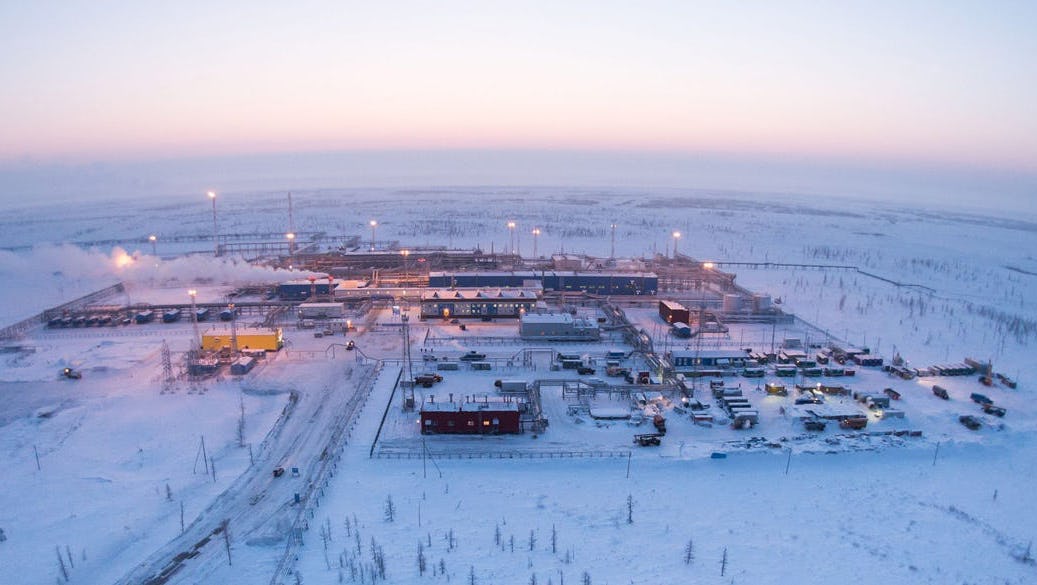
Arctic natural gas infrastructure on snow

Russia’s Zapolyarnoye natural gas field on the Gydan Peninsula in 2016. Photo: Gazprom

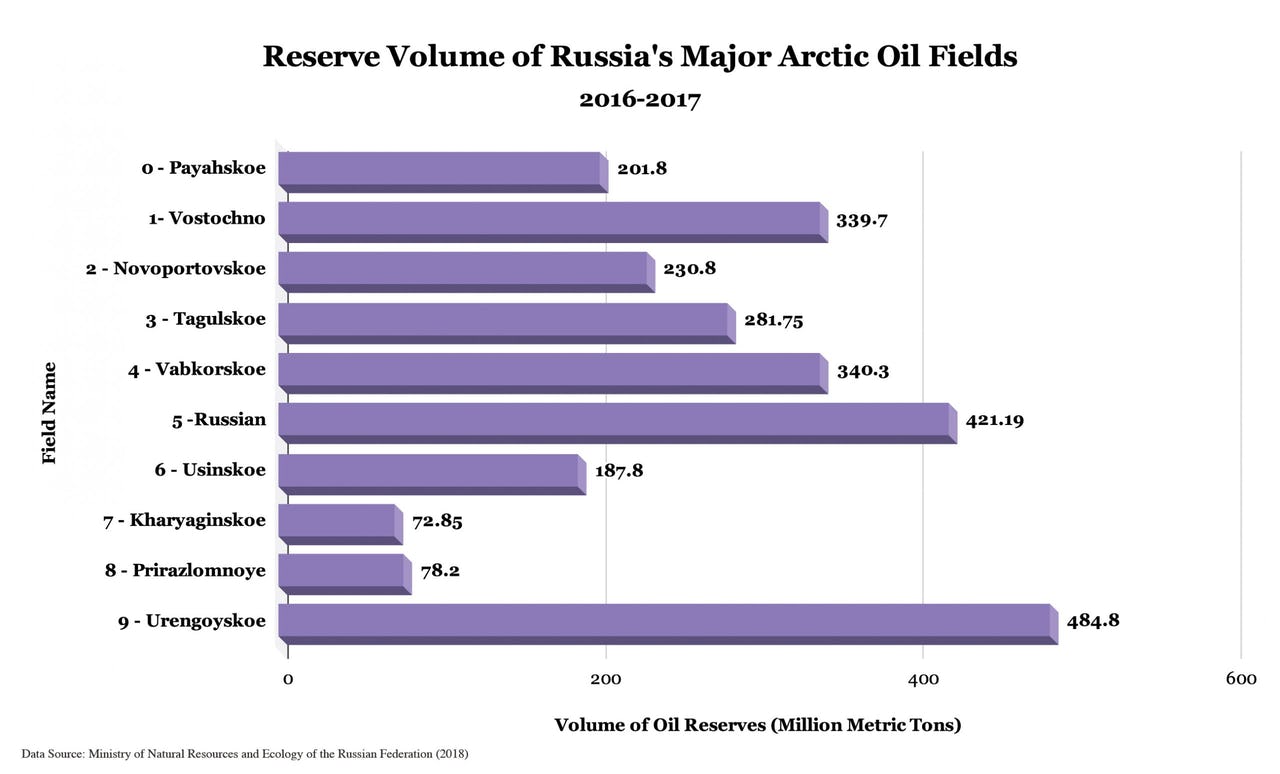
Globally, climate change presents major implications for hydrocarbon development and is especially relevant in the Arctic, where surface air temperatures warm at approximately twice the global rate.1)NOAA (2018) ‘Arctic Report Card: Update for 2018.’ Report for the NOAA Arctic Program. https://arctic.noaa.gov/Report-Card/Report-Card-2018/ArtMID/7878/ArticleID/771/2018-Headlines. Accessed on 1 August 2019 In the past five decades, Arctic regions saw downward trends in sea ice levels and snow cover extent, increased permafrost thaw, and an intensified hydrological cycle resulting from warming air temperatures.2)Box J, Colgan W, Christensen T,  Schmidt N, Lund M, Parmentier F, . . . Romanovsky V (2019) ‘Key indicators of Arctic climate change: 1971-2017.’ Environmental Research Letters, 14(4), 1-18 The Arctic is also one of the world’s most significant and extensive regions of untapped oil and gas. The Russian Arctic alone comprises over 35,700 billion cubic meters of natural gas (Figures 3 & 4) and over 2,300 million metric tons of oil and condensate (Figures 1 & 2) with the majority concentrated in the Yamal and Gydan peninsulas.3)Ministry of Natural Resources and Ecology of the Russian Federation (2018) State Report on the state and use of mineral raw materials of the Russian Federation in 2016 and 2017. https://bit.ly/37zaeht. Accessed on March 1 2019 However, successful hydrocarbon industries depend not only on resource reserves, but also on physical infrastructure, political structures and environmental context.4)Kazanin A (2019) ‘Strategicheskie prioritety i vyzovy razvitie neftegazovogo sektora Arkticheskoj zony RF [Strategic priorities and challenges of the Russian Arctic zone oil and gas industry].’ Prostranstvennaja Jekonomika [Spatial Economics], 15(2), 169-185.5)Stephenson S and Agnew J (2015) ‘The work of networks: Embedding firms, transport and the state in the Russian Arctic oil and gas sector.’ Environment and Planning A, 48(3), 558-576. Thus, fossil fuel development must be considered in relation to the complex entanglement of local firms, extraction sites and distribution systems which connect local resources to global markets, as well as the unique Arctic environments and global climate in which such networks are spatially embedded.
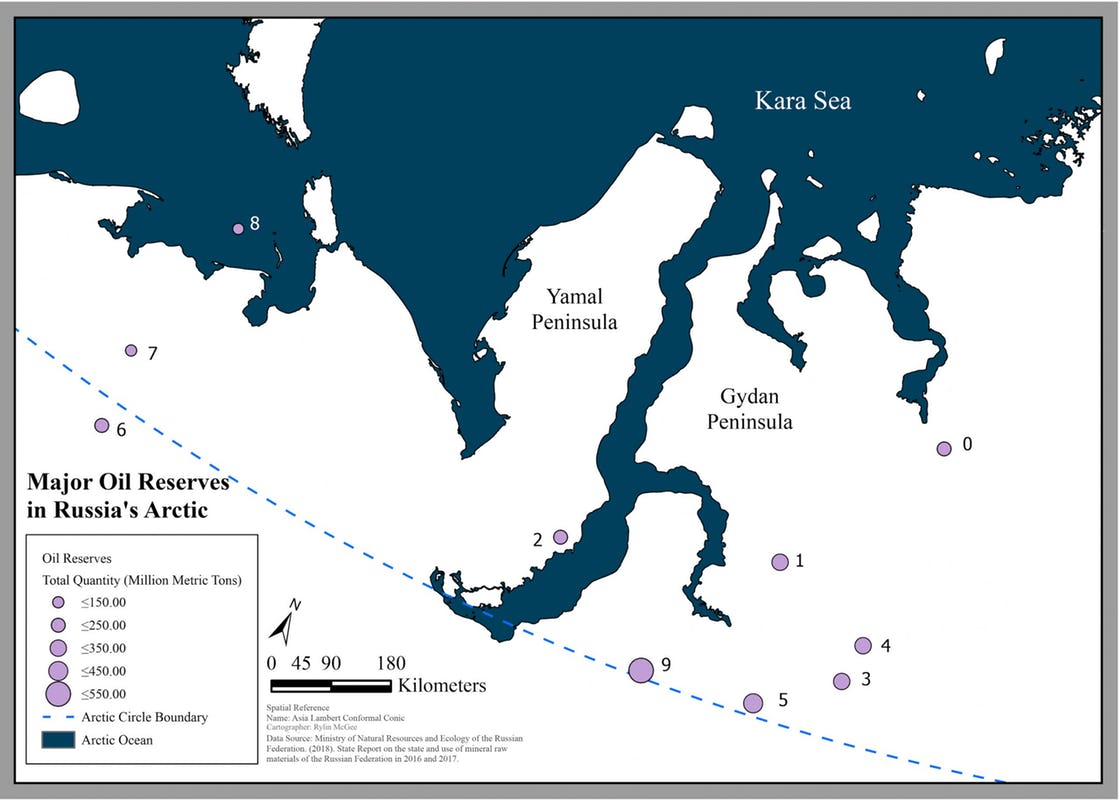
Map of major oil reserves in Russia’s Arctic (2016-17)
Rylin McGee | The Arctic Institute Major oil fields in Russia’s Arctic are mapped throughout the West Siberian Arctic (Figure 1).

Concurrent with changing global temperatures, Russian President Vladimir Putin used the Fifth International Arctic Forum as a platform to announce Russia’s intentions to continue expanding its network of fossil fuel activity. Over the next decade and a half, Russia’s Arctic development strategy will focus on expanding fossil fuel extraction in Russia’s Arctic regions and developing the Northern Sea Route as a primary means of distributing extracted hydrocarbons to market.6)‘Soveshhanie po voprosam razvitija Arktiki [Arctic development meeting]’ (2015) Pravitel’stvo Rossii [Russian Government] 18 December. http://government.ru/news/35056/. Accessed on 1 July 2019 In particular, Russia’s resource distribution network and centralized state control play key roles linking local production to global consumption. Specifically, Russia relies on over 10,000 kilometers of pipeline and its re-emerging Northern Sea Route (NSR) to bring Arctic hydrocarbons to consumers in the  East and West.7)Stephenson S and Agnew J (2015) ‘The work of networks: Embedding firms, transport and the state in the Russian Arctic oil and gas sector.’ Environment and Planning A, 48(3), 558-576. As warming temperatures create ice-free or weakened ice corridors, the NSR has increasingly allowed Russia to realize its Arctic economic potential (Figure 5).8)Melia N, Haines K, Hawkins E (2016) ‘Sea ice decline and 21st century trans-Arctic shipping routes.’ Geophysical Research Letters, 43(18), 9720-9728. In 2019, the volume of traffic shipped by nuclear icebreakers on the NSR reached 30.28 million tons.9)‘Rosatomflot summed up 2019 operation results’(2020) Rosatom, 16 January, http://rosatom.ru/en/press-centre/news/rosatomflot-summed-up-2019-operations-results/ Accessed on 29 January 2020 With increased infrastructural and technological investment, Russia seeks to reach 80 million tons by 2024.10)Putin V (2019) ‘Plenary session of the 5th International Arctic Forum.’ 9 April, ExpoForum Exhibition and Convention Center, St. Petersburg. http://en.kremlin.ru/events/president/news/60250 Accessed on 1 July 2019 To complement such growth, Russia also plans to operate thirteen heavy-duty linear icebreakers by 2035, nine of which will be nuclear powered.11)Putin V (2019) ‘Plenary session of the 5th International Arctic Forum.’ 9 April, ExpoForum Exhibition and Convention Center, St. Petersburg. http://en.kremlin.ru/events/president/news/60250 Accessed on 1 July 2019

Graph of Russia’s major Arctic oil fields and volume of recoverable reserves (2016-17)
Rylin McGee | The Arctic Institute Graph detailing the total volume of recoverable reserves of major oil fields in the Russia’s Arctic (Figure 2).

While investment in Arctic ports, infrastructure and technology allow Russia to expand its fossil fuel distribution network, dynamic geographic factors and environmental conditions such as climate, sea ice, sea levels, permafrost and remoteness also influence Russia’s Arctic hydrocarbon landscape and emerge as key constraints to fossil fuel development at local, national and global scales. Thus, such factors must also be considered when attempting to understand the spatial network of Russia’s developing Arctic hydrocarbon landscape. With large implications for the global environment and international markets, it is important to understand the current state of the Russian Arctic oil and gas industry. However, doing so requires us to consider the multidimensional and spatially-embedded series of networks which define Russia’s Arctic hydrocarbon development activities. Building upon Stephenson and Agnew’s (2015) work12)Stephenson S and Agnew J (2015) ‘The work of networks: Embedding firms, transport and the state in the Russian Arctic oil and gas sector.’ Environment and Planning A, 48(3), 558-576. discussing Russia’s Arctic oil and gas sector in relation to network theory, the maps below provide visual representations of Russia’s Arctic fossil fuel network and reveal the spatial configuration of the region’s development activity, as well as how the interaction between local, regional, and global fossil fuel networks are both territorial and trans-boundary in nature. 

Oil & Gas: The primary data source used in the creation of Figures 1-6 was the Russian Ministry of Natural Resources “State report on the use and state of raw materials of the Russian Federation,”13)Ministry of Natural Resources and Ecology of the Russian Federation (2018) State Report on the state and use of mineral raw materials of the Russian Federation in 2016 and 2017. https://bit.ly/37zaeht. Accessed on March 1 2019 which provided a catalog of Russia’s major oil and natural gas fields and data on the total estimated volume of oil and gas reserves at each field site, as well as project information provided by Gazprom14)‘Proekty [Projects]’ (2019) Gazprom. http://www.gazprom.ru/projects/ Accessed on 1 July 2019 and Novatek15)‘Nashi aktivy [Our assets]’ (2019) Novatjek. http://www.novatek.ru/ru/business/assets/ Accessed on 1 July 2019. Occasionally, external news articles, videos and maps were cross-referenced, validating findings. 
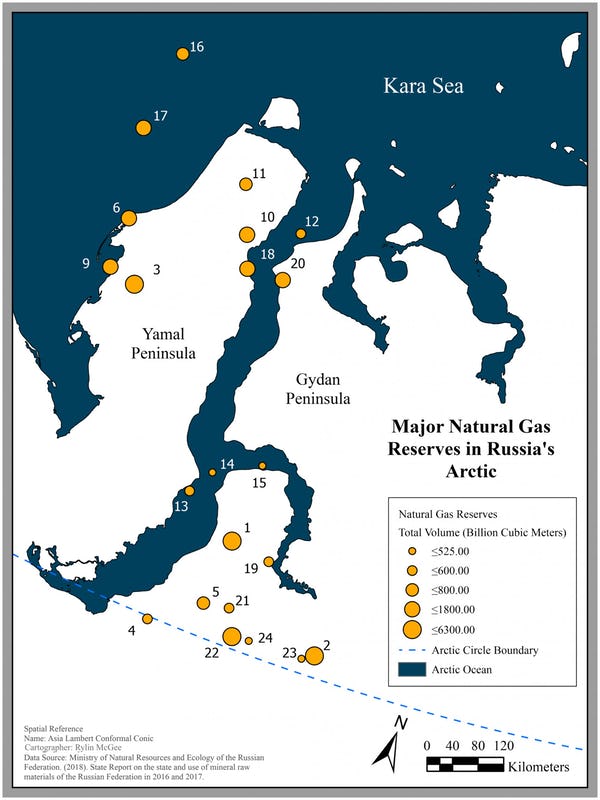
Map of major natural gas reserves in Russia’s Arctic (2016-17)
Rylin McGee | The Arctic Institute Major natural gas fields are mapped on the Yamal and Gydan Peninsulas, the epicenters of Russia’s Arctic hydrocarbon development (Figure 3).

Pipelines & NSR: This research focused only on Arctic pipelines, which will play a critical role in Russia’s fossil fuel development strategy. These pipelines were mapped by digitizing and georeferencing imagery provided by Gazprom16)‘Proekty [Projects]’ (2019) Gazprom. http://www.gazprom.ru/projects/ Accessed on 1 July 2019 For fields relying on the NSR to ship hydrocarbons to market, McGee analyzed project information provided by Gazprom17)‘Proekty [Projects]’ (2019) Gazprom. http://www.gazprom.ru/projects/ Accessed on 1 July 2019, Novatek18)‘Nashi aktivy [Our assets]’ (2019) Novatjek. http://www.novatek.ru/ru/business/assets/ Accessed on 1 July 2019 and the Russian media, as well as data from Russian state-owned company Rosatom.19)Ruksha V (2019) ‘Development of Arctic Icebreaking Fleet to Provide Navigation in the Russian Arctic.’ Arctic Frontiers Conference. Clarion Hotel The Edge, Tromsø, 24 January 2019. The World Port Index20)National Geospatial Intelligence Agency (2019) World Port Index Database, geospatial dataset. Maritime Safety Information. https://msi.nga.mil/NGAPortal/MSI.portal?_nfpb=true&_pageLabel=msi_portal_page_62&pubCode=0015. Accessed on 1 March 2019 was used to geolocate Russian ports used to transport Arctic hydrocarbons, as well as Google Earth Imagery for identifying ports not included in the index. Some smaller Arctic oil and gas fields and local pipelines were not included in the analysis.
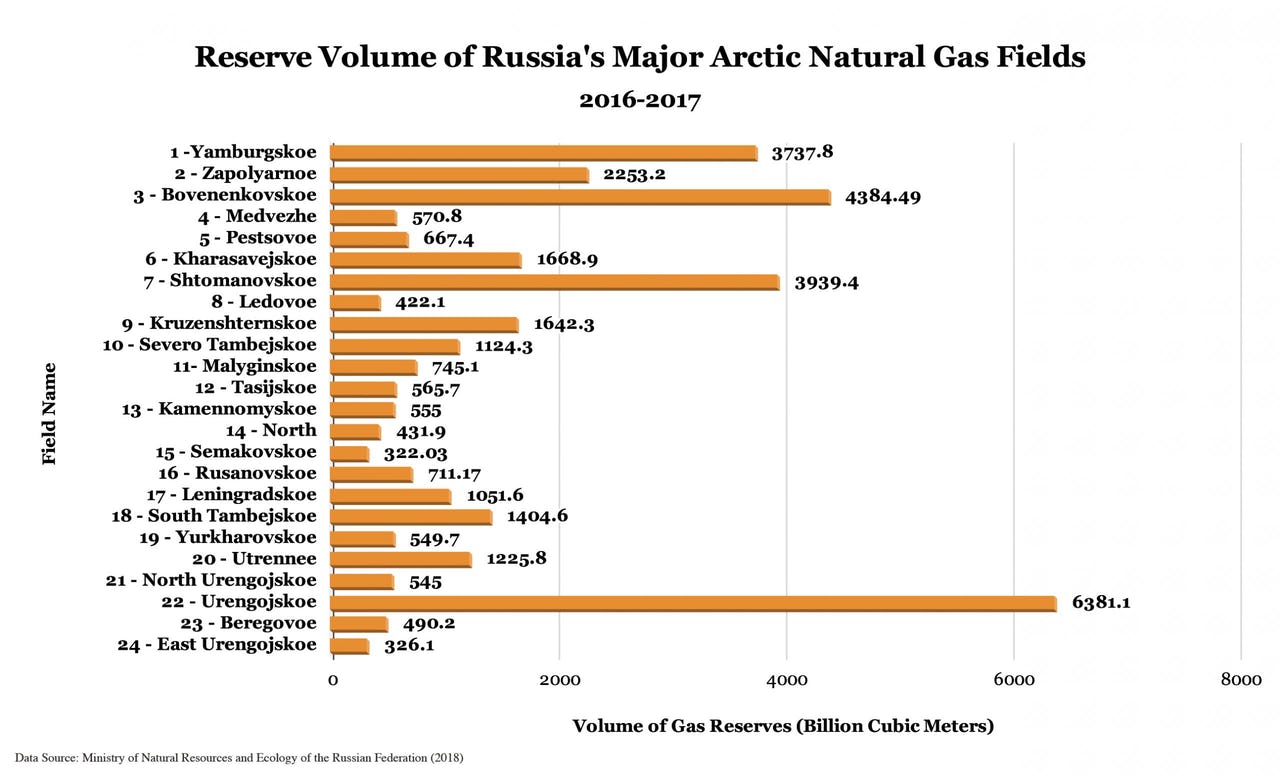
Graph of Russia’s major Arctic natural gas fields and volume of recoverable reserves (2016-17)
Rylin McGee | The Arctic Institute Graph detailing major natural gas fields in Russia’s Arctic and the total volume of recoverable reserves in each field (Figure 4).

Permafrost & Sea Ice: McGee downloaded sea ice extent data directly from the National Snow & Ice Data Center21)Fetterer F, Knowles K, Meier W et al. (2017) Sea Ice Index, Version 3. Sea Ice Extent. Boulder, Colorado USA: National Snow and Ice Data Center and permafrost extent data from the Russian Academy of Science.22)Stolbovoi V and McCallum I (2002) ‘Land Resources of Russia.’ Laxenburg, Austria: International Institute for Applied Systems Analysis and the Russian Academy of Science. https://webarchive.iiasa.ac.at/Research/FOR/russia_cd/guide.htm. Accessed on 1 March 2019

Territory and Network Dynamics 

Mapping Russian Arctic hydrocarbon development reveals the multiscalar and multidimensional character of the industry’s various networks, as well as the dynamic interplay existing between territory and network. Specifically, Figures 1 and 3 reveal the spatial embeddedness of Russia’s Arctic upstream fossil fuel activities, in which resources and local extractive firms are grounded and dependent upon the availability of accessible, resource-rich sites centrally located on the Yamal and Gydan peninsulas. In this context, Arctic hydrocarbon development is contingent upon regional availability, thus taking on a fixed territorial character.23)Zimmerbauer K (2014) ‘Constructing peripheral cross-border regions in planning: territory-network interplay in the Barents region.’ Environment and Planning A, 46(11), 2718-2734. However, Figure 5 also reveals how Russia’s Arctic hydrocarbon industry transcends boundaries to operate in a fluid and relational sense, as transportation and distribution networks connect local and regional resources to global markets.24)Zimmerbauer K (2014) ‘Constructing peripheral cross-border regions in planning: territory-network interplay in the Barents region.’ Environment and Planning A, 46(11), 2718-2734. Physical infrastructure including Arctic pipelines, shipping ports, oil and gas tankers, icebreakers and the NSR (Figures 5 and 6) all uphold larger global production networks, linking localized economies to agglomerate ones and are therefore critical to network connectivity.25)Stephenson S and Agnew J (2015) ‘The work of networks: Embedding firms, transport and the state in the Russian Arctic oil and gas sector.’ Environment and Planning A, 48(3), 558-576.

Spatial Embeddedness and Changing Environmental Conditions 
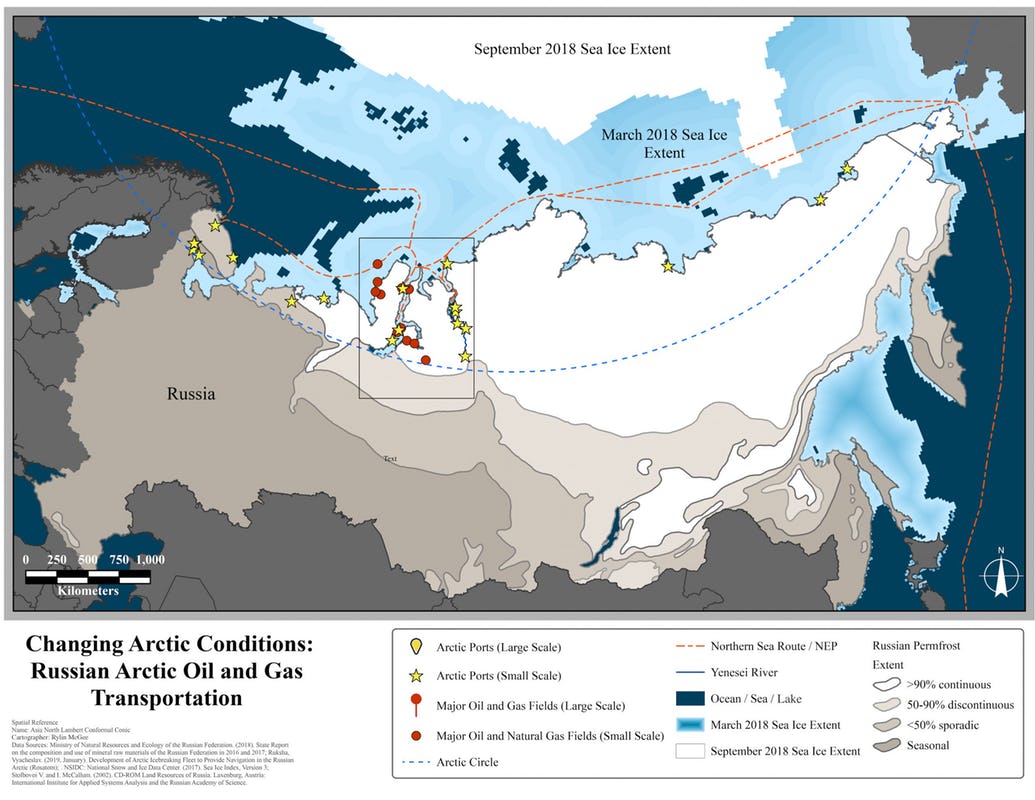
Map of Russia's NSR, oil and gas fields and changing environmental conditions
Rylin McGee | The Arctic Institute Russia’s 2002 permafrost extent and 2018 summer and winter (September and March) sea ice extent are mapped alongside Russia’s Northern Sea Route (Figure 5).

Visualizing Russia’s Arctic fossil fuel development scheme reveals its spatially-embedded character, as changing Arctic environmental conditions such as permafrost thaw, melting sea ice extent, and rising sea levels closely influence the direction and development of regional activities (Figure 5). According to the Arctic Climate Impact Assessment (ACIA) program, the area of permafrost in the northern hemisphere will decrease 10 to 18% by 2030; 15 to 25% by 2050; and 25 to 50% by 2080 due to climate change.26)Pavlenko V I and Glukhareva E K (2010) ‘Environmental changes and the economic growth in regions of the Russian Arctic.’ Studies on Russian Economic Development, 21(2): 158-164. This means normally frozen regions will begin to thaw and recede, increasing the risk of accidents involving hydrocarbon infrastructure built in permafrost regions. As shown in Figure 6, many pipelines in Russia’s Arctic are built on full or partial permafrost zones, making them susceptible to soil expansion and recession and thus damage with high repair costs and extensive environmental impacts. Here, the stability of Arctic pipelines and Russia’s ability to connect local resources to global and primarily Western markets will be heavily influenced by future permafrost conditions. Sea ice conditions, which vary on seasonal bases, also pose a challenge. While state-owned corporation Rosatom will develop icebreakers to support Russia’s targets for NSR export volumes, current conditions and sea ice variability render investment by many shipping firms unprofitable, due to limited navigability windows, icebreaker fees, insurance costs and other economic factors associated with Arctic maritime operations.27)Yumashev D, van Hussen K, Gille J, Whiteman G (2017) ‘Towards a balanced view of Arctic shipping: Estimating economic impacts of emissions from increased traffic on the Northern Sea Route.’ Climatic Change, 143(1-2), 143-155. Further, sea level rise in coastal regions presents the risk of erosion and flood damage, threatening infrastructure and key ports. Thus, the functioning of Russia’s primary means of distributing LNG to eastern markets depends upon the ability of infrastructure and technology including tanker terminals, nuclear icebreakers and Arctic ports to withstand and overcome environmental factors. Figure 5 reveals the degree to which Russia’s NSR is embedded in and contends with this changing environment. 
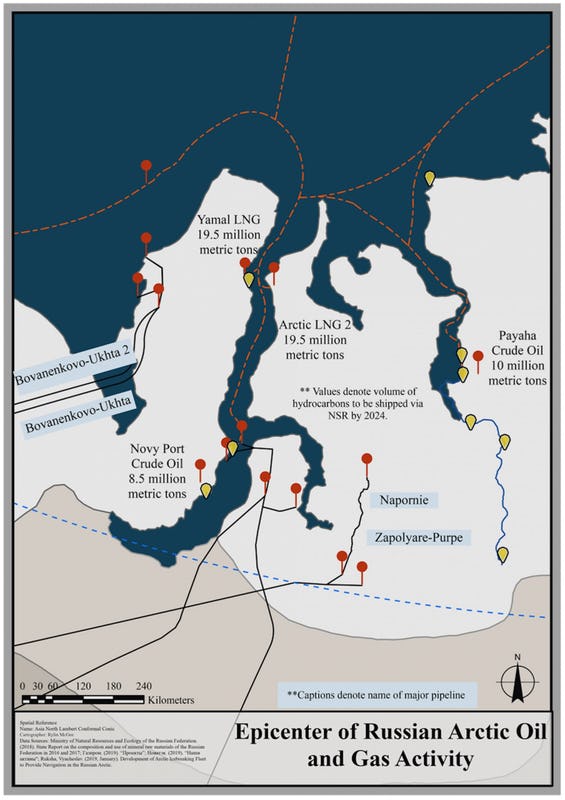
Map of the epicenter of Russia's Arctic oil and gas activity
Rylin McGee | The Arctic Institute Hydrocarbon distribution networks on the Yamal and Gydan Peninsulas (Figure 6).

Russia’s hydrocarbon and NSR development scheme also exacerbates the very environmental changes which influence the realization of such ventures. Locally, emissions from shipping including black carbon intensify warming effects in already climate-sensitive Arctic regions, and the global consumption of Russian fossil fuels will intensify climate change impacts in regions extending beyond the Arctic.28)Yumashev D, van Hussen K, Gille J, Whiteman G (2017) ‘Towards a balanced view of Arctic shipping: Estimating economic impacts of emissions from increased traffic on the Northern Sea Route.’ Climatic Change, 143(1-2), 143-155. Therefore, Russia’s Arctic fossil fuel development scheme (Figures 1-6) must also be considered in relation to the geographic redistribution of emissions which will occur within the global fossil fuel network, as well as in relation to the resulting climate-induced economic costs and opportunities which will arise across the globe as a result.29)Yumashev D, van Hussen K, Gille J, Whiteman G (2017) ‘Towards a balanced view of Arctic shipping: Estimating economic impacts of emissions from increased traffic on the Northern Sea Route.’ Climatic Change, 143(1-2), 143-155.

Conclusion

Viewing each map in relation to one another, Russia’s Arctic fossil fuel resources, infrastructure, transportation schemes, and environmental conditions interact with one another to form a complex series of networks which will continue to establish themselves in Russia’s Arctic and beyond, especially as the state continues to invest in the fossil fuel industry. In particular, Russia’s Arctic development strategy will stimulate investment in physical, midstream fossil-fuel distribution infrastructure and strengthen the connection between both local and global economies, as well as upstream and downstream fossil fuel activity. This in turn reinforces the connection between political and spatial networks. Thus, as Stephenson and Agnew30)Stephenson S and Agnew J (2015) ‘The work of networks: Embedding firms, transport and the state in the Russian Arctic oil and gas sector.’ Environment and Planning A, 48(3), 558-576. underscore, the dynamism of political, social and physical geographies surrounding the Arctic extractive industry will continue to change the future functioning of networks embedded within them, especially as Russia continues to expand its fossil fuel economy in a warming world.

References[+]

References
↑1 NOAA (2018) ‘Arctic Report Card: Update for 2018.’ Report for the NOAA Arctic Program. https://arctic.noaa.gov/Report-Card/Report-Card-2018/ArtMID/7878/ArticleID/771/2018-Headlines. Accessed on 1 August 2019
↑2 Box J, Colgan W, Christensen T,  Schmidt N, Lund M, Parmentier F, . . . Romanovsky V (2019) ‘Key indicators of Arctic climate change: 1971-2017.’ Environmental Research Letters, 14(4), 1-18
↑3 Ministry of Natural Resources and Ecology of the Russian Federation (2018) State Report on the state and use of mineral raw materials of the Russian Federation in 2016 and 2017. https://bit.ly/37zaeht. Accessed on March 1 2019
↑4 Kazanin A (2019) ‘Strategicheskie prioritety i vyzovy razvitie neftegazovogo sektora Arkticheskoj zony RF [Strategic priorities and challenges of the Russian Arctic zone oil and gas industry].’ Prostranstvennaja Jekonomika [Spatial Economics], 15(2), 169-185.
↑5, ↑7, ↑12, ↑25, ↑30 Stephenson S and Agnew J (2015) ‘The work of networks: Embedding firms, transport and the state in the Russian Arctic oil and gas sector.’ Environment and Planning A, 48(3), 558-576.
↑6 ‘Soveshhanie po voprosam razvitija Arktiki [Arctic development meeting]’ (2015) Pravitel’stvo Rossii [Russian Government] 18 December. http://government.ru/news/35056/. Accessed on 1 July 2019
↑8 Melia N, Haines K, Hawkins E (2016) ‘Sea ice decline and 21st century trans-Arctic shipping routes.’ Geophysical Research Letters, 43(18), 9720-9728.
↑9 ‘Rosatomflot summed up 2019 operation results’(2020) Rosatom, 16 January, http://rosatom.ru/en/press-centre/news/rosatomflot-summed-up-2019-operations-results/ Accessed on 29 January 2020
↑10 Putin V (2019) ‘Plenary session of the 5th International Arctic Forum.’ 9 April, ExpoForum Exhibition and Convention Center, St. Petersburg. http://en.kremlin.ru/events/president/news/60250 Accessed on 1 July 2019
↑11 Putin V (2019) ‘Plenary session of the 5th International Arctic Forum.’ 9 April, ExpoForum Exhibition and Convention Center, St. Petersburg. http://en.kremlin.ru/events/president/news/60250 Accessed on 1 July 2019
↑13 Ministry of Natural Resources and Ecology of the Russian Federation (2018) State Report on the state and use of mineral raw materials of the Russian Federation in 2016 and 2017. https://bit.ly/37zaeht. Accessed on March 1 2019
↑14 ‘Proekty [Projects]’ (2019) Gazprom. http://www.gazprom.ru/projects/ Accessed on 1 July 2019
↑15 ‘Nashi aktivy [Our assets]’ (2019) Novatjek. http://www.novatek.ru/ru/business/assets/ Accessed on 1 July 2019
↑16, ↑17 ‘Proekty [Projects]’ (2019) Gazprom. http://www.gazprom.ru/projects/ Accessed on 1 July 2019
↑18 ‘Nashi aktivy [Our assets]’ (2019) Novatjek. http://www.novatek.ru/ru/business/assets/ Accessed on 1 July 2019
↑19 Ruksha V (2019) ‘Development of Arctic Icebreaking Fleet to Provide Navigation in the Russian Arctic.’ Arctic Frontiers Conference. Clarion Hotel The Edge, Tromsø, 24 January 2019.
↑20 National Geospatial Intelligence Agency (2019) World Port Index Database, geospatial dataset. Maritime Safety Information. https://msi.nga.mil/NGAPortal/MSI.portal?_nfpb=true&_pageLabel=msi_portal_page_62&pubCode=0015. Accessed on 1 March 2019
↑21 Fetterer F, Knowles K, Meier W et al. (2017) Sea Ice Index, Version 3. Sea Ice Extent. Boulder, Colorado USA: National Snow and Ice Data Center
↑22 Stolbovoi V and McCallum I (2002) ‘Land Resources of Russia.’ Laxenburg, Austria: International Institute for Applied Systems Analysis and the Russian Academy of Science. https://webarchive.iiasa.ac.at/Research/FOR/russia_cd/guide.htm. Accessed on 1 March 2019
↑23, ↑24 Zimmerbauer K (2014) ‘Constructing peripheral cross-border regions in planning: territory-network interplay in the Barents region.’ Environment and Planning A, 46(11), 2718-2734.
↑26 Pavlenko V I and Glukhareva E K (2010) ‘Environmental changes and the economic growth in regions of the Russian Arctic.’ Studies on Russian Economic Development, 21(2): 158-164.
↑27, ↑28, ↑29 Yumashev D, van Hussen K, Gille J, Whiteman G (2017) ‘Towards a balanced view of Arctic shipping: Estimating economic impacts of emissions from increased traffic on the Northern Sea Route.’ Climatic Change, 143(1-2), 143-155.
Business and Economics, Multimedia, Natural Resources and Energy, Russia
Newer
Older

Latest Articles
  • A Retrospective of The Arctic Institute’s Archive

    A Retrospective of The Arctic Institute’s Archive

    This article analyzes changes in The Arctic Institute’s publications from …Read More »
  • Uncomfortable Inuk: Exploring Inuit Qaujimajatuqangit (Traditional Knowledge)

    Uncomfortable Inuk: Exploring Inuit Qaujimajatuqangit (Traditional Knowledge)

    The Nunavut Government must work to strengthen the bridge between …Read More »
  • Nunami Ilinniarniq: Inuit Community Control of Education through Land-based Education

    Nunami Ilinniarniq: Inuit Community Control of Education through Land-based Education

    Rather than fitting Inuit life into schools, Canada needs to …Read More »
  • Announcing Lillian Hussong as Interim Managing Director of The Arctic Institute

    Announcing Lillian Hussong as Interim Managing Director of The Arctic Institute

    The Arctic Institute is happy to announce that Lillian Hussong …Read More »
  • Holding Hope and Grieving Loss in the New Normal of Arctic Climate Change

    Holding Hope and Grieving Loss in the New Normal of Arctic Climate Change

    While extreme temperatures were once extraordinary, they are now part …Read More »
About Us
The Arctic Institute is a 501(c)3 tax exempt nonprofit organisation with a network of researchers across the world.

About Us
Donate
The Arctic Institute’s research and capacity building projects help make the Arctic a more secure, just, and sustainable place.

Donate Today
Newsletter
Get a weekly rundown of the Arctic’s top stories by subscribing to the Institute’s newsletter: The Arctic This Week.

Subscribe

© The Arctic Institute, 2021. All rights reserved. Privacy Policy.

THIS SITE USES COOKIES TO IMPROVE YOUR USER EXPERIENCE.CLOSEPRIVACY POLICY