The Arctic Institute's 2026 Japan Series: An Introduction
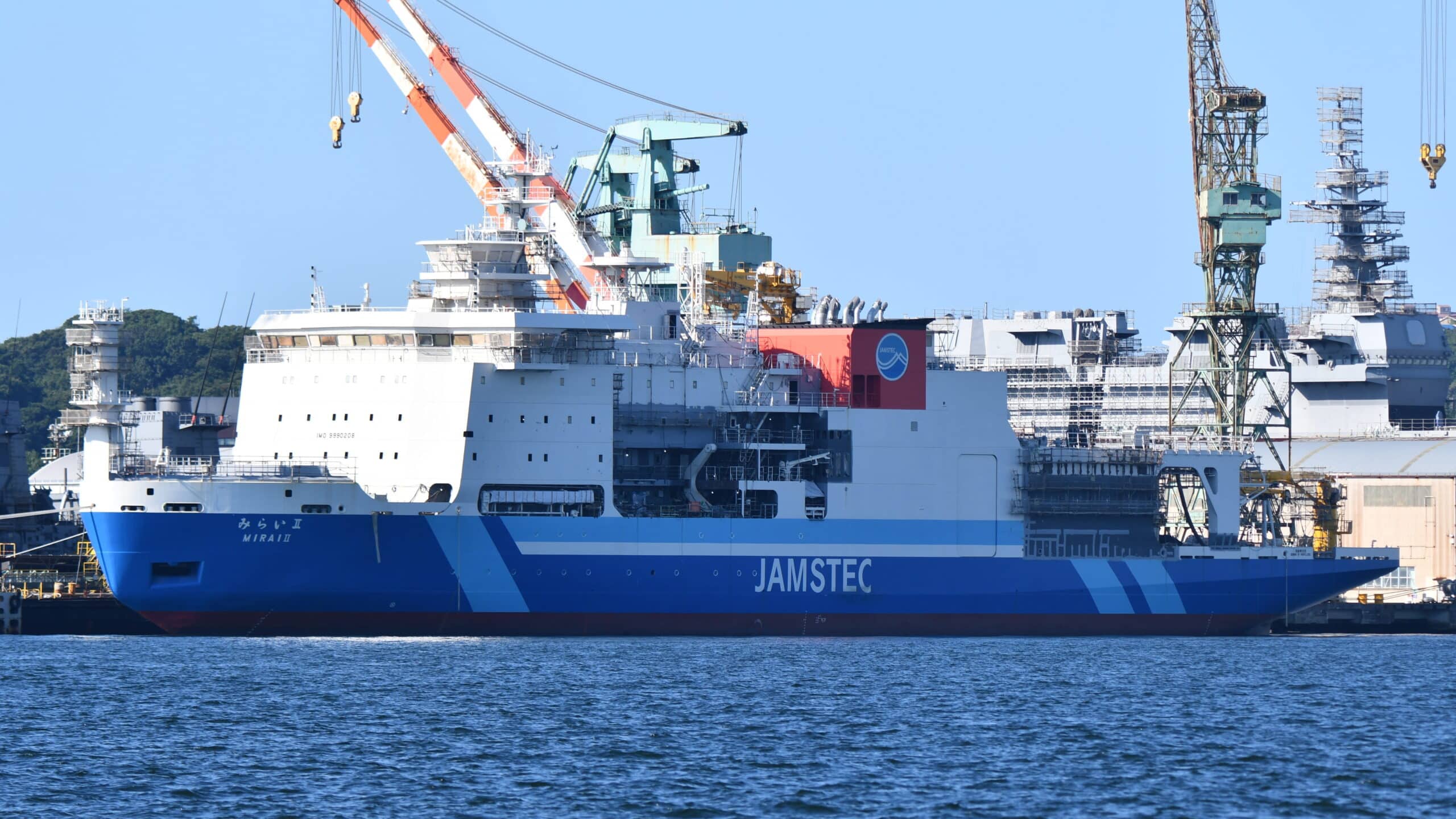
Japan’s first Polar Class 4 Arctic research vessel Mirai II at JMU Isogo Shipyard in Yokohama in July 2025. Photo: Hunini
The Arctic Institute Japan Series 2026
Although it is a non-Arctic nation, Japan has never been absent from the Arctic story. Long before the effects of climate change began to transform the region into a space of strategic anticipation, Japan’s economic, scientific, and geopolitical interests were already reaching northward. Yet one cannot help but detect a tangible and relatively recent shift in how the region is portrayed and discussed both within Japan and among Japan watchers. What has changed is not Tokyo’s curiosity about the Arctic but the stakes attached to it. Climate-driven accessibility, accelerating resource competition, technological innovation, rising tensions, and the growing overlap between Arctic and Indo-Pacific security dynamics have transformed a region that, for lack of a better word, became peripheral in the post–Cold War era into a consequential one. The Arctic Institute’s 2026 Series Japan in the Arctic begins from that premise: that Japan’s Arctic engagement is no longer a niche policy domain but a revealing lens through which to examine how a middle power navigates systemic uncertainty, alliance politics, and long-term strategic hedging and risk management.
The series opens with Barry Scott Zellen’s historical overview of Japan’s role and presence in the Arctic helping readers to reimagine and/or contextualise this non-Arctic nation’s engagement with the Arctic as a conversation between past and present: a long memory of northern reach and a newer, more deliberate policy practice shaped by climate-driven accessibility and intensifying great-power rivalry. In other words, Zellen’s chapter offers the necessary historical vantage for readers to anchor their understanding of Japan’s role and interests in the Arctic. By tracing Japan’s nineteenth- and twentieth-century northern presence — from fisheries and whaling to the episodic projection of power in the North Pacific and the contested legacy of the Kuril Islands — Zellen reminds readers that Japan’s “Arcticness” is not a contemporary invention but an old strategic identity reasserting itself in a changed environment. His account frames the series by showing how geography, memory, and unresolved territorial disputes condition Tokyo’s contemporary sensitivity to developments in the Arctic.
Building on that historical foundation, Hajime Kimura turns to how Japan now makes Arctic policy. Kimura’s sweeping institutional account demonstrates that Japan’s Arctic posture has matured through iterative planning and inter-ministerial coordination: science diplomacy, R&D collaboration, international cooperation, and sustainable development were the pillars that emerged after Japan gained observer status in 2013, and have since been recalibrated under successive Basic Plans on Ocean Policy. Kimura’s narrative explains why Japan’s choices look cautious rather than maximalist by diligently demonstrating that the policy apparatus in Japan privileges scientific credibility, legal norms, and contingency planning over abrupt commercial gambits. The deployment of Mirai II and the decision to prioritise information-gathering and navigational safety, Kimura argues, are emblematic of a strategy intent on preserving influence through capability and governance rather than force and/or display of hard power.
From Kimura’s account on institutional architecture the series then moves into the operational and commercial mechanisms that translate Tokyo’s intent into presence. Fangda Yu examines Japan’s state–corporate ecosystem — the financial scaffolding of Mitsui and JOGMEC, the operational role of MOL, and the informational contributions of JAXA — to show how a narrow set of actors sustains Japan’s Arctic engagement. Yu exposes a structural tension: tightly coordinated institutions can deliver steady, verifiable contributions, yet concentrating fiscal, operational, and informational risk within a few entities also creates brittle dependencies. Complementing that perspective, Viktor Šimov applies a developmental-state lens to energy policy. Šimov recounts how public–private consensus drove Japanese investments in Russian projects before explaining how the 2022 war in Ukraine has both complicated and opened space for a strategic recalibration in Tokyo’s energy sourcing.
Picking up on the role of Russia, and Russian energy, in Japan’s Arctic strategy, Pavel Devyatkin’s commentary places Russia squarely at the centre of Tokyo’s calculus. For Devyatkin, Moscow’s control of the Northern Sea Route and its centrality to Arctic energy make it simultaneously indispensable and disquieting. As Devyatkin explains, Japanese companies’ stakes in Sakhalin and Arctic LNG projects coexist with rising anxiety over Sino-Russian alignment; a state of affair that has complicated, and will likely continue to do so, strategic deliberations in Tokyo. This uneasy balance — economic pragmatism entangled with strategic caution — is a through-line in multiple chapters of the series and surfaces a central contradiction in Japan’s Arctic posture: continued commercial ties with Russia amid a public-facing security realignment with Western partners.
The security logic that has started to inflect Japan’s Arctic thinking is examined in two complementary articles. Khang Pham maps how the Free and Open Indo-Pacific (FOIP) vision is being extended northwards. Pham asserts that Tokyo now treats the Arctic as a natural extension of its maritime order agenda: rule of law, connectivity, and open seas. Magnus Aander then connects that broad strategy to partnership opportunities with the Nordic states. Aander emphasises that the Arctic is a bridge between the Euro-Atlantic and Indo-Pacific theatres and that closer Japan–Nordic alignment could yield mutual benefits in surveillance, undersea infrastructure, and deterrence of gray-zone activities. Yet, he cautions that institutional paralysis and the need to balance ties with Washington complicate deeper cooperation.
Practical instruments of that cooperation are the focus of Giulia Saccone’s analysis of Japan–Canada relations and Juha Saunavaara’s commentary on trans-Arctic cables. Saccone portrays science diplomacy as a low-risk, high-value entry point for bilateral cooperation with Canada: jointly produced data can support legal submissions, improve navigation safety, and create pathways to deeper strategic alignment. Saunavaara, by contrast, turns attention to the political economy of connectivity: undersea cables offer resilience and shorter routes, but private-sector reticence over profitability and the multiplicity of European stakeholders have left EU–Japan cooperation tentative. Together, Saccone and Saunavaara highlight a recurring practical lesson for Tokyo: scientific credibility and legal engagement open doors, but infrastructure projects require clearer public–private resolve.
Finally, Riccardo Villa and Jakob Ranglin Grissler close the thematic cases by showing how disaster risk reduction (DRR) functions as a diplomatic instrument. Their study reframes DRR as more than humanitarian practice. Rather, they convincingly argue, it is a routine mechanism through which Japan converts technical assistance into institutional legitimacy and long-term governance influence within Arctic forums; a cunning strategy that could serve as a model for other non-Arctic aspirants. More importantly, their argument ties back to Kimura’s observation that Japan prefers steady, capability-based presence as the route to credibility.
Read as a whole, the series reveals a Japan that is neither retreating from the Arctic nor seeking abrupt dominance but rather is pursuing a calibrated posture: leveraging scientific assets, legal norms, and steady public–private coordination to sustain presence and influence. The series also reminds – and in case of many – informs readers of the fragility of arguments that equate Arctiness and decision making rights to territory and geographical proximity. Above all, it exposes persistent contradictions that Japanese lawmakers and strategists seem to be grappling with: between commercial engagement and geopolitical anxiety, between private-sector caution and state interest, and between rules-based rhetoric and pragmatic investments. How these tensions are managed in the years ahead will play a decisive role in shaping whether Japan’s Arctic presence remains that of a reliable middle-power contributor or evolves into a more assertive strategic actor—or something in between. What follows in each article is an attempt to map those pressures in detail and to show the policy choices that will shape Tokyo’s future in a region where geography, governance and great-power politics are converging in new and unpredictable ways.
Nima Khorrami is a Research Associate at The Arctic Institute.