Reimagining Care: Emerging Urban Inuit Models of Health and Wellbeing in Canada
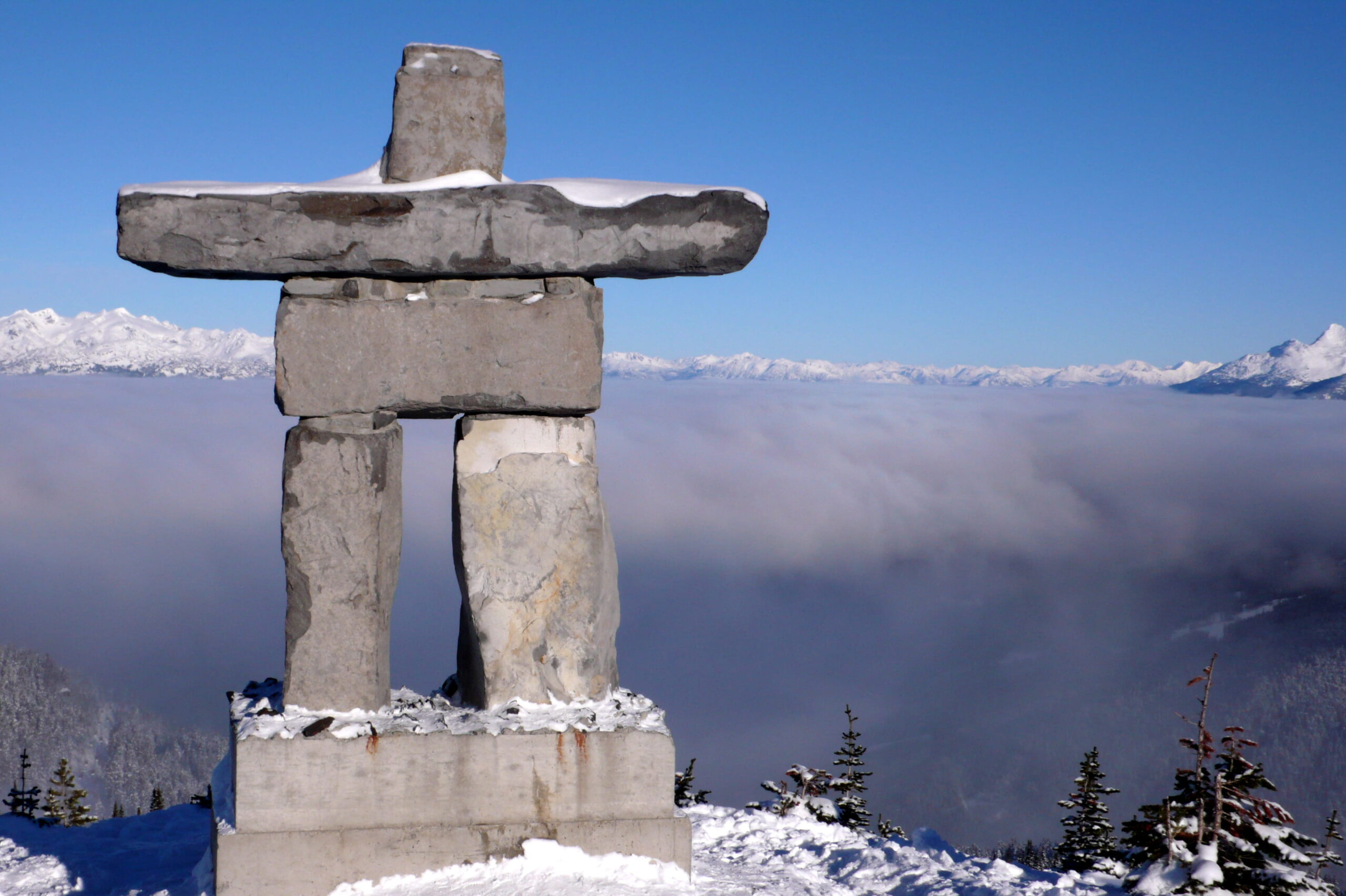
Whistler Peak’s Inukshuk. Photo: John Johnston
Inuit populations living in Canadian urban centres are growing rapidly, yet healthcare systems have struggled to provide care that reflects Inuit experiences, values and understandings of wellbeing. While Inuit continue to experience significant health inequities rooted in historical and ongoing colonial processes, emerging Inuit-led health initiatives are demonstrating alternative approaches to care that centre on self-determination and sovereignty in healthcare. Drawing upon the development of the Qavvivik clinic in Montreal and the Akausivik clinic in Ottawa, this article examines how urban Inuit-centred models of care are being designed and implemented. In doing so, it highlights key principles and practices that may inform the development of culturally appropriate, comprehensive and sustainable healthcare services for Inuit living in urban settings.
Inuit are the original inhabitants of the circumpolar regions, living in Russia, Alaska, Greenland and Canada; despite geographical distances they share a common heritage. However, it should be noted that great variations in culture, language and lived experiences exist both between Inuit from these regions and within.1) Inuit in these regions have distinct experiences of colonialism and continue to embody these impacts, particularly in relation to health and wellbeing. Inuit in Canada have a clear difference in their experiences of colonialism, both in relation to their international counterparts but also in relation to their Canadian Indigenous counterparts (i.e. First Nations, Métis) in that European contact and subsequent colonial intervention came significantly later.2) During the 1950/60s, Inuit in Canada faced forced relocation and settlement, attendance at residential schools, adoption into the wage-based economy and intense bureaucratic control, all in the name of assimilation and strengthening of Canadian sovereignty in the high Arctic.3)
Canadian Inuit face significant social and structural determinants of health in relation to their non-Inuit Canadian counterparts, such as significant household overcrowding, lower high school completion rates, unemployment, food insecurity, lack of access to physicians, infant mortality and median earnings (before tax) less than a third of their non-Inuit counterparts4) all of which are linked to aspects of historical and ongoing colonisation or better termed as coloniality’.5) These inequities compound leading to an average life expectancy that is ten years below Canadians,6) with latest figures showing a widening gap.7) Suicide rates among youth are considered the highest in the world.8) In relation to specific urban social and structural determinants of health, a recent survey in Winnipeg found four out of ten adults are 29 years or younger, 71% live at or below the tax income cutoff (in comparison to 11% of the rest of the population), face significant challenges in employment (with the overall unemployment rate in Winnipeg 7%), 66% have not completed high school, 75% identifying housing as a challenge face racism, frequent interaction with Child and Family Services, lack of accessible culturally safe healthcare, food insecurity and more than seven out of ten have attempted suicide.9)
The COVID-19 pandemic further highlighted Inuit communities’ barriers to accessing healthcare and the importance of other social determinants of health, such as food insecurity and housing-related issues.10)
A Growing Urban Population
Despite originating in the Arctic, urban Inuit populations in Canada are growing. In 2021, just over two-thirds of the population were reported to live in Inuit Nunangat, with the rest living in urban centres.11) Further, the Inuit population residing outside Inuit Nunangat has grown at a significantly faster pace than within the Inuit homelands.12) It is important to note that Statistics Canada has faced criticism regarding the reliability of its data collection methods in this context. However, no other data sets exist on this topic.13)
In 2024, the first study to map Inuit accessing health services in Manitoba suggested that the population in the province is an estimated 1500 people, with 65 percent residing in Winnipeg. The study notes that this may be an underestimation due to methods used, but there is currently no systematic data collection to keep track of Inuit in Manitoba.14) The Southern cities of Edmonton, Winnipeg, Montréal, Ottawa and St John’s have seen rising numbers of Inuit due to historical and current mobility patterns related to seeking healthcare, educational and economic opportunities.15) As a result of patient referral processes between Northern and Southern Canada, and a lack of healthcare infrastructure in Northern Canada, Winnipeg in particular sees a large number of Inuit patients.16) Due to these factors, and a lack of culturally appropriate healthcare for Inuit in Southern cities, including difficulties navigating healthcare systems, exclusion from services and experiences of racism,17) urban Inuit primary healthcare clinics are being developed in an effort to move towards self-determination and sovereignty within healthcare. This piece draws upon the emergence of two clinics, the Qavvivik clinic in Montreal and the Akausivik clinic in Ottawa, to unpack their types and practices of healthcare and showcase the models and frameworks of culturally appropriate Inuit based care they provide.
Akausivik clinic, Ottawa
Ontario has an estimated 200 family health clinics, five of which take a pan-Indigenous focus: the Akausivik clinic being the only Inuit-centric one.18) Located in an accessible neighbourhood for the Ottawa Inuit community, the Akausivik Inuit family and health clinic in Ottawa offers primary health care, including a COVID clinic, acute and urgent care, and mental health services for Inuit.19) When registering at the Akausivik clinic, a case manager and interpreter, if needed, ask questions about the individual’s past and present life to understand the physical, mental, and spiritual health needs.20) In 2015, the Akausivik Inuit family health clinic employed five part-time physicians, case managers, and registered nurses, as well as specialists. For example, dentists or paediatricians come into the clinic when needed.21) The clinic is funded through the Ontario Ministry of Health Long Term Care program, with an annual budget of $1.4 million; doctors are paid via salary rather than ‘fee for service’, ensuring that patients receive adequate consultation time.22) Furthermore, the clinic has an outreach team to meet Inuit needing care in Ottawa and meets people coming directly off the plane from the North, if needed.23) One of the directors of the clinic has stated the need for health centres in the North to model their care after the Ottawa-based clinic, voicing that “in the North, you cannot insist on anything to the nurses or you could get accused of being abusive or uncooperative” and that it is “sad to think that Inuit might be better served at the Akausivik clinic than at some community stations in the North.”24) A member of the clinic stated that staff in Akausivik “make an effort to see the person behind the problem – the abuse they may have suffered, the untreated trauma, the depression.”25) Inadequate data around the size of the Ottawa Inuit population has led to challenges for the clinic to gain insufficient funding to support the population, with the Canadian census reporting a lower number than local agencies. Inaccuracies have been suggested due to fluctuation between the North and Ottawa, language barriers on census forms and the lack of differentiation between Indigenous groups in data collection.26)
Qavvivik clinic, Montreal
The Qavvivik Inuit Family and Community Health Centre opened in 2024, and is primarily run by Inuit with on-site physicians selected through a consensus-based process.27) The clinic offers support to individuals with difficulties navigating the wider healthcare system, where advocates can accompany, and advocate for, individuals to external doctor appointments, an Elder support network, provision of country food, support for women in the hospital birthing centre, and those receiving treatment, and recovering, from cancer.28) The clinic obtains funding from Makivvik which is the organisation representing the rights of Inuit under the James Bay and Northern Quebec Agreement.29) Prior to the opening of Qavvivik, the ‘Qanuilirpitaa?’, meaning ‘where are we now’, study was conducted to assist with defining the priorities for and ways to promote health and wellbeing.30) From the results of the study, the IQI model was created to facilitate a model of Inuit health and wellbeing, and to help to frame the actions of the clinic. The three core concepts of the model are: ilusirsusiarniq (state of feeling good in one’s body); qanuinngisiarniq (not feeling bad or impacted by negative aspects); and, inuuqatigiitsianiq (to live harmoniously together).31) Further, the study reported eight determinants of health that are applied through the IQI model: community, identity, family, food, land, knowledge, economy, and services.32)
Reflecting Needs
Healey, critiquing healthcare challenges for Inuit in Nunavut, states while advancements have taken place to engage Inuit in healthcare practices and research, the approach to serve this population has to be “born from [Inuit] perspectives on wellness, from design to the implementation and delivery.”33) Healey further highlights that biomedical practices typically assume that symptoms are purely expressions of underlying disease, contributing to both the medicalisation of lived experiences and natural life processes, such as aging. Therefore, healthcare approaches often undermine patients’ conceptualisations of ‘being well’, their life experiences, and generally fail to support those whose symptoms do not fit into a clear disease category.34) Although there has been a wider global move for ‘holistic’ healthcare practices,35) Inuit understand health and wellbeing through relationships; that is, on an individual and community level, with the land, animals and the spirit world; where ‘illness’ tends to be conceptualised through imbalances or disharmonies of these aspects rather than just relating to physical aspects.36) As such, this approach inherently takes a more strengths-based approach focusing on restoration of balance rather than focusing on bodily deficits.
Today, restoring balance also includes healing from colonially induced traumas.37) Drawing on the lead author’s doctoral work, experience of colonial traumas contributes to intergenerational trauma which interferes with intergenerational communication and is often expressed as anger, violence, abuse and reliance on unhealthy coping mechanisms.38) While engaging in cultural practices,such as spending time on the land, speaking Inuktitut, hunting and consuming traditional foods, are established protective factors for restoring health and wellbeing, much cultural knowledge and practice has not been passed onto youth today, due to forced attendance to residential schools and resulting trauma.39) Therefore, restoring balance is about addressing these cultural elements, healing from trauma through culturally appropriate means as well as addressing the physical downstream markers (such as chronic diseases, life expectancy, suicide rates), through a relationally based epistemology. Addressing social and structural determinants are also integral to maintain wellbeing, for example, but not limited to household overcrowding, racism, food security.
Health and wellbeing could be grounded through the Inuktitut concept of qanuinngitsiarutiksait; referring to the tools for the maintenance of health and wellbeing. This concept encompasses physical, mental, cultural, spiritual, environmental and community-level aspects.40) These elements are somewhat demonstrated by the urban clinics; but the extent of engagement with these aspects is unclear due to the lack of available information. The key point is that what may be seen as ‘programming’ or ‘intervention’ type aspects of health and wellbeing are as important as those addressing ‘disease’. In Alaska, the Nuka Healthcare system demonstrates a model of relational care where patients are termed ‘customer-owners’ and ‘partners’, receiving care that encompasses addressing physical, mental, emotional and spiritual wellbeing through medical, behavioural, dental and traditional approaches.41) Further, through this model of care, overall spending on care has remained low and high employee and customer-owner satisfaction has been reported.42)
With adequate long-term funding and support for those leading and working in the clinic), an urban Inuit-centric clinic could encompass services that are based in Inuit worldview, such as through qanuinngitsiarutiksait, the IQI model and/or wider anchoring in the concepts constituting Inuit Qaujimajatuqangit – commonly referred to as ‘traditional’ knowledge, but more accurately “that which Inuit have known all along.”43) The concepts of Inuit Qaujimajatuqangit are: inuuqatigiitsiarniq (respecting others), tunnganarniq (being welcoming), pijitsirniq (serving), aajiiqatigiinniq (consensus), pilimmaksarniq (mentoring), ikajuqtigiinniq (cooperation), qanuqtuurniq (resourcefulness) and avatittinnik kamatsiarniq (caring for the environment).44) Of course, these concepts embody much more than their bracketed translations. However for ease of the reader the core sentiments have been highlighted. Further, a clinic could provide health and wellbeing services across the life-course, from culturally based prenatal to elderly care, addressing issues of primary care as well as integrating maintaining cultural wellbeing and trauma-informed care. Coordination with regional and territorial providers, and social determinants of wellbeing, could also assist in continuity of care. A ‘patient advocate’ role as provided with the Qavvivik clinic could be incorporated as well as services offered in Inuktitut.
Conclusion
Inuit need to be safe in seeking health and wellbeing services both from those providing care but also in the physical spaces where the outlined aspects that inform an Inuit-specific continuum of care are accessible. Being healthy in this context is not just about conventional medical treatment, but also aspects such as the maintenance of language, consumption of country foods and healing from the past. Ongoing collection of data for evaluation tracking as well as wider publicly available information on already established clinics would also assist in the maintenance of a long-term clinic; however, this requires the establishment of further infrastructure, resourcing and funding. Support for Inuit to access the roles needed to provide this care also needs to be taken into consideration. Lastly, further comprehensive analysis into ways that these clinics can be supported by the federal and provincial authorities should be conducted, both in terms of funding but also legislation. These aspects are easy to solve or implement, however through this piece we hope that further attention is brought to Inuit health and wellbeing, the growing need for urban clinics that can provide long-term services as well as models of care that challenge dominant narratives of approach and worldview.
Overall, the emergence of Inuit-centred urban clinics demonstrates that culturally grounded healthcare is not simply an adaptation of mainstream services, but a fundamentally different approach to supporting health and wellbeing. The examples discussed illustrate the importance of embedding Inuit values, knowledge systems, language, community and trauma-informed practices within service design and delivery. However, the long-term success of such models depends on sustained funding, robust evaluation, workforce development and policy support enabling Inuit leadership across all levels of care. As urban Inuit populations continue to grow, investment in Inuit-led models of care represents not only a response to unmet healthcare needs, but also an important step toward advancing Inuit self-determination, health equity and wellbeing across generations.
Jeevan Toor is a PhD Student at the Institute for Global Health, University College London, and a Research Associate at The Arctic Institute. Joshua Waldman is a third year medical student at the Max Rady College of Medicine, University of Manitoba. Josée G. Lavoie is Dean and professor in the College of Community and Global Health, Rady Faculty of Health Sciences at the University of Manitoba, and past director of Ongomiizwin Research Indigenous Institute of Health and Healing.
References