The Circumpolar Podcast - Critical Minerals in the Arctic
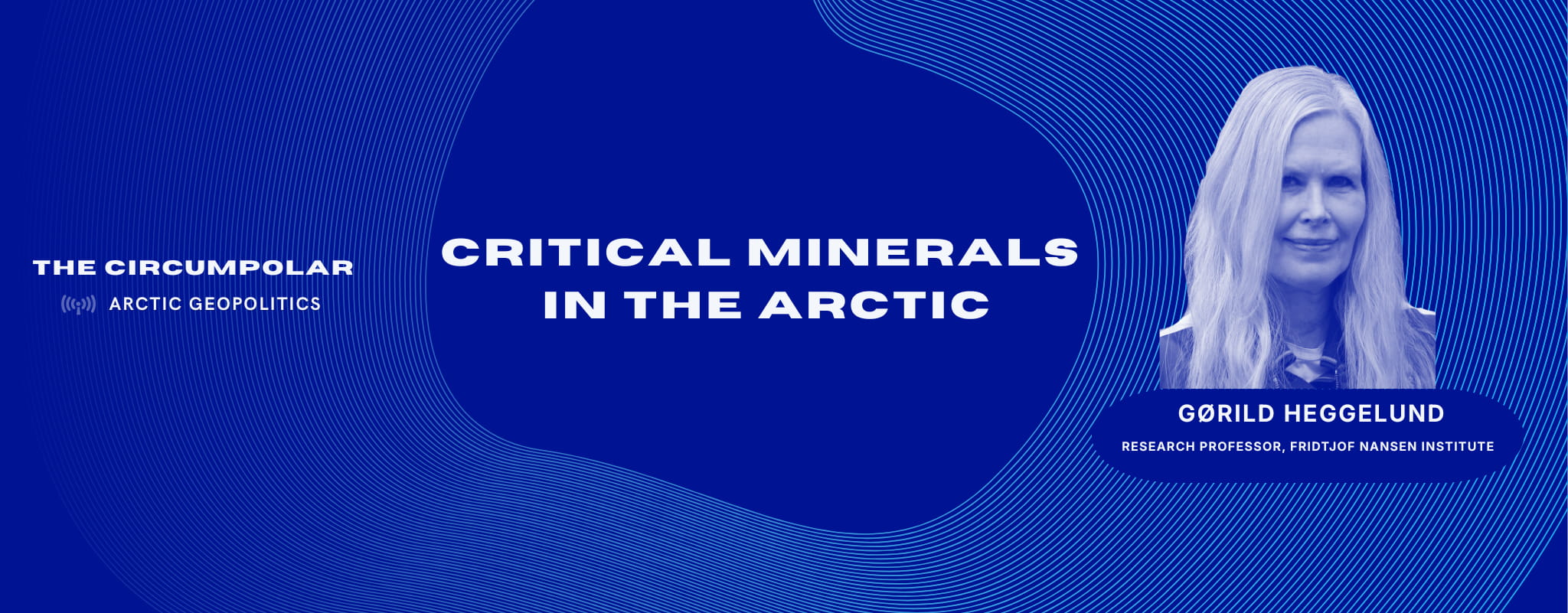
In this episode of The Circumpolar, Serafima Andreeva speaks with Gørild Heggelund about critical minerals in the Arctic. Photo: Serafima Andreeva
The Circumpolar is a podcast on Arctic geopolitics, governance, and security. Created and hosted by Serafima Andreeva, and supported by The Arctic Institute and the Fridtjof Nansen Institute. The podcast brings together leading experts from various fields of Arctic geopolitics and many Arctic and non-Arctic states to unpack key developments, challenge common misconceptions, and discuss the current dynamics of todays changing Arctic.
Critical minerals in the Arctic
The rare earth elements and critical minerals behind the green transition are overwhelmingly controlled by China. That dependence is now pushing the Arctic states to ask whether the north can offer an alternative, and how much they are willing to pay for it.
In the season two finale, Gørild Heggelund, research professor at the Fridtjof Nansen Institute who has studied China longer than most, explains why critical minerals have moved to the top of the agenda now: a green transition that needs new materials, geopolitics that has reached the centre of trade, and a single dominant supplier. China’s lead was built over decades of long-term policy going back to Deng Xiaoping, she argues, while Europe was content to import cheaply and leave the «dirty work» to others. She maps where Arctic extraction actually happens and what it costs, from the relocation of part of Kiruna in Sweden as the ground subsides to Sami communities consulted too late, and from stalled Greenland projects like Kvanefjeld to Norway’s pause on deep sea mining.
China’s export controls on rare earths are a bargaining tool against US tariffs, she argues, but usually a response to American moves, and China restricts supply partly because it needs these minerals for its own transition and security. On Russia and China, drawing on her co-edited work on the two states in the Arctic, she is clear the partnership has limits: they cooperate on energy, from Yamal LNG to Power of Siberia 2, but barely on critical minerals, and Russia is wary of depending on a stronger neighbour. The question she leaves open is whether it should be learning from China, or even cooperating, rather than only trying to cut it out.