Legitimacy is an Arctic Security Asset: What Denmark's Legally Fatherless Greenlanders Reveal about Trust, Sovereignty, and Security in the High North
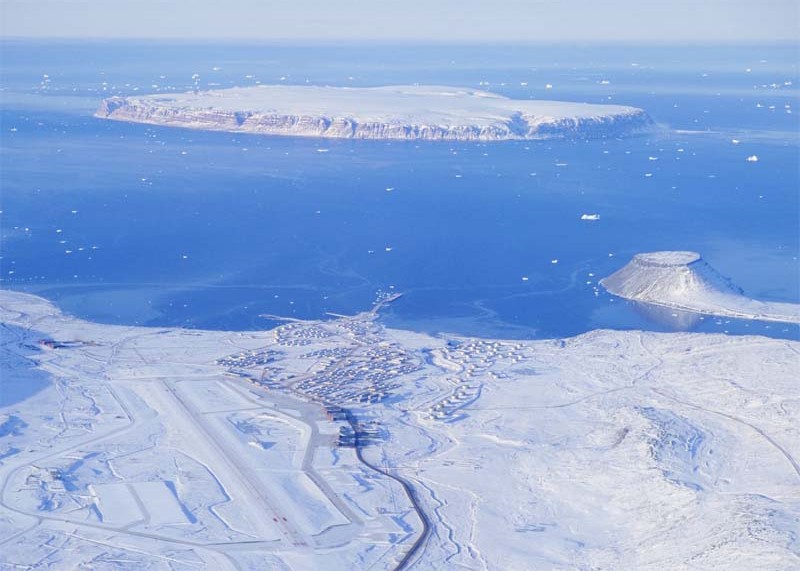
Pituffik Space Base in northern Greenland, the northernmost installation of the US’s Department of War. Photo: Wikimedia Commons
Greenland is usually discussed as an Arctic security problem in material terms: geography, missile warning, space surveillance, critical minerals, shipping routes, and the growing military significance of the High North. These factors are real. Yet any durable Western position in Greenland also depends on political legitimacy: whether Greenlanders trust the states and institutions seeking long-term access, cooperation, and consent there.
This article argues that Denmark’s unresolved colonial legacy is part of that strategic environment. In October 2026, the Eastern High Court in Copenhagen is expected to hear a case brought by twenty-six Greenlanders known as the legally fatherless.1) As children born outside marriage, they lacked the same legal access to paternity as children in Denmark. Their claim for compensation is therefore more than a domestic legal dispute. It exposes a question at the centre of Denmark’s position in Greenland: whether unresolved colonial responsibility can become a strategic liability.
The connection matters because Greenland is not transferable strategic property. The Arctic Institute has previously argued2) that contemporary international law, Indigenous rights, and Greenlandic self-determination make the idea of a state-to-state sale of Greenland a legal anachronism. Recent American pressure over Greenland,3) moreover, has shown that legal principle and great-power politics now collide in the same Arctic space.
The legally fatherless case will not decide Greenland’s constitutional future, and no single grievance explains the independence debate. It does, however, condense a wider legitimacy problem into a clear human story: Danish law treated children in Greenland differently from children in Denmark, and that unequal treatment affected identity, kinship, inheritance, and family life.
The case also raises a universal principle. The UN Convention on the Rights of the Child4) recognizes, as far as possible, a child’s right to know and be cared for by his or her parents. Greenland’s legally fatherless case arose from a specific colonial legal order and should not be collapsed into every modern custody or child protection dispute. But the discrepancy between the Danish legal regime in Greenland and broader norms concerning family life helps explain why the case has meaning beyond compensation.
For Denmark, settlement would therefore be more than a gesture of regret. It would reduce a legitimacy risk at a time when Arctic security increasingly depends on Greenlandic consent.
A Dual Legal Order
Between 1914 and 1963 in West Greenland, and until 1974 in North and East Greenland, children born outside marriage did not have the same opportunity to establish legal paternity as children in Denmark. The 2011 historical inquiry documented this unequal legal order in detail.
Danish legislation had already moved toward legal equality for children born outside marriage in the 1930s. The same rights were not introduced simultaneously in Greenland. A man could be required to contribute financially without becoming the child’s legal father. The child might therefore receive some support while remaining outside the father’s family in law, without the same rights to his name or inheritance.
The scale was significant. The 2011 historical inquiry estimated that approximately 8,000 people had been born legally fatherless in Greenland between 1911 and 1974.5) A 2016 ministry note later estimated that around 3,300 legally fatherless people born in Greenland were living in Greenland, and around 1,300 were living in Denmark.6)
The human situations behind these figures varied. Not every father was Danish, not every father was known, and not every case followed the same pattern. Yet many legally fatherless children were born to Greenlandic women and Danish men who had come to Greenland as officials, craftsmen, employees, or other temporary workers. Some of these men returned to Denmark, leaving mothers and children behind.
This created a severe asymmetry. A Greenlandic mother could be left with the practical and social responsibility for the child, while the child had no enforceable legal membership in the father’s family. Where the father had resources or property, the absence of inheritance rights could compound existing poverty. The inequality was therefore not only symbolic. It could affect material security across generations.
The legal order did not create male irresponsibility. Men have abandoned women and children in every society. What the law did was fail to counter that irresponsibility on equal terms. In Greenland, private absence was reinforced by public rules. The result was a colonial hierarchy within a single realm: children in Denmark possessed rights that children in Greenland did not.
Reform Came Late
Denmark and Greenland have not ignored the issue. The unequal rules ended in West Greenland in 1963 and in North and East Greenland in 1974. A historical inquiry published in 2011 documented the development of the law and the political and administrative reasoning behind it.7) Legislation that entered into force in 2014 enabled legally fatherless Greenlanders to seek formal establishment of paternity and, under specified conditions, inheritance rights.8) A subsequent study examined the human effects of legal fatherlessness, including identity, stigma, family history, and the absence of a recognized father.9)
These reforms mattered, but they could not restore childhood after the fact. A father can be recognized on paper after he has died. Evidence may be unavailable. Estates may have been settled decades earlier. Families may have formed without the child, and opportunities for contact, recognition, and inheritance may have disappeared permanently. Late legal repair can recognize a wrong without undoing its formative consequences.
The 26 plaintiffs now before the Eastern High Court argue that the unequal legal regime violated their right to family life. A submission to the Folketing10) concerning the case states that they seek 125,000 Danish kroner each, and that the case is scheduled for October and November 2026. The ministry has suspended limitation periods for similar claims while the case proceeds, recognizing that other legally fatherless Greenlanders may be affected by its outcome.
The state nevertheless has legitimate legal concerns. Governments cannot compensate for every historical injustice without examining causation, evidence, limitation rules, and the boundaries of present-day liability. Public authorities must also protect public funds and consider precedent. These concerns are not trivial. A historical wrong may be morally clear while a present legal claim remains complex.
A settlement need not deny those concerns. Denmark has already used political acknowledgment, apology, and limited compensation in other historically sensitive cases involving Greenland, as discussed below. These cases differ factually and legally from the legally fatherless case, but they show that carefully bounded forms of redress are possible.
The central question is therefore not whether the state should abandon legal scrutiny. It is whether litigation to final judgment is the wisest response to a documented inequality that Denmark has already taken legislative steps to correct. A court may find that the claim fails under doctrines governing liability or time limits. Such a judgment would settle a legal question, but it would not remove the political meaning of the case in Greenland. A Danish victory could instead intensify the impression that Copenhagen acknowledges historical injury only when acknowledgment carries no substantial cost.
The Principle Denmark Has Not Fully Learned
The case reveals a principle that extends beyond its colonial setting: the relationship between a child and both parents should not be treated merely as an administrative variable.
The UN Convention on the Rights of the Child states that a child has, as far as possible, the right to know and be cared for by his or her parents. It also recognizes the importance of maintaining personal relations and direct contact with both parents when separation occurs, unless this conflicts with the child’s best interests.
These provisions do not create an unconditional right to parental contact in every case. Abuse, neglect, violence, and serious risk may require separation. The best interests of the child remain decisive. Nor are modern custody disputes equivalent to Greenland’s legally fatherless generation. The latter arose from a territorially unequal colonial legal order and must be understood on its own terms.
Still, the historical case makes a continuing institutional habit visible. Public systems sometimes translate a child’s relationship with one parent into a file, a benefit category, a risk assessment, or an evidentiary problem. In the Greenlandic case, the law did something more radical: it allowed one parental relationship to remain legally incomplete even where paternity and responsibility could be socially or financially recognized. The child’s loss was then carried as identity loss, family-history loss, inheritance loss, and the loss of ordinary legal belonging.
This is why the continuing litigation matters symbolically. The state is not only defending a legal position. It is demonstrating how it understands the original loss. If the loss is treated as a narrow question of liability and limitation, the state may appear not to have absorbed the deeper lesson: the connection between a child and a father is part of family life and personal history, not merely a benefit to be balanced away for administrative convenience.
Greenlandic Trust and the Independence Debate
Greenland’s movement toward greater self-government and possible independence has many sources. It arises from language, culture, political identity, economic aspirations, control of natural resources, and a desire to make decisions in Greenland rather than Copenhagen. The 2009 Self-Government Act11) recognized Greenlanders as a people under international law with the right to self-determination and established a procedure by which Greenland may move toward independence if its people choose that path.
Historical grievances are not the only driver of this movement, but they give sovereignty arguments a moral force. The legally fatherless case condenses a broad colonial history into an intelligible human story: Danish law treated Greenlandic children differently; some Danish men could return home without their children obtaining legal recognition or inheritance; and the consequences remained with Greenlandic families. That story is politically powerful because it connects sovereignty to personal dignity and memory.
Other Greenlandic grievances have operated in a similar way. Denmark apologized in 2020 for the 22 Greenlandic children sent to Denmark in 1951 as part of a social experiment.12) Denmark and Greenland have also confronted the IUD or “spiral” case, in which Greenlandic women and girls were fitted with intrauterine devices without consent.13)
Greenland in the Western Security Architecture
Greenland’s geography makes it indispensable to North American and European security. Pituffik Space Base, the northernmost installation of the United States Department of Defense, supports missile warning, missile defense, space surveillance, and wider Arctic operations. Greenland lies between the North American and European theatres and occupies a central position in the North Atlantic approaches.14)
The wider Arctic security environment has also changed. Russia maintains substantial military capabilities in the region, particularly in the European Arctic and around the Kola Peninsula. China’s 2018 Arctic policy white paper15) describes China as a “near-Arctic state” and sets out interests in Arctic research, shipping routes, infrastructure, and resources. Climate change is increasing physical access, although not necessarily making Arctic activity easier or safer.16)
American rhetoric has also become part of the security environment. Trump’s repeated statements about acquiring or controlling Greenland have stirred concern in Denmark and Greenland and have forced NATO allies to address a question they would rather avoid: what happens when the alliance’s most powerful member treats the territory of another ally as an object of strategic pressure? Greenlandic reactions have been equally important. Reuters reported in July 202617) that Greenlanders rejected Trump’s renewed push for control and emphasized that decisions about Greenland’s future should be made by Greenlanders.
NATO has responded by giving the High North greater operational attention. In February 2026, the Alliance launched Arctic Sentry18) to strengthen deterrence, defense, situational awareness, and its ability to operate in the region. In January 2026, Denmark’s Defense Minister, Troels Lund Poulsen, and Greenland’s Foreign Minister, Vivian Motzfeldt, met NATO Secretary General Mark Rutte in Brussels to discuss the importance of the Arctic, including Greenland, to the Alliance’s collective security.19) Naalakkersuisut has also stated that strengthening defense and security in and around Greenland is a core priority, and that this should happen in close cooperation with NATO allies.20)
Any long-term arrangement involving military presence, investment, raw materials, ports, or surveillance will depend upon political consent in Greenland. If Greenlanders believe that Denmark, the United States, or NATO regards the island primarily as strategic real estate, security policy may itself strengthen demands for greater distance from Copenhagen or tighter conditions on foreign involvement. This is why legitimacy functions as a condition of strategy, not as a decorative ethical add-on.
Denmark’s Problem Is Also a Western Problem
The United States has an obvious interest in a stable and friendly Greenland. NATO has an interest in a secure North Atlantic and a politically cohesive High North. European allies have an interest in avoiding a sovereignty crisis within the Western alliance.
Denmark remains an important bridge among Greenland, North America, and Europe. That role depends on Copenhagen retaining enough trust in Greenland to represent the realm credibly. If Danish legitimacy erodes, Washington may be tempted to deal more directly with Nuuk and treat Copenhagen as an obstacle. Greenlandic leaders may welcome direct engagement when it increases their room for maneuver, but they have also been clear that Greenland is not seeking to become American territory. The result can be an unstable triangular relationship: Washington wants strategic certainty, Nuuk wants agency, and Copenhagen wants to preserve the constitutional framework of the realm.
Recent events show how quickly this triangle can become tense. American political pressure over Greenland has already pushed Danish and Greenlandic leaders to restate that Greenland is not for sale and that decisions about its future belong to Greenlanders. At the same time, the United States already has military access through Pituffik and longstanding defense arrangements. This makes coercive rhetoric strategically awkward: it can undermine trust even where practical cooperation already exists.
The danger is not that one court case will cause Greenland to leave the Danish realm or move into an American sphere. The danger is cumulative. Each unresolved historical grievance reinforces a narrative in which Denmark acts only when compelled, treats Greenlandic concerns as legal or administrative problems, and places institutional self-protection above reconciliation. That narrative weakens Denmark’s ability to argue that continued partnership offers Greenland equality, security, and respect.
It also creates opportunities for adversarial influence. Russia or China need not invent every criticism of Western conduct. They can amplify genuine grievances and use them to challenge Western claims about rules, rights, and self-determination. The most effective answer is not better messaging. It is a credible action.
Settlement as Strategic Risk Reduction
Denmark should seek a negotiated settlement before the case reaches its final conclusion. Such a settlement should be carefully designed. It should distinguish acknowledgment from unlimited legal liability. It should be based on documented criteria and involve Greenlandic representatives and the affected people themselves. It should also recognize that compensation alone cannot restore lost relationships or inheritance.
Comparable Danish and Greenlandic cases show possible elements of such a model. In the case of the 22 Greenlandic children sent to Denmark in 1951, the Danish state issued an official apology in 2020 and later reached a settlement with the six surviving participants, each of whom received 250,000 Danish kroner in compensation.21) The IUD or “spiral” case has followed a different path, involving an independent inquiry, an official apology from the Danish government and Naalakkersuisut, legal claims, and a later compensation arrangement.22) These examples do not dictate the result in the legally fatherless case. They do show that Denmark can respond politically to historical injury without transforming every grievance into open-ended liability.
A settlement could state clearly that the old legal order treated children in Greenland unequally and that the Danish state accepts responsibility for its role. It could set compensation within a defined category of claimants, provide support for family-history research, and assist remaining paternity or inheritance proceedings where evidence still exists. It could also be negotiated in a way that prevents the state from appearing to purchase silence or close the larger colonial debate.
From a narrow legal perspective, settlement may appear to concede a case the state might win. From a strategic perspective, it would convert an open-ended legitimacy liability into a defined act of reconciliation. Its cost would have to be assessed carefully, but the sums discussed in the present case are small beside the broader political and defense investments now being made in the Arctic. Its symbolic value could be substantial.
A settlement would not end criticism of Denmark. Nor should it be used as evidence that all colonial issues have been resolved. It would instead demonstrate an institutional capacity to learn, a quality essential to any political relationship that seeks to endure.
Denmark’s position in Greenland cannot be sustained by constitutional law alone if political trust continues to weaken. The United States and NATO face a related constraint: military necessity can explain why Greenland matters, but it cannot by itself generate durable consent. Long-term Arctic security in Greenland will depend on whether Greenlanders regard cooperation as a partnership rather than as another arrangement imposed from outside.
Security Begins with Consent
The case of Greenland’s legally fatherless is about family law, colonial inequality, identity, and inheritance. It is also about the political consequences of leaving historical injury unresolved.
To an important extent, Arctic security rests on the consent of the people who live in the Arctic. Military capabilities matter. So do infrastructure, intelligence, logistics, and economic resilience. But without legitimacy, these assets stand on a fragile political foundation.
Denmark may still win the case in court. If it does, the judgment will not erase the history that produced the lawsuit. It may instead confirm a damaging impression: that Copenhagen will acknowledge Greenlandic suffering in reports and legislation but resist acknowledgment when it carries a financial or legal price.
A settlement would not be an act of weakness. It would be an investment in trust. For Denmark, it would show that the realm can correct its own history without being forced to the final limit of litigation. For the United States and NATO, it would strengthen a partner whose legitimacy matters to the stability of the High North. For Greenland, it would not answer the question of independence, but it would demonstrate that partnership can include accountability.
Greenland is not merely geography. It is a society with memory, agency, and political choice. Any durable Arctic strategy must begin there.
Jon Eirik Lundberg is a Norwegian writer, curator and director of Læsø Kunsthal, Denmark. Torben Haugaard is an independent adviser and chairman of Manderådet, a Danish organization working on fathers’ and men’s issues.
References