Towards a Svalbard Convention on Scientific Research: Building on the ATCM Model
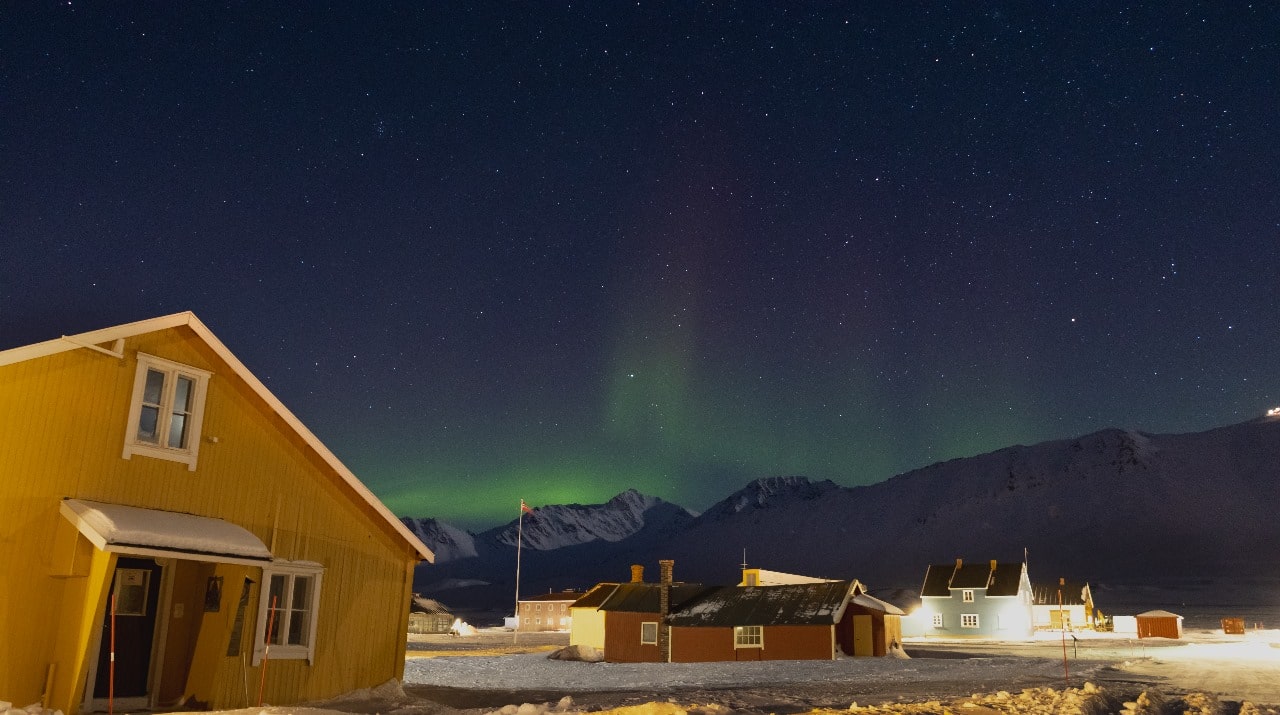
The Indian Research Station Himadri in Ny-Ålesund on Svalbard by night. Photo: Sandeepan Dawn
We often hear the phrase: “What happens in the Arctic doesn’t stay in the Arctic, it affects the entire planet”.1) This underscores the region’s critical role in regulating the Earth’s climate. Yet, despite this global importance, only 10 of the 48 signatories to the Svalbard Treaty, currently maintain permanent research stations on the archipelago.2) Even if the eight Arctic Council states are included, which operate stations either within their own territories or on Svalbard, the overall participation still represents less than 40 percent of the Treaty’s signatories.3)
Moreover, there is a striking underrepresentation of the Global South in Arctic research. Only two developing countries, India and China, have established permanent research stations in the region. This disparity likely stems from the absence of a fair, transparent, affordable and inclusive framework for regulating scientific research on Svalbard. Although the Svalbard Treaty itself provides for such a mechanism, it remains unimplemented more than a century after it entered into force. In the following article, the rationale behind the recommendations to address these gaps is outlined.
Svalbard
Svalbard, a 61,000 square km Arctic Archipelago located between Norway and the North Pole, remained unclaimed for centuries. Sovereignty disputes emerged in the nineteenth century and remained unresolved, despite negotiations between Russia, Norway and Sweden, along with other stakeholders such as the United States, Great Britain and Germany. After World War I, the 1919 Paris Peace Conference unexpectedly addressed Svalbard’s status, leading to the 1920 Svalbard Treaty. Russia (then Soviet Union) was initially excluded due to the Bolshevik Revolution but joined in 1935.4) Despite Soviet efforts for shared control during the Cold War, Norway retained sovereignty while balancing East-West relations. The Svalbard Treaty granted Norway sovereignty over the archipelago with conditions ensuring equal rights for signatories in economic activities and scientific research. It prohibits military activities and mandates international cooperation in scientific research, making Svalbard a unique model of international governance.5) Today, Svalbard hosts vital Arctic research and symbolises international cooperation.6)
International Scientific Research in Svalbard
Over the years, Svalbard has become a key international hub for Arctic scientific research, hosting permanent facilities and attracting scholars from across the globe. Research activities are concentrated in four year-round stations; Ny-Ålesund, Longyearbyen, Hornsund, and Barentsburg, while numerous field sites support specialized studies. Each year, more than a thousand researchers travel to the archipelago,7) and in 2023 alone, scientists from over 30 countries were registered with active projects on the Research in Svalbard (RiS) Portal.8)
Ny-Ålesund is the centrepiece of this network, functioning as a global platform for climate and ecological studies. It hosts roughly one-quarter of all research projects in the archipelago and is home to Himadri, India’s permanent Arctic research station. Ten countries, including China, France, Germany, India, Italy, Japan, the Netherlands, Norway, South Korea, and the United Kingdom, maintain dedicated research facilities there, while many other nations conduct seasonal projects. Ny-Ålesund is owned and managed by Kings Bay AS, a state-owned company under Norway’s Ministry of Climate and Environment, which provides essential services such as accommodation, logistics, energy and water supply and port facilities.9)
Coordination among the various national stations is ensured through the Ny-Ålesund Science Managers’ Committee (NySMAC), an international forum designed to foster collaboration and prevent duplication of research efforts, its Secretariat operating under the Norwegian Polar Institute in Tromsø.10) Beyond Ny-Ålesund, significant research also takes place in Longyearbyen, home to the University Centre in Svalbard (UNIS) and the Svalbard Science Forum (SSF), as well as in Barentsburg. Additional specialized sites include the Polish Polar Station at Hornsund, focused on geophysics; the EISCAT radar near Longyearbyen, dedicated to atmospheric studies; and Adventdalen, which serves as a natural laboratory for geology and permafrost research.11)
Areas of Scientific Research in Svalbard
Research conducted in Svalbard makes a critical contribution to global climate change studies, while simultaneously advancing knowledge across interrelated fields such as earth sciences, biology, atmospheric research, and climatology. Some of the areas of research in Svalbard are listed below.
Climate Change and Glaciology
Svalbard has experienced a dramatic retreat of its glaciers with 91 percent having shrunk significantly since 1985, losing over 800 sq km of ice.12) The region is warming up to seven times faster than the global average.13) This melting not only drives local sea-level rise but also influences ocean circulation and climate patterns worldwide. Research in Svalbard helps to generate long term data sets for understanding of the Arctic in a changing climate and policy decisions.
Atmospheric and Cryospheric Monitoring
Long-term glaciological and meteorological observations play a vital role in understanding Arctic amplification and improving climate models.14)
Methane Emissions from Glacial Retreat
Recent research shows that glacial meltwater and groundwater flushing transport ancient, thermogenic methane, trapped beneath glaciers, into the atmosphere in Svalbard. Fieldwork across 78 land-terminating glaciers found supersaturated methane levels, up to 600,000 times higher than equilibrium, and estimated annual emissions of up to 2.31 kilotons.15)
Global Seed Vault
The Svalbard Global Seed Vault serves as a secure, fail-safe repository for global crop diversity. Built into permafrost and deep within a mountain, it stores duplicate seed samples free of charge and can house up to several million varieties’.16) In February 2025, the Vault received 14,022 new samples, underlining its role in preserving food sovereignty amid crises.17)
Why Svalbard Research Matters to the World
Being one of Earth’s fastest-warming regions, Svalbard acts as a “canary in the coal mine,” projecting climatic shifts that will later affect mid-latitude zones and acting as an early warning of warming trends. Processes observed in Svalbard, such as changes in the North Atlantic Current and Arctic Oscillation, influence global climate systems including monsoons in India. Research links between Arctic warming and mid-latitude extreme weather (e.g., heatwaves, floods, and cold spells) make Svalbard’s monitoring stations crucial for improving weather and climate forecasts. Likewise, Svalbard serves as an important case in critical feedback loops. Studies on methane release due to glacial retreat are uncovering potent feedback mechanisms. If ignored, these could lead to underestimations in climate projections. Long-term observations of glacial mass and atmospheric variables are also invaluable for enhancing model accuracy and guiding international climate strategies. Additionally, Svalbard hosts world-leading satellite ground stations and atmospheric monitoring sites. Data collected here supports space weather forecasting, GPS reliability, and climate monitoring on a global scale. On the food security front, Svalbard’s Global Seed Vault is a globally significant resource, safeguarding biodiversity and underpinning agricultural resilience against disasters, conflict, and changing climates. Finally, Svalbard is home to unique Arctic species like polar bears, walruses, seabirds, and cold-water corals. Research here informs global understanding of how ecosystems adapt (or fail to adapt) to rapid climate change, with lessons applicable to biodiversity conservation worldwide.
Norwegianization of Svalbard
Despite the oxymoronic notion of “qualified yet full and absolute sovereignty” over Svalbard, which imposes certain conditionalities on Norway, the country has, over the years, gradually tightened its control through a series of regulations and administrative measures, a process often referred to as the “Norwegianization” of Svalbard.18)
The “Norwegianization” effort included renaming the archipelago from Spitsbergen to Svalbard in 1925, strict environmental regulations starting from the 1970s, and the development of Norwegian-dominated institutions like UNIS and the Svalbard Science Centre in the 1990s. Norway also controls land ownership, infrastructure, and maritime security while enforcing visa regulations that complicate direct access for some Treaty signatories, particularly Russia. Recent restrictions, such as denying Russian charter flights, highlight ongoing geopolitical tensions, as Norway consolidates its authority over Svalbard under the framework of the Svalbard Treaty.
Norway firmly asserts its sovereignty over Svalbard, maintaining that it is as Norwegian as any mainland territory. While the Svalbard Treaty grants equal rights to signatory nations, Norway emphasises that this applies only to territorial waters, not the continental shelf.19) Governance is closely managed by the Norwegian Storting (the parliament), which oversees legislation, budget allocations, and compliance with the Treaty.20) Norway also maintains sovereignty through land ownership, controlling 98.75 percent of Svalbard’s land Regular White Papers guide the archipelago’s development, with the latest, released in 2024, reinforcing Norway’s commitment to sovereignty, governance, and sustainable infrastructure.21)
Tightening Control Over Svalbard
Norway has also tightened its control over Svalbard by curtailing the civil rights of non-Norwegian residents. Notably, amendments passed in 2022 deprived many foreigners who comprised about 35 percent of Longyearbyen’s population in 2023, of their right to vote in local elections unless they’d lived at least three years in mainland Norway. This regulation disenfranchised roughly 700 people, contributing to a sharp decline in voter turnout, from 1,128 ballots in 2019 to 808 in the 2023 election.22)
In addition to voting restrictions, Norway has also introduced changes affecting driving privileges. Holders of non-Norwegian licenses from countries not party to key international traffic conventions have had their driving rights revoked, a move that impacted residents from many Global South nations. While those from convention-signatory countries later regained their rights, the policy highlighted a growing trend of exclusion.23)
Tightening controls over arrivals in Svalbard, in May 2022, following the introduction of a new Border Act, Norway empowered the Governor of Svalbard with authority to conduct identity checks on individuals arriving to or departing from Svalbard by air or sea, particularly targeting direct charter flights from abroad, to better prevent cross-border crime and uphold national security and international obligations. Concurrently, the Norwegian Parliament approved extending the Customs Act to Svalbard.24)
Extending the tightening control on scientific research, Norway now strictly regulates it in Svalbard, interpreting the Svalbard Treaty to assert its sovereign authority.25) While the Treaty ensures equal access for signatory nations, Norway imposes environmental and security-based restrictions, requiring research permits and compliance with strict regulations. The UNIS and institutions like the SSF coordinate research oversight. These bodies ensure that research complies with Norwegian law. Specific permissions are required for fieldwork, including adherence to environmental and logistical regulations.26) However, some countries argue that Norway’s control exceeds Treaty provisions, leading to tensions, particularly with Russia. Disputes over access to maritime zones, including the continental shelf, further complicate international relations, with Norway maintaining that Treaty rights apply only to territorial waters.27)
Svalbard Treaty – Article 5
Norway’s regulation of scientific research in Svalbard raises questions regarding the interpretation of Article 5 of the Svalbard Treaty, which stipulates that scientific investigations should be governed by international conventions negotiated by the Treaty’s signatories.28) Scholars contend that Norway’s unilateral control over research activities goes beyond the Treaty’s intent, as the regulatory framework was envisioned to be established through multilateral agreements. Since the Treaty guarantees equal access for commercial enterprises, a similar principle could reasonably apply to scientific research. This underscores the need to develop an international convention on research governance under the Treaty’s provisions. The comparison with the Antarctic Treaty System is instructive here, as it demonstrates how a multinational framework can facilitate open and cooperative scientific collaboration, ensuring that research is conducted in the spirit of shared global benefit rather than unilateral control.29)
Antarctic Treaty
The Antarctic and Svalbard Treaties both govern polar regions, frontloading peace, science, and international cooperation, yet they differ in scope and governance. The 1959 Antarctic Treaty designates Antarctica as a demilitarized zone for scientific research, with an international consultative mechanism ensuring collaboration.30) In contrast, the 1920 Svalbard Treaty grants Norway sovereignty while allowing signatory nations equal access for peaceful activities. However, unlike the Antarctic Treaty, Svalbard lacks a structured framework for international decision-making, leading to ongoing debates over Norway’s authority and the regulation of scientific research in the region.
The Antarctic Treaty Consultative Meeting, or ATCM, plays a crucial role in governing Antarctica under the Antarctic Treaty System. It ensures that Antarctica remains a zone of peace and science, prohibiting military activity, mineral exploitation, and nuclear testing while promoting international scientific collaboration. Composed of 29 Consultative and 28 Non-Consultative Parties, decisions are made by consensus. The ATCM enforces environmental protection through the Madrid Protocol, regulates tourism, and relies on expert bodies like the Committee for Environmental Protection and the Scientific Committee on Antarctic Research. By fostering cooperation and strict environmental safeguards, the ATCM preserves Antarctica as a shared, protected space for scientific discovery.31)
The proposal
Concluding a binding convention and applying the Antarctic Treaty Consultative Meeting model to regulate scientific research in Svalbard could enhance international cooperation while ensuring environmental protection. An international convention, similar to the ATCM, could promote collaborative research on climate change, marine ecosystems, and glaciology. Additionally, strict environmental guidelines, such as protected zones and sustainability protocols, could reduce the human impact on Svalbard’s fragile Arctic ecosystem. Adapting key elements of the ATCM model to the convention could help balance scientific exploration with conservation, reinforcing Svalbard’s role as a hub for responsible Arctic research.
By granting stake in governance and research in Svalbard to the signatory nations, as provided for in the Svalbard Treaty, such a convention would ensure balanced policy-setting. Reinforcing Svalbard’s peaceful-use provisions and regulating tourism to protect sensitive areas would further align with the Antarctic model. Establishing an independent governing body with treaty signatory states, states, scientific institutions, and indigenous representation, under the auspices of the proposed convention, could provide oversight, funding, and access, ensuring sustainable and collaborative Arctic research.
An international convention for regulating scientific research in Svalbard would promote international collaboration, encourage transparency in data sharing, and include governance mechanisms to oversee compliance. Inspired by the Antarctic model, it could incorporate environmental safeguards, prohibit military activities, and enforce dispute resolution measures. Balancing Norway’s sovereignty with the rights of Treaty signatories, this framework would ensure that scientific research in Svalbard remains cooperative, transparent, and environmentally responsible.
Negotiating an international convention for scientific research in Svalbard could begin with a formal request by some of the Svalbard Treaty signatory states to France, the Treaty’s depository, to initiate discussions. This may be followed by bilateral and multilateral talks among signatory nations to define the convention’s scope. A lead country or group of nations could drive this process forward. The drafting phase would focus on research conditions, environmental protections, data transparency, and dispute resolution. Engaging global stakeholders, including non-Arctic states and indigenous communities, would ensure a balanced and inclusive framework for Svalbard’s scientific research governance.
Challenges
Efforts to establish an international convention for regulating scientific research in Svalbard are likely to face a number of obstacles. Norway is likely to resist such an initiative, perceiving it as an encroachment on its sovereignty. Geopolitical frictions, particularly those arising from NATO–Russia tensions, further complicate the prospects for Arctic cooperation. The role of the United States will also be pivotal. Unlike Antarctica, where the continent is demilitarised and governed collectively, the Arctic is shaped by overlapping sovereign territories, entrenched national interests, and legal frameworks such as the United Nations Convention on the Law of the Sea (UNCLOS). These factors make consensus-building more complex. Nevertheless, drawing on the Antarctic Treaty’s principles and adapting them carefully to Svalbard’s unique political and geographic context could provide a pathway to a cooperative framework. Such an approach would not only strengthen scientific governance but also contribute to broader stability in the Arctic.
Conclusion
Svalbard embodies both the promise and the paradox of Arctic governance. While on one hand, the archipelago is a critical site for climate research, environmental monitoring, and global scientific collaboration, on the other, it reflects the tensions between national sovereignty and international responsibility. The underrepresentation of Global South countries in Arctic research highlights the need for a more equitable and participatory framework, one that is both transparent and inclusive, in keeping with the spirit of the Svalbard Treaty.
Adapting elements of the Antarctic Treaty model could help strike a balance between Norway’s sovereignty and the collective rights of Treaty signatories, while also safeguarding the fragile Arctic ecosystem. Establishing a multilateral convention to regulate research in Svalbard would foster cooperation, ensure equal access, and reinforce the principle that Arctic science should serve the interests of all humanity.
To move toward this end state, three steps are particularly important. First, Treaty signatories, especially those from the Global South, should jointly advocate for discussions under Article 5 of the Svalbard Treaty to create a fair and structured framework for scientific research. Second, Norway must be encouraged to adopt a more facilitative approach, balancing its sovereign interests with the global responsibility of enabling inclusive research. Third, lessons from the Antarctic Treaty System should be adapted to the Arctic context, ensuring cooperative research, environmental safeguards, and transparent data-sharing.
For India and other emerging nations, active engagement in this process is crucial, not only to secure continued access to Arctic research opportunities but also to shape the governance of a region that profoundly influences climate, oceans, and food security worldwide. Ultimately, transforming Svalbard into a model of inclusive scientific cooperation would reaffirm the principle that the Arctic’s knowledge and resources must remain a shared heritage of humankind, serving both present and future generations.
Captain Anurag Bisen is a veteran submariner and a Senior Fellow at Vivekananda International Foundation, India.
References