Cold Reality: Why U.S. Military Arctic Readiness Is (Still) Lagging and What the Pentagon Can Do about It
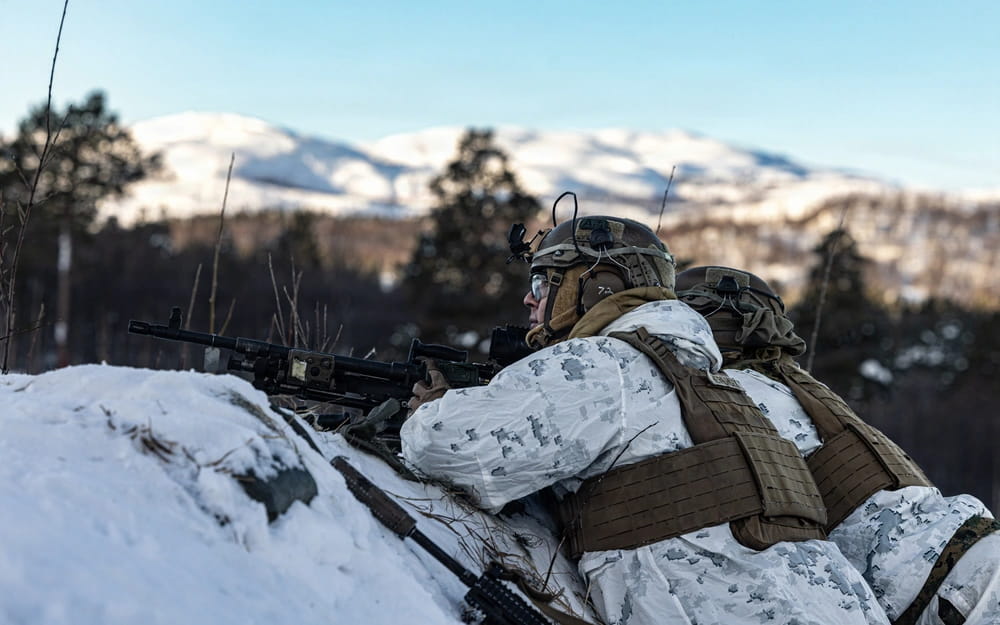
COLD RESPONSE and other multilateral exercises build competence in operating in cold-weather environments. Photo: Judith Ann Lazaro
The Arctic, a region that once dominated U.S. defense strategies during the Cold War, has largely receded to the periphery in the Defense Department’s global planning. Despite the Pentagon’s continued assurances that the military is ready to counter any threat arising in the High North, the evidence tells a different story. Insufficient Arctic strategies, fractured interoperability among Allies, a complicated organizational structure, and limited cold-weather resources and infrastructure hinder U.S. military Arctic readiness and render the services unprepared to compete with peer adversaries in the region.
The Arctic does not feature prominently in U.S. national identity, and as a result, the United States underemphasizes the region. U.S. Arctic policies understate the reality of regional competition, resulting in sporadic engagement and contradictory messaging. The belief in Arctic exceptionalism has been used to justify demilitarization and reallocation of resources elsewhere.1) It is thus unsurprising that the Pentagon’s interest in the Arctic has been inconsistent. The onus of the region’s security has fallen largely to the Coast Guard as the only service with a legal obligation to maintain an icebreaking capability. However, as the Coast Guard is a fraction of the Navy’s size and structured primarily for domestic security, it is not well suited to project power abroad.2)
While the Department of Defense and its subordinate services have all authored their own Arctic strategies, they remain disjointed and vague. The Pentagon’s umbrella strategy fails to direct the services’ individual efforts in the Arctic sufficiently, instead implementing a monitor-and-respond approach that maintains the status quo and positions the United States to be reactive in the region. While the document repeatedly directs the Joint Force to improve its Arctic readiness, it does little to task the services individually,3) resulting in interservice disputes over implied responsibilities. The Army’s strategy does not address how the Army, as a land force, will integrate with other services to achieve success in a predominantly maritime environment.4) The Navy calls for a persistent presence but does not account for its lack of icebreakers, preventing year-round above-ice access.5) The Air Force does not incorporate layered air defense and offers few details on how the Space Force will contribute to the theater.6) Additionally, the Coast Guard’s strategy is focused domestically, offering no vision on how it would function as a specialized service under the Navy Department should it be transferred by the President or Congress in times of emergency or war.7) Finally, while all services’ strategies address the research and development of new technologies, they do not acknowledge the limitations of both human performance and existing equipment resulting from prolonged extreme cold weather conditions.8) While the services have made strides in implementing joint integration, most notably during Exercise ARCTIC EDGE, if the Pentagon desires to sustain this momentum and become a credible power in the High North, it must direct the services to synchronize their strategies formally as a Joint Force and address how human and equipment limitations will be overcome to achieve Arctic competence.
The strategic level
The Pentagon does not have a unified Arctic command. Currently, responsibility for the Arctic falls to three separate geographic combatant commands: Northern Command, European Command, and Pacific Command. In addition to complicating command and control (C2), this fragmented approach runs the risk that the region will be overshadowed by combatant commanders’ other geographical responsibilities, presenting a potential gap that adversaries could exploit.9) To synchronize the services in the Arctic environment, the Pentagon should create a combatant command (ARCTICCOM) that would absorb the existing Arctic structure and expand through the creation of additional formations.
Despite participating in numerous multinational training exercises annually, the U.S. military lacks interoperability among Arctic partners. Like the United States, NATO does not have a dedicated Arctic regional command, resulting in international partners relying on ad hoc coordination for the control, execution, and support of combined Arctic operations. While the U.S. and Canadian militaries share a cloud-based Command and Control (C2) capability through their membership in the North American Aerospace Defense Command (NORAD), the United States does not share a formalized C2 structure with its other Arctic partners, the consequences of which include slower response times and fragmented decision-making that reduce operational flexibility and hinder combined operations.10) C2 and overall trust among Arctic partners are currently strained following President Donald Trump’s proposal to seize Greenland, rhetoric towards NATO, and threats of tariffs against Allies, all of which put into question the U.S. military’s long-term ability to collaborate effectively with its traditional partners.11)
The Defense Department should seek to improve its relations with Allies. As politics largely influences partnerships, this can prove difficult for the apolitical military services to achieve in today’s divisive political climate. Service chiefs and other senior military leadership must be willing to advise civilian policymakers and politically appointed departmental leaders without fear of career repercussions, a task admittedly easier said than done. Cooperation with Arctic Allies through multinational exercises allows the United States to gain operational proficiency in a region that it has for decades ignored while enhancing interoperability with those nations most likely to support it in an Arctic conflict.12) The United States should spearhead the development of a unified C2 structure for the employment of all Arctic partners that addresses the deficient and disjointed framework currently employed by NATO members. Additionally, the United States should advocate for the development of both a NATO Arctic Command and an overarching NATO Arctic Strategy to oversee the implementation of this C2 architecture and enable clearer communication and faster decision-making among regional Allies.13) The services should invest time between exercises and enable C2 by embedding year-round liaisons at foreign commands and hosting allied and partner force liaisons at home.14) Additionally, while the United States builds its fleet of icebreakers to help secure Arctic dominance within the next decade, it should advocate for the use of combined NATO Arctic maritime patrols.15) Finally, military leaders and civilian policymakers can ease international tensions by championing existing agreements that grant the U.S. military access to Greenland and the Nordic states.16)
The operational level
Despite recent improvements in their ability to defend Alaska’s Arctic, the services continue to lack the organizational structure necessary for sustained offensive or expeditionary Arctic operations abroad. The Air Force maintains the largest military presence in the region, and, although most of its force structure in Alaska focuses on air and missile defense, the service increasingly struggles to detect low-flying, long-range missiles and drones as well as hypersonic projectiles due to the United States and Canada’s aging North Warning System.17) While the Army’s reactivated 11th Airborne Division and the newly created Arctic Aviation Command mark a substantial improvement in the Defense Department’s Arctic readiness, they alone would likely be insufficient in a prolonged or distant engagement against an Arctic adversary. When confronted with extreme environmental conditions, such as those in the Arctic, human limitations result in much higher casualty rates and reduced effectiveness than in more traditional combat settings.18) During a large-scale, sustained regional conflict, a singular Arctic division would need to rely on increasingly under-prepared replacements for relief and reinforcement as casualties mount and equipment deteriorates.
The Navy and Marine Corps lack dedicated cold-weather units and maintain only a minimal active-duty presence in Alaska, mostly in the form of recruiters and independent duty holders attached to reserve units. While Navy submarines once commonly operated beneath the polar ice caps, vessels and their crews are now focused predominantly on deterring China in the iceless waters of the Indo-Pacific.19) Beginning in 2017, the Marine Corps maintained a continuous presence in Norway through rotational forces;20) however, it ended the program in 2020 and now only travels in and out of Norway intermittently to participate in cold-weather survival training and NATO combined exercises.21) Although the service has recently announced that it will begin rotating forces to Alaska to gain more experience operating in extreme cold temperatures, challenging Arctic terrain, and inadequate infrastructure conditions, it has yet to clarify whether this persistence will be year-round.22) Ultimately, the consistent rotation of the same units into Alaska is unlikely. Given that the Army credits 80 percent of cold-weather capability to training, such singular, short-duration visits will likely not adequately prepare U.S. forces for Arctic operations.23)
While all services maintain a reserve and National Guard structure in Alaska, most of these units are support formations that do not focus training on cold-weather operations. Exceptions include the Air Force Reserve’s 477th Fighter Group and the Alaska Army National Guard’s 1st Battalion, 29th Infantry Regiment. The Marine Corps has also announced that it will establish a reserve-supporting arms liaison team at Joint Base Elmendorf-Richardson.24) Together, existing active and reserve units may be sufficient to repel a foreign invader from Alaska but unlikely adequate for sustained and expeditionary offensive Arctic operations overseas. Additionally, Arctic unit readiness is hindered by redirection to unrelated missions, such as the deployment of the Air Force’s 3rd Wing to the Middle East in August 2024 in response to rising Iranian tensions25) and the 11th Airborne’s placement on heightened alert to respond to domestic unrest in Minnesota in 2026.26)
The 11th Airborne Division in Alaska already serves as a base of combat power specializing in Arctic warfare. However, the Army lacks the requisite cold-weather-capable force structure to maintain sustained operations in the face of mounting casualties and gear degradation. “2=1” is a common phrase used by military planners to address the need for backup forces and equipment. Due to the harsh nature of the Arctic, this could be reformulated to “3=1” in this context. To address this problem, the Army should reorganize existing active, reserve, and National Guard units in Alaska to create additional Arctic ground combat formations that can reinforce and relieve the 11th Airborne Division during a prolonged Arctic conflict.
While combatant commanders across the services have communicated a need for additional Amphibious Ready Groups/Marine Expeditionary Units (ARG/MEUs), and despite the current Chief of Naval Operations’ desire to tailor Naval forces to support specific missions,27) the Arctic is absent from the conversation.28) As it seeks to expand its number of ARG/MEUs, the Navy should establish some that are Arctic-focused, reside in the Navy’s U.S. 2nd Fleet, and are attached to a newly created ARCTICCOM for operational control during deployment. Meanwhile, while the Marine Corps champions itself as an expeditionary force capable of winning in any clime and place, it tries to make every unit and Marine globally capable at the expense of having regional expertise. Yet the unique complexities of extreme environments require specialization that can take years to master. Under the current model, a unit may find itself completing short stints in the Mojave Desert, Amazon rainforest, and circumpolar North – three of the harshest environments on Earth – all within a singular year, resulting in an organization of generalists. To ready itself for an Arctic conflict, the Marine Corps should identify both an active-duty infantry regiment and a reserve infantry battalion to specialize in expeditionary cold-weather warfare, which could serve as the ground combat element of the aforementioned Arctic-focused ARG/MEUs, all of which would ultimately reside within the previously proposed ARCTICCOM.
Infrastructure must be constructed, modernized, and expanded to enable these solutions. Even if enough icebreakers are acquired, any effort to field a credible naval force capable of persisting in the region would be hindered by the lack of deepwater Arctic ports. Currently, Dutch Harbor provides the only port in western Alaska capable of supporting large military vessels, with the Port of Nome currently undergoing expansion to allow for the same.29) At least one additional location in northern coastal Alaska should be developed for a similar port that would allow the United States to project and sustain power northwards. Additionally, the United States should investigate reopening installations it had shuttered after the Cold War. Naval Air Facility Adak, located approximately halfway between mainland Alaska and Russia30) and capable of housing a deepwater port, would offer the Navy a means to secure shipping lanes and control the Aleutian Islands31) by serving as a forward defensive position allowing for the staging and projection of sea and air power to counter adversaries’ advances.32) Alternatively, the former Amchitka Air Force Base lies approximately 21 minutes east of Adak by air and would offer an excellent aviation reserve position or logistical staging area, allowing for the prepositioning of fuel and other supplies to enable rapid crisis response.33)
The tactical level
The military lacks sufficient resources and infrastructure necessary for cold-weather combat. While the military is well-equipped to detect and counter long-range and fast-moving aerial and ballistic threats, it lacks sensors capable of tracking slower, low-altitude munitions and unmanned aerial systems (UAS), which are rapidly becoming the dominant threat on the modern battlefield. The services also lack the equipment and capabilities necessary to fulfill the plans laid out in their respective current Arctic strategies. Although the Air Force has proven itself capable of Arctic aerial operations, it lacks the ground equipment necessary for year-round operations. And while the Army and Marine Corps train formations in cold-weather environments, both services lack the aircraft and support equipment needed to conduct Arctic operations at the battalion level or higher.34) The Marine Corps, in particular, is ill-equipped to employ its Expeditionary Advanced Base Operations (EABO) strategy in an Arctic environment, having prioritized wheeled vehicles in anticipation of a future tropical fight in the Indo-Pacific35) and lacking a platform comparable to the Army’s tracked Cold-Weather All-Terrain Vehicle (CATV) capable of transporting combat troops over Arctic winter terrain.
The U.S. military cannot currently counter Russian threats to underwater infrastructure. The Navy’s sole ice-hardened platforms are submarines, but their under-ice proficiency has atrophied in the decades following the Cold War. While Russia maintains a fleet of 45 icebreakers, eight of which are nuclear-powered, the United States possesses only three, none of which reside within the Defense Department.36) The Navy appears unwilling to fix this imbalance, stating before Congress that it views icebreaking and its associated funding as the Coast Guard’s responsibility.37) With a budget just one-tenth the size of the Navy’s, the Coast Guard has consistently struggled to fulfill its regional obligations in the Arctic due to mechanical issues plaguing its aging icebreakers and an overall lack of heavy security cutters. While the service has announced plans to acquire 28 additional ice-hardened platforms, it does not anticipate fulfilling this goal before 2039.38) Moreover, given the U.S. shipbuilding industry’s historical underperformance,39) this timeline is likely to suffer further delays.
While the Coast Guard is well-suited for Arctic security at home, it is limited by its budget and lacks capacity to conduct operations abroad. To supplement the Coast Guard’s efforts, the Navy should commit to expanding its fleet to include other ice-hardened crewed vessels, including anti-submarine frigates, multi-mission surface vessels, and dual-use sealift-capable platforms that can aid in the protection of U.S. waterways at home and respond to disasters and threats overseas.40) At a minimum, the Navy should seek to acquire the ice-hardened capabilities necessary to put an ARG/MEU to sea. Additionally, the Air and Space Forces should procure sensors capable of detecting and tracking slow-moving, low-altitude missiles and unmanned aerial and underwater systems in case the developing space-based Airborne Moving Target Indicator (AMTI) fails to perform as anticipated. Furthermore, both the Army and Marine Corps should strive to obtain the equipment necessary to conduct battalion- and regiment-level extreme cold-weather operations, with the Marine Corps investing in a snow- and ice-capable platform to transport troops in support of its EABO strategy in the Arctic.
All branches should embrace and adopt emerging technologies. Robotic, autonomous, and remotely controlled unmanned aerial and underwater systems are becoming increasingly capable and affordable. These platforms would allow the military to persist in the region without requiring personnel to reside or operate above the Arctic Circle and provide a means to more fully monitor the vast, undeveloped territory of the Arctic. Existing medium-altitude long-endurance platforms, such as the MQ-9B Reaper, could be hardened and reconfigured to sense and intercept slower-moving, low-altitude cruise missiles and drones that the military’s current programs struggle to detect and counter. The increasing affordability of drones foreshadows their saturation on the modern battlefield, and it is anticipated that future enemy attacks will involve large swarms that will be difficult to intercept and designed to overwhelm existing anti-aerial capabilities. Incorporating artificial intelligence into UAS platforms will also likely prove essential in a future Arctic counter-UAS strategy.41)
Conclusion
After nearly a decade of renewed focus northward, the U.S. military remains underprepared for a prolonged conflict against a peer adversary in the High North. Insufficient Arctic strategies, lack of focused organizational structure, and limited resources have put the United States in a position where it would be forced to rely heavily on its Arctic Allies to persevere in a sustained Northern conflict, but increasingly fractured relations among strategically important partners could result in their hesitancy to respond in a crisis. To address these challenges, the Department of Defense and military branches should refine their Arctic strategies, and the Pentagon should invest in a unified combatant command focused on the Arctic, strengthen and better streamline cooperation with Allies, and commit to a persistent presence in the region through investment in personnel, capabilities, Arctic infrastructure, and emerging technologies.
Timothy R. Brig is a career U.S. Marine Corps infantryman whose operational experiences in the Arctic include Marine Rotational Force – Europe, Exercise JOINT VIKING 2017, and Exercise COLD RESPONSE 2022. Brandon M. Boylan is Professor of Political Science and Director of Arctic and Northern Studies at the University of Alaska Fairbanks.
The views expressed in this article are those of the author and do not reflect the official policy or position of the U.S. Marine Corps, Department of Defense, or Government.
References