The Arctic Ocean and the WTO Fisheries Subsidies Agreement
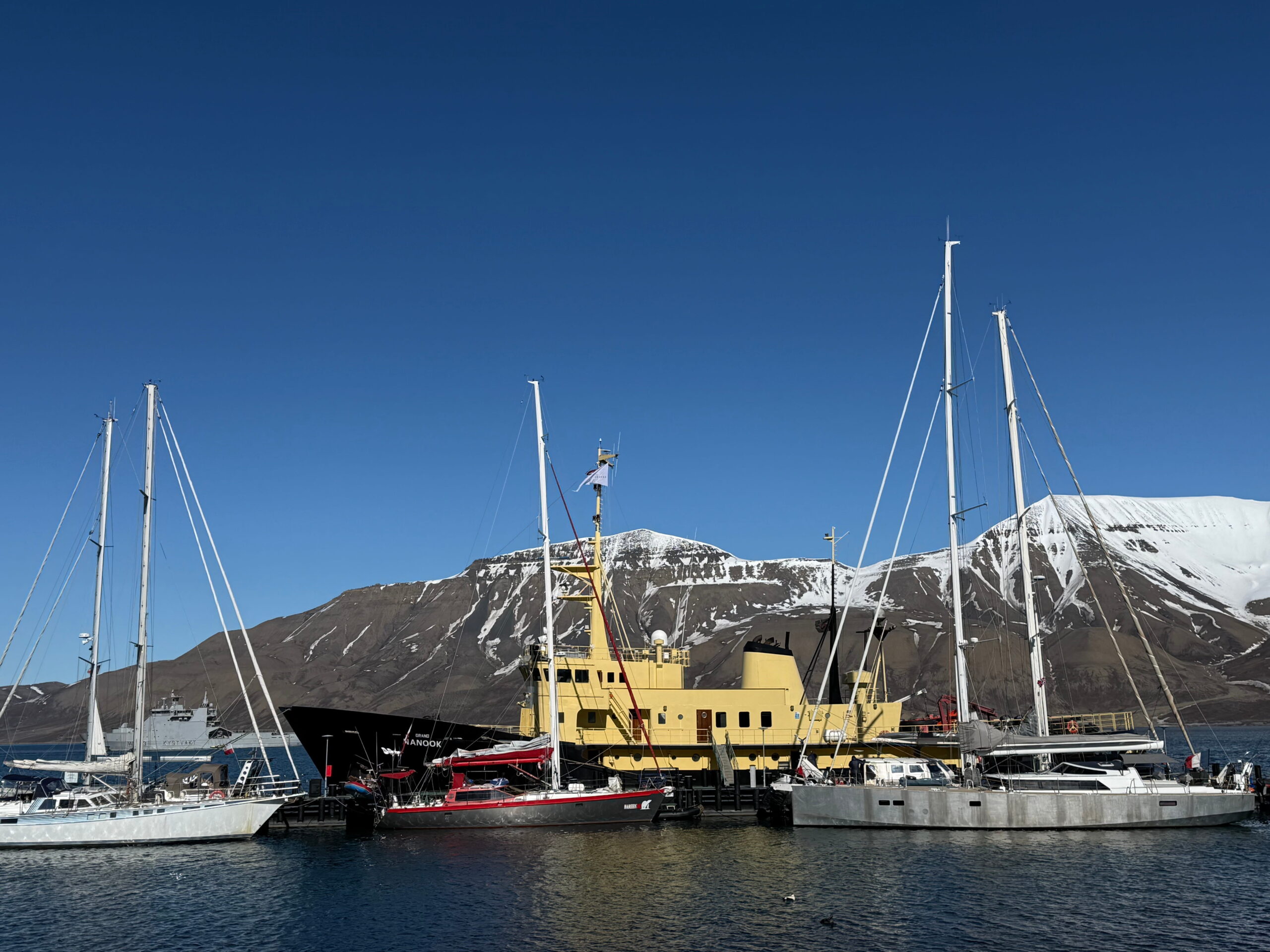
Ships in the port of Longyearbyen, Svalbard. Photo: Ekaterina Uryupova
In September 2025, the World Trade Organization’s Agreement between 86 members, representing two thirds of the WTO, ratified the Fisheries Subsidies Agreement. The agreement was adopted at the WTO’s twelfth Ministerial Conference on June 17, 2022. It paves the way for the responsible use of global fish stocks and prohibits illegal, unreported and unregulated fishing, for instance, in waters outside the jurisdiction of regional fisheries management organizations (RFMOs) or by vessels not flying flags. What does this mean for the Arctic?
How Fisheries Subsidies Work in general?
Fisheries subsidies (as a financial support) are provided by governments and they can be such types of support as fuel subsidies, low-interest loans, and tax breaks, that lower the cost of fishing. It creates opportunities for fleets to work longer periods, including time at sea. In fact, if it is not managed effectively, it may create such obstacles as overexploitation, additional pressure on low biomass or understudied fish stocks, etc. However, the management of the fishing activities can be still effective on a local or national level, or at high seas with collective management arrangements.1)
Legal basis for fishing activities globally and in the Arctic Ocean
The Arctic serves as a central, shared body of water connecting and affecting the surrounding Arctic States. However, the legal basis for fishing activities here still has room for improvement.2) As of now, the international cooperation is based on the following agreements:
- All maritime activities in the World Ocean are based on the international legal framework originating from the United Nations Conventions on the Law of the Sea (UNCLOS), which was adopted in 1982. This document covers the territorial sea (12 nautical miles), exclusive economic zones – EEZ (200 nautical miles), continental shelves (beyond 200 nautical miles), and high seas. Every Arctic state manages activities with respect to maritime boundaries and jurisdiction in the Arctic Ocean.3)
- The UN Fish Stocks Agreement (The Agreement for the Implementation of the Provisions of the United Nations Convention on the Law of the Sea) is focused on the straddling and highly migratory fish stocks within the framework of the UNCLOS. Regional Fisheries Management Organizations are taking responsibility in the Atlantic and Pacific sectors to ensure the cooperation between nations.4)
- The Central Arctic Ocean Fisheries Agreement (CAOFA) provides great opportunities for cooperative governance of the Arctic, including Arctic and non-Arctic states. This document establishes a grounds for the regulation of fisheries in the high seas of the Central Arctic Ocean (CAO), including a temporary moratorium on unregulated commercial fishing. The agreement’s precautionary nature seems to be an advantage for planning fishing activities in adjacent areas, as well as to prevent any negative impacts to commercially significant fish species in the Central Arctic and adjacent seas.5)
What is the new WTO Fisheries Subsidies Agreement?
Recently, in addition to above-mentioned agreements, the World Trade Organization has announced that the Agreement on Fisheries Subsidies has entered into force after two-thirds of WTO members formally accepted proposed cooperation in the fisheries sector. The agreement was adopted in 2022, at a time when global fish stocks were already in visible decline.6)
The Agreement will promote food security by curbing subsidies to illegal, unreported and unregulated fishing, by prohibiting subsidies to fishing overfished stocks, and by prohibiting subsidies to fishing on the unregulated high seas.7)
The goal of the Agreement is to support sustainable fisheries management practices by all WTO members through stopping overfishing by eliminating certain forms of fisheries subsidies which contribute to overcapacity and overfishing, by cutting subsidies that contribute to illegal, unreported and unregulated fishing, and by stopping the introduction of new similar subsidies. It means that it will affect governments and the legal framework in general, with a focus on sustainability. Recently, in 2026 at the fourteenth Ministerial Conference of the World Trade Organization (WTO) Yaoundé, Cameroon, this agreement has caught the attention of international organizations focused on sustainability. For instance, IUCN (The International Union for Conservation of Nature) has called for more attention to sustainable development in fisheries with focus on The WTO Agreement on Fisheries Subsidies.8)
Goals and expectations for the global and the Arctic fisheries
As of 2019, global fisheries subsidies were at USD 35.4 billion in 2018, of which capacity-enhancing subsidies are USD 22.2 billion. Among the top subsidizers are China, the EU, USA, the Republic of Korea, and Japan – these states contribute the most to the total estimated subsidy.9) The 2021 Oceana report on harmful fisheries subsidies showed that the contribution of parties could vary by the size, distribution and sub-sectors of fleets, drivers for distant-water and high-seas fishing, and other factors.10)
Harmful fisheries subsidies can be caused by local policies and legal frameworks, lack of information on the biology of fish species and commercial characteristics, and specifics of trade and tax regulations, and more. All these obstacles may be potentially eliminated or reduced by effectively distributing subsidies, funds and government management of fleets.
Fishing activities in the Arctic Ocean take place in the territorial and EEZ waters, and in the international waters (high seas). Although northern waters are characterized by the effective management mechanisms of Arctic states working together and creating multilateral agreements, the potential for a conflict over biological resources exists.11)
However, fish stocks in the north are declining. A recent decline in Northeast Arctic cod stock has been recorded, caused by increasing fishing pressure which has prompted arguments for a reduction of fishing quotas.12) Based on local reports, Norwegian shellfish landings are showing a similar trend over the past year.13) Salmon species in Arctic rivers are experiencing dramatic declines as well, and as a result these changes are affecting Indigenous communities and their access to food, and are having a negative impact on traditional Indigenous cultures.14)
These factors create a more competitive environment between interested parties in global fishing, and the WTO Fisheries Subsidies Agreement aims to focus on the sustainability of the fishing industry in the north as well. Some possible positive outcomes of this new international cooperation are the following:
More information about fish stocks shared
It is believed that the new agreement will initiate the collection of data, new exploration activities, and improve information sharing. Local databases may play a crucial role in this process, as they will be in the focus while reporting on specific species and their migrations within the Arctic region and adjacent seas. It is even more crucial for nations to work as a team while monitoring fish stocks, which are characterized by migratory behaviour under new climate change conditions. It has been found that the exploitation status of marine species is negative when a stock is shared in comparison to when it is contained within a single EEZ – climate change affects sustainability of these stocks when they shift their distribution.15) In addition, information sharing helps recognize the importance of ecosystem effects, for instance scientists working together to study the interaction of Northeast Arctic cod with capelin and herring in the Barents Sea.16) If WTO members implement optimal ecosystem approaches as described in the Fisheries Subsidies Agreement, it will become a significant tool in modern fisheries management in the northern seas.
Optimal management of fleets
The problem of overfishing and illegal/unreported fishing is caused by aggressive harvesting of open access resources, and as a result of it – the collapse of a fish stock. Access to new technologies, as well as absence of legal framework, usually lead to overcapacity in national fishing fleets.17)
However, the flexibility of the industry, together with strong scientific advice and appropriate agreements, may quickly adjust the capacity of the fishing fleet. Among positive examples, the Treaty on maritime delimitation and cooperation in the Barents Sea and the Arctic Ocean signed by Norway and Russia (which came into force in 2011) established a solid management framework in the region for the jointly harvested fish stocks and resulted in the effective use of fleets.18) The WTO Fisheries Subsidies Agreement, by controlling vessel numbers, efforts, and catch limits, should focus on economic viability and the sustainability of fleets in the Arctic region.
Effective negotiations between parties
The WTO, as an international organization, provides a framework for effective negotiations and decision-making for all the parties involved. The new agreement may open discussions on novel technologies and optimal management of fleets between those countries with limited options for direct dialogue due to political reasons. The shared fishing grounds and open access resources of the Arctic Ocean may lead to productive sustainable management practices. However, the first step from agreement to action is required.
In addition, the WTO supports Indigenous people – as a fair trading system must also defend food security and the rights of smallholder farmers, Indigenous Peoples – and perhaps the new fisheries agreement may undertake actions to protect the rights of Indigenous peoples and traditional life of local communities in the Arctic. In fact, only a few WTO member states subsidize fisheries in a way to support fishing as an economic activity through technical and economic instruments as well as traditional cultural expressions or rituals.19) The growing number of parties which are the most supportive to Indigenous communities in the North, i.e. Arctic States, may become a new trend in the work of the WTO members based on the signed agreement.
Transparent reporting system
If the WTO Fisheries Subsidies Agreement works well, then we can reach a well-described reporting scheme used by different nations. Collecting and sharing data based on an uniformed system will contribute to the development of a transparent reporting system. The Agreement aims to eliminate hidden or intentionally replaced data by motivating parties to share as much information as they can in order to improve our knowledge about the changing Arctic ecosystem. Members are required to notify the WTO annually on the types of fishing activities subsidized, the status of fish stock, measures on conservation, and fleet and vessel details. With the aim to support, the Fisheries Transparency Initiative (FiTI) has announced the launch of a new web-based Fisheries Information System (FIS), which can be used to share information about their fisheries.20) A well-developed, transparent reporting system improves fisheries through open data and modern technology.
Scientific advice and fishing quotas
Following scientific advice is a key to effective fishery management. In past decades, while using new technologies which give us better understanding of some aspects of climate change, the Arctic states and some observers have reached a consensus on the establishment of fishing quotas. In the Iceland-East Greenland-Jan Mayen area, there is a quota for the Barents Sea capelin, and in the East Greenland/Iceland/Faroe Islands, there is quota for Greenland halibut. In Iceland there is quota for Northern shrimp, and in the Barents Sea, based on joint Russian Norwegian quotas, there is a limit on catches of the Northeast Arctic cod and haddock.21) The WTO Fisheries Subsidies Agreement aims to support communication between scientific institutes and industry players for sustainable fisheries management. This practice has been used in many parts of the global ocean, and it will help to monitor the ecosystem characteristics of the Arctic better, and, if required, to adjust recommended catches through subsidies. The more we know from the field, the more efficient the management is.
Strengthened international cooperation
The WTO Fisheries Subsidies Agreement promotes global partnership by establishing a collective structure allowing to prohibit harmful subsidies for illegal, unreported, and unregulated (IUU) fishing, as well as nations supporting the use of overfished stocks and fishing in unregulated high seas areas. The WTO Agreement itself is an example of cooperation but it still supports individual country’s goals, however, when the Subsidies Agreement is mentioned – then we can talk about the global sustainable fisheries and international coordination.
Also, political decisions often distract countries from direct dialogue in different industries. The WTO Fisheries Subsidies Agreement may play a crucial role in preserving the long-time established local agreements from being disturbed: for instance, the Norwegian-Russian Fisheries Agreement in the Barents Sea works but is going through a stagnation period due to the conflict over Ukraine.22) This newly ratified WTO agreement will enhance the collaboration between countries to continue dialogue with the focus on sustainability.
Conclusion
The WTO Fisheries Subsidies Agreement has a good potential for the future development of Arctic fisheries. Through optimal fisheries management, WTO members can not only establish solid international cooperation, but also show effective economic indicators and achieve sustainable goals while harvesting biological resources in the North, while hopefully taking into account the opinion of Indigenous communities as well. It will take time to negotiate additional recommendations on fisheries subsidies as it is quite a complex activity. However, the states party to the agreement have agreed that subsidies are prohibited for illegal fishing, fishing of understudies stocks, and on the high seas outside of established management areas. At the end of the day, the WTO Agreement provides an excellent platform from which sustainable development of the industry can be carried out.
Ekaterina Uryupova is a Senior Fellow at The Arctic Institute.
References