The Arctic Institute's 2026 Connecting the Cryosphere Series: An Introduction
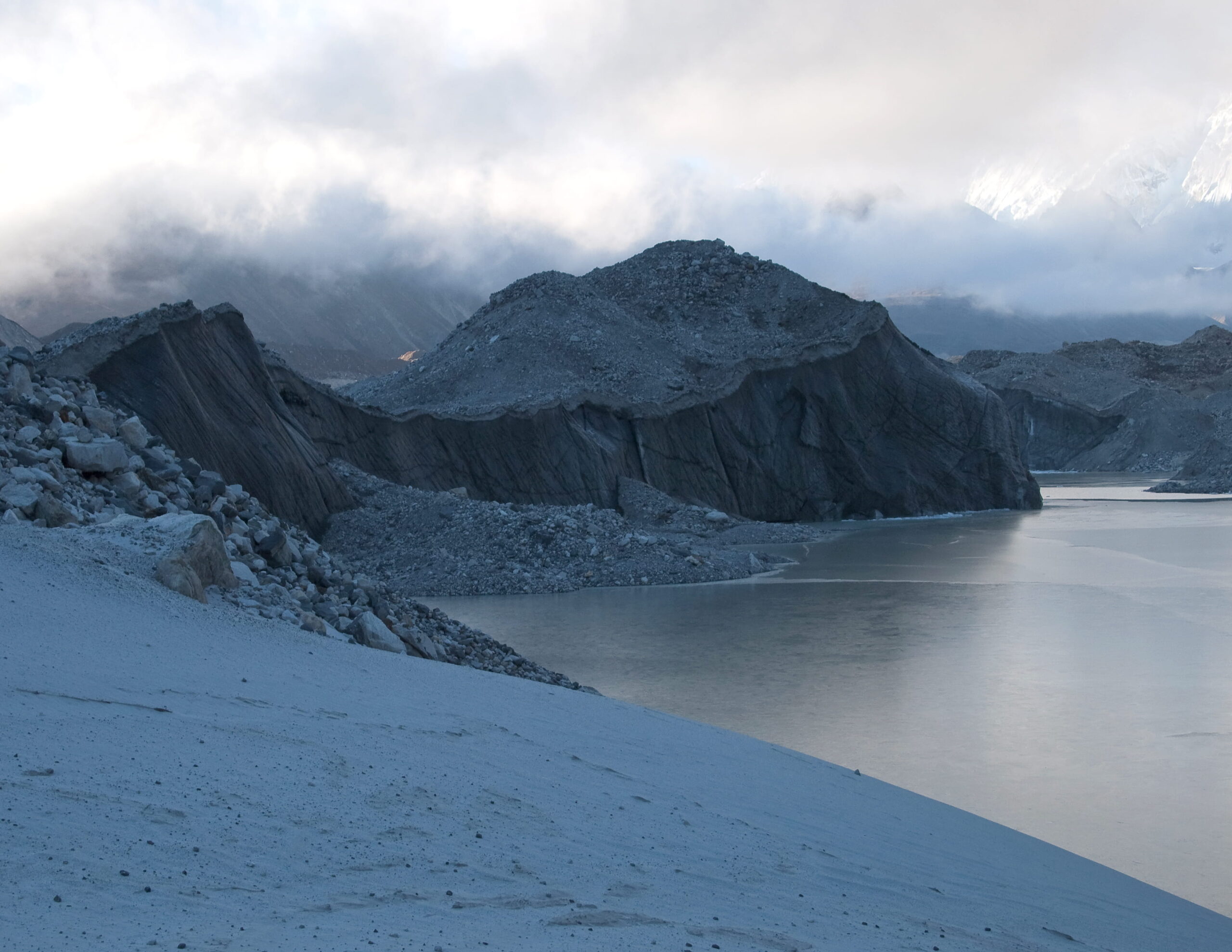
Ngozumpa Glacier, islands and lakes, Nepal. Photo: Vyacheslav Argenberg
The Arctic Institute Cryosphere Series 2026
The cryosphere encompasses the world’s frozen spaces, from the polar ice caps to glaciers close to the equator. While global discourse on climate change has consistently recognized the shared futures faced by alpine and polar regions, much of academic literature remains geographically siloed, with interdisciplinary approaches limited largely to specific regional contexts. Our initial intention in forming this series was to identify and strengthen connections across geography and to bring Arctic scholars into conversation with places that could act as foils against which to hold up their own research. The authors in this article series brought their own interpretation of what connection means and where they perceive a need for greater connectivity. This multitude of synapses underscores the need for and interest in bridging borders among regions, states, (more-than-)humans, and disciplines.
The first two articles in this series consider the interconnectedness of icy places across geography. Jennifer Rainsford’s interpretive map of the Arctic Ocean sets the stage for the series. Ongoing and planned extractive sites co-exist on the same page as animal migration routes and sea ice predictions. Rainsford’s layers of intersecting activity in northern maritime spaces demonstrate areas for interaction (and disruption) between human economic processes and the diversity and natural cycles of the Arctic’s ecosystem. Extending beyond the Arctic, Robert Henderson reflects on decades of skiing and hiking in Norway, Canada, and Nepal, bearing witness to the environmental changes across the cryosphere. Henderson’s meditation on grief recognizes the duality of experiencing rapid and creeping glacial melt and decline, revealing that while overarching attitudes toward nature diverge regionally, the phenomena and grief of cryospheric change are shared.
The middle of the series considers connections across the notion of the human-nature divide. Governing across the Arctic has remained a challenge, with differing and often conflicting understandings of rights and responsibilities. Romain Chuffart, Apostolas Tsiouvalas, and Mana Tugend unpack the complexities of extending the concept of Rights of Nature to sea ice in order to bring polar legal frameworks into alignment with a valuation system that reflects ‘sea ice’s intrinsic value’ (Chuffart et al., forthcoming). The laws currently in place are unevenly able to apply to sea ice in its multitude of forms, as it ebbs and flows with seasonal change and in geographic position. Adding to this discussion of the cryosphere as an actor, Katie Craney and Klara Maisch write in conversation with C’ulc’ena’ Łuu’ (Gulkana) Glacier in Alaska. Their piece builds on their experiences visiting C’ulc’ena’ Łuu’ and seeks to foreground its experience within the history of place and to decenter the anthropocentric gaze in archival work. This article challenges readers to consider what forms collaboration with the cryosphere takes–can a glacier be a project participant? A co-author? Or something else entirely, requiring a new term and way of thinking about the ice humanities and the relationships among its contributors?
This question of human-environment kinship is also addressed reflexively in scientific settings. The third and final part of the series refocuses on relationships between the cryosphere, our colleagues, and ourselves to take an introspective and self-reflective look at what it means to conduct cryosphere research. Keeya Beausoleil’s auto-enthonographic article connects her experiences as a Métis woman and researcher in Svalbard, a place with no historical Indigenous presence. Her mediation of self and identity is reflected in the creation of an artistic piece, bringing together the landscape of Svalbard and body in the shape of a corset. Lastly, the series concludes with Friederike Gehrmann and colleagues’ documentation of a collaborative project across the art-science divide. Through a rigorously intentional transdisciplinary process, the project embarked on by the authors resulted in the revelation of a new framework comprising a set of tools that are grounded in ‘nature’s relational values’.
The threads woven across these articles point toward a broader imperative–that cryospheric scholarship must be both geographically porous and methodologically integrative. By holding Arctic scholarship in conversation with snowy contexts around the world, and by treating ice and snow as active participants rather than passive subjects, we begin to map the fuller network of relations that sustain the cryosphere and our research practices across boundaries.
Mariel Kieval is a doctoral researcher at the Norwegian University of Life Sciences and a Research Associate with The Arctic Institute. Seira Duncan is a postdoctoral researcher at the Center for Ainu and Indigenous Studies at Hokkaido University and an associate at the Harvard University Asia Center.