A Framework for Avoiding Polar Disasters
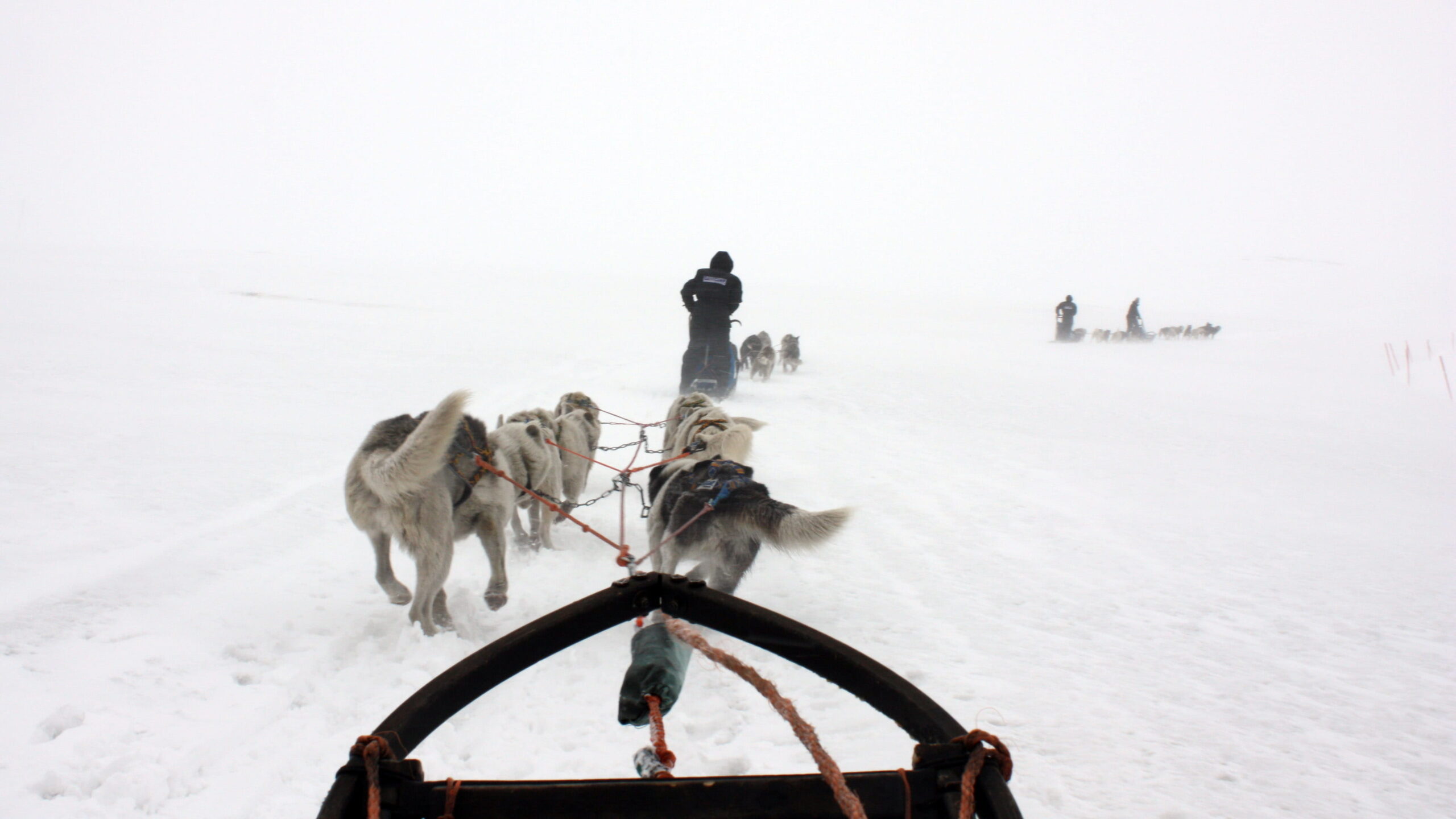
Dogs are banned in the Antarctica, but not in the Arctic, as in this photo from Svalbard. Photo: Ilan Kelman
The Arctic Institute Polar Disaster Series 2026
- The Arctic Institute’s 2026 Polar Disaster Risk Reduction and Response Series: An Introduction
- Crisis Management in Arctic Communities: Principles of Crisis Response
- Disaster Risk Reduction and Response: Greenland
- Risk Analysis of Infrastructure Vulnerability and Sustainable Resource Exploitation in the Arctic
- Ships in the Arctic Need to Plan to Survive Until Help Arrives
- From Pandemic to Permafrost: Legal Pathways for One Health Preparedness in Arctic Communities
- Icebergs and Navigation Safety in Antarctica: Possible Impact of new Sea-Ice Regime in the Southern Ocean and South Atlantic Ocean
- Legal Preparedness for One Health in Polar Regions: Strengthening Disease Surveillance
- A Framework for Avoiding Polar Disasters
- Keeping an Eye on Iceland: Volcanoes and Climate Change
- Choosing the Bear: Navigating Spectacular Risks in Longyearbyen
- Local Perspectives in Disaster Risk Reduction: Visualising Disaster Risk in Svalbard
- The Arctic Institute’s 2026 Polar Disaster Risk Reduction and Response Series: A Conclusion
The Disasters Avoided project provides a conceptual framework for key actions that society can take to avoid disasters. It was developed from knowledge gained through dozens of interviews conducted with stakeholders and institutions worldwide who succeeded in mitigating or preventing disasters, while combining these insights with published work from around the world and across history.
With the goal of inspiring positive change, this work produces and disseminates examples describing initiatives, policies and actions to avoid disasters. The framework is:
- the right mindset
- the right investment
- good governance
- good data
- meaningful inclusion
- meaningful targets
Here, we apply this framework to the polar regions.
The right mindset implies commitment to short- and long-term preventive action. Although all six factors are closely interlinked, starting with the right mindset greatly facilitates the realization of the other five. Without the right mindset, monetary investment and data collection in particular, will default to disaster response activities over prevention.
The 2017 Greenland tsunami, generated by a thaw-induced rockfall shows how pre-hazard monitoring as part of a wider warning system could have prepared communities and saved lives. Instead, it came as a surprise killing at least four people and leading to the abandonment of at least two communities.
The right investment must be linked to goals and metrics that provide value to peoples living in the polar regions. For example, if increased resource extraction is permitted in the Arctic, then it should be coupled with investments to support communities who may not benefit from and may be harmed by those activities.
The balance is tricky and, at times, irresolvable. Many inside and outside the Arctic see the desire for resource extraction as the disaster, devastating environments, cultures, and communities. Others see it as their only viable option for a reasonable quality of life in their northern communities, often indicating that it should be about some—not all—resource extraction.
In northern Sweden, iron ore mining by the town of Kiruna led to subsidence, so the people voted to move and rebuild large parts of the town in order to continue mining. In 2023, the largest known European deposit of rare earth metals was discovered nearby, enthusing many of Kiruna’s residents for even more mining. Who should have the most say for risk-informed governance of Kiruna’s resources?
Good governance is about good decisions and proper accountability. In polar regions, it entails collaboration among and navigating through the confluence of subnational, national, and international interests, policies, laws, and treaties, many of which do not incorporate disaster prevention. Globally unique governance mechanisms include the Svalbard Treaty and the Antarctic Treaty System, both of which would benefit from many more clauses for avoiding disasters.
If preventing disasters were codified, then those in power could be held accountable when their decisions create risks and vulnerabilities, so that climate change does not become a scapegoat for explaining all polar disasters. The International Code for Ships Operating in Polar Waters (Polar Code) from the International Maritime Organization is an excellent example, aiming for safe shipping irrespective of the rapidly changing polar environments. Other examples of shipping-related governance for avoiding disasters are the International Convention for the Safety of Life at Sea (SOLAS) and the International Convention for the Prevention of Pollution from Ships (MARPOL) with regulations specifically to avoid pollution from heavy grade oils. Monitoring is key for enforcement.
Good data includes Earth Observations (EO) from satellites, ground instrumentation, and communities’ knowledges, records, and experiences. While the usefulness of EO for characterizing changes in the polar regions is well established, its translation into knowledge aimed at preventing polar disasters has been hampered by challenges related to sparse in-situ networks, satellite data latency, and the lack of a unified Arctic data repository—compare to The Southern Ocean Observing System—among others. In addition, in the future, the Arctic could experience potential gaps in EO where the loss of permafrost prevents future ground station deployment and data collection.
In the Arctic, the centuries of wisdoms built up by Arctic peoples must be used in tandem with modern, remote, and in situ EO. In Antarctica, without a known Indigenous population and research missions being short-term, EO rely on in-situ instruments including specialized techniques (which are also Arctic-relevant) for penetrating deep into the Earth and looking back eons in time.
With this wealth of knowledge, polar hazards such as storms, permafrost melting, wildfires, and tsunamis do not need to turn into disasters. Hazards such as persistent organic pollutants, oil spills, mine tailings, and dust in the air can and should be reduced substantially. In Antarctica, strict monitoring protocols, including through EO, can aim to stop non-native species from reaching the continent due to human activity.
A related action to prevent the introduction of non-native species was banning dogs from Antarctica in 1994. The reasoning was sound. It also meant that dogsled travel was no longer possible, whereas vehicles using fossil fuels continue to be permitted. Not that dogsled travel is necessarily recommended or desirable for scientific and exploration work—although it is often attractive for tourism, where permitted—but it raises the questions of what humans seek for Antarctica and balancing hazards, such as canine distemper and human-caused climate change from fossil fuel use. Who makes these decisions, how, and with what input are all important elements in avoiding polar disasters.
Meaningful inclusion refers to involving everyone in making and acting on policies or decisions to prevent future disasters, including Indigenous peoples and their centuries of accumulated understandings about their environments and the intertwining of natures and cultures. Private companies, including those involved in transport and resource exploration/extraction, must be engaged in risk-informed decision-making, as must be non-profit groups opposing and supporting the private sector activities. Inclusion is important for setting targets and committing to investments that are responsive to all peoples, not just those with the most power or influence. Communities should be included in designing, collecting, and validating instrument-based EO for practical use including decision-making.
Meaningful targets or goals are needed for positive action to be realized, for which metrics and indicators can help as a guide for measuring progress towards meeting those targets and goals, provided the numbers are not taken as immovable absolutes. For example, the Expert Group on Black Carbon and Methane tracks emissions trends of these pollutants in Arctic countries and recommends mitigation actions, including adopting modern technologies and best practices in the vehicular, oil, and gas industries. Metrics for mining activities should encompass its full lifecycle – design, operation, decommissioning, and rehabilitation.
Polar regions are experiencing greater rates of temperature increases compared to lower latitudes. Ice, permafrost, habitat loss, and increased smoke pollution are already manifest in the Arctic, while Antarctica faces its own major changes through melting ice sheets, changing ice-ocean interfaces, warming sea surfaces, and continuing pollution. These changes do not condemn polar regions to unavoidable disasters.
The Disasters Avoided framework supports proactive risk management incorporating all environmental and social influencers, as well as their interactions. The push for increased economic and livelihood activities—including shipping, tourism, resource extraction, agriculture, and people moving in to take advantage of these opportunities—adds to possible disaster risks and should be conducted in a way that ensures that disasters are avoided.
Ana Prados is a senior research scientist at the University of Maryland, Baltimore County, USA. Gareth Byatt is an independent risk and resilience consultant, having founded and leading Risk Insight Consulting. Ilan Kelman is Professor of Disasters and Health at University College London, UK and Professor II at UiT The Arctic University of Norway.