Risk Analysis of Infrastructure Vulnerability and Sustainable Resource Exploitation in the Arctic
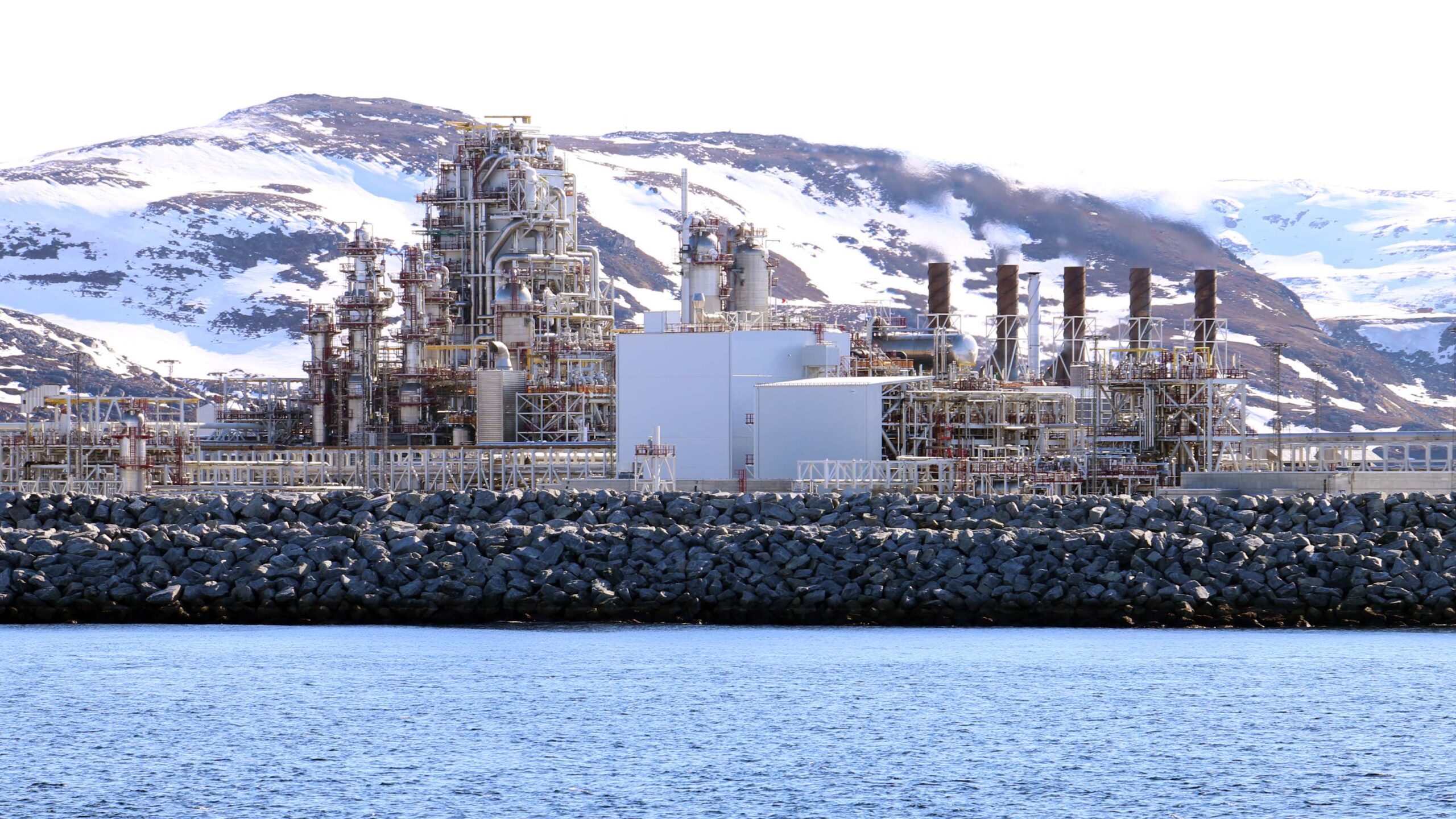
Hammerfest LNG an onshore plant on the island of Melkøya, Norway. Photo: Ilan Kelman
The Arctic Institute Polar Disaster Series 2026
- The Arctic Institute’s 2026 Polar Disaster Risk Reduction and Response Series: An Introduction
- Crisis Management in Arctic Communities: Principles of Crisis Response
- Disaster Risk Reduction and Response: Greenland
- Risk Analysis of Infrastructure Vulnerability and Sustainable Resource Exploitation in the Arctic
- Ships in the Arctic Need to Plan to Survive Until Help Arrives
- From Pandemic to Permafrost: Legal Pathways for One Health Preparedness in Arctic Communities
- Icebergs and Navigation Safety in Antarctica: Possible Impact of new Sea-Ice Regime in the Southern Ocean and South Atlantic Ocean
- Legal Preparedness for One Health in Polar Regions: Strengthening Disease Surveillance
- A Framework for Avoiding Polar Disasters
- Keeping an Eye on Iceland: Volcanoes and Climate Change
- Choosing the Bear: Navigating Spectacular Risks in Longyearbyen
- Local Perspectives in Disaster Risk Reduction: Visualising Disaster Risk in Svalbard
- The Arctic Institute’s 2026 Polar Disaster Risk Reduction and Response Series: A Conclusion
The rising temperatures in the Arctic, driven by human-caused climate change, have significant repercussions for the region’s peoples and ecosystems, with impacts extending far beyond the region. The Arctic has warmed faster than the global average, attributed to Arctic Amplification, wherein the Arctic is warming twice to four times faster since 1979 due to several endemic physical features of the region, such as oceanic heating and ice-albedo feedback (The ice-albedo feedback is a positive feedback loop, where a system undergoes cycles that amplify or diminish its effects. In the Arctic, as sea ice melts, it reveals a further darker ocean surface. This darker water absorbs additional heat, leading to further melting of the ice.) due to diminishing sea ice, the Planck feedback (The Planck feedback is a negative feedback mechanism within a planet’s climate system, where an increase in temperature of the surface and troposphere enhances the rate at which infrared energy escapes into space, thereby helping to stabilize the temperature.), lapse-rate feedback (A positive feedback mechanism occurs when surface warming in the Arctic surpasses that of the free atmosphere, creating a cycle that enhances warming further due to the atmosphere retaining heat close to the surface, which intensifies with rising temperatures.), near-surface air temperature inversion, cloud feedback (Referring to transformations in the clouds due to climate change which can further contribute to the Amplification.), ocean heat transport, and meridional atmospheric moisture transport (The movement of water vapour within the atmosphere along north-south (meridional) lines. It is essential for redistributing heat and moisture across the globe.) along with a reduction in Asian aerosols and declining air pollution in Europe.1) A formidable threat exists in the alarming degradation of Arctic permafrost, which stores approximately 1.7 trillion metric tons of carbon2) This substantial reserve, if released, could significantly exacerbate human-caused climate change, also noting that “the enhanced CH4 emissions have 35 times more warming potential than CO2 on a 100-year timescale.”
Within the above context of Arctic transformation and its repercussions, this paper mainly deals with risk analysis and management of infrastructure vulnerability and sustainable resource exploitation in the Arctic. Risk essentially refers to potentially negative or detrimental outcomes. Risk analysis is a logical approach to understanding the factors, likelihood, and consequences of the risk.3) Risk analysis and management are correlated in every decision-making process. The risk management part deals with the appropriate framework of planning and decision-making to cautiously avoid, reduce, or maintain a particular level of risk, which is evaluated through risk analysis. The growing human population in the Arctic, along with the development of infrastructure such as roads and buildings, poses a significant threat to the region’s ecosystems.4) Furthermore, the large-scale exploitation of natural resources, including fisheries, oil, and gas, contributes to this damage. The 2018 “Agreement to Prevent Unregulated High Seas Fisheries in the Central Arctic Ocean” aims to prevent unregulated fishing in the central Arctic region recognising the lack of scientific knowledge about the repercussions of such activities.5)
The United Nations’ definition of DRR is “Disaster risk reduction is aimed at preventing new and reducing existing disaster risk and managing residual risk, all of which contribute to strengthening resilience and therefore to the achievement of sustainable development.”6) This paper aims to highlight the DRR efforts in the Arctic through a targeted approach of policies and decision-making. The analysis is mainly based on secondary data from the Arctic Council. The paper employs content analysis and theoretical substantiation for its inferences regarding risk analysis and management in the Arctic. The melting ice sheets in the Arctic might usher in ice-free summers by the mid-twenty-first century7) along with various other changes, which necessitate timely risk identification and management, along with internationally coordinated policy to effectively mitigate adverse consequences.
Disaster risk reduction in the Arctic
The Arctic has initiated DRR efforts to mitigate risks associated with climate change and socio-economic development. These initiatives are particularly crucial as growth and development in the region have contributed to amplifying existing vulnerabilities and introducing new emerging challenges.8) Response activities in the Arctic involve Risk and Emergency Management, Coast Guard, and Search and Rescue (SAR).9) In this respect, SAR cooperation initiatives under DRR and response have emerged as a prominent feature for bi- and multilateral agreements.10) Notably, this cooperation was solidified at the seventh Ministerial Meeting of the Arctic Council in 2011, leading to the adoption of “the first legally binding international agreement adopted within the framework of the Arctic Council” which came into force in 2013.11) The growth of commercial shipping activities has significantly changed the risk of oil spills. The Emergency Prevention, Preparedness, and Response (EPPR) Working Group of the Arctic Council actively engages in safeguarding the Arctic region by developing strategies for spill prevention and response.12)
Global frameworks such as the Yokohama Strategy and Plan of Action for a Safer World (1994), the Hyogo Framework for Action (2005-2015), and the Sendai Framework for Disaster Risk Reduction (2015-2030) have all recognised the importance of local-level preparedness and the integration of Indigenous perspectives. Kirchner and Cristani (2023) assert that current treaties negotiated by Arctic states primarily address these regional concerns linked to increased risks for inhabitants; however, the presence of political constraints indicates a substantial potential for future treaties that could be aimed at strengthening DRR laws and practices.13) In this context, Frisso (2022) also notes evidence of incidents, such as oil spills, severely impacting the livelihoods of Arctic populations, reinforcing the necessity for more balanced, inclusive, and legally coherent assessments rather than merely allowing oil spills to dissipate naturally.14) Further, by analysing earlier EPPR measures, attempts have been made to incorporate Indigenous and local knowledge, which have begun to address these issues. Despite various efforts, there are challenges and limitations, including significant changes to hazards and disaster risks15) including those connected with extreme temperatures, wildfires, and pollution.16) The implementation of effective approaches and a thorough analysis of Arctic DRR efforts still have a considerable journey ahead.
Risk analysis of infrastructure vulnerability and resource exploitation
The vulnerability of Arctic infrastructure refers to the susceptibility of physical structures and systems threatened due to various changing conditions, including climate change, notably permafrost thaw, coastal erosion, and increased wave power. This situation presents a significant risk of instability, with many settlements experiencing the consequences. Research suggests that Arctic coastal erosion has shown signs of acceleration in many regions over the past decades and model projections at benchmark years 2030, 2050, and 2100 indicate a further intensification of its impacts, driven by the combined effects of sea-level rise and permafrost thaw.17)
This study conducts a risk analysis drawing on recent findings from the EPPR report.18) The analysis focuses on extracting quantitative data regarding infrastructure vulnerabilities and sustainable resource exploitation in the Arctic, illustrated in Figures 1 and 2, respectively. According to this EPPR report, a substantial portion of existing infrastructure, including residential, industrial, and transportation, occupies low-lying areas that are highly vulnerable due to increasing threats of coastal erosion and rising sea levels. Figure 1 below reveals a visual representation of infrastructure vulnerabilities, categorising them into high-, medium-, and low-hazard potential across Arctic regions, as extracted from the EPPR report.
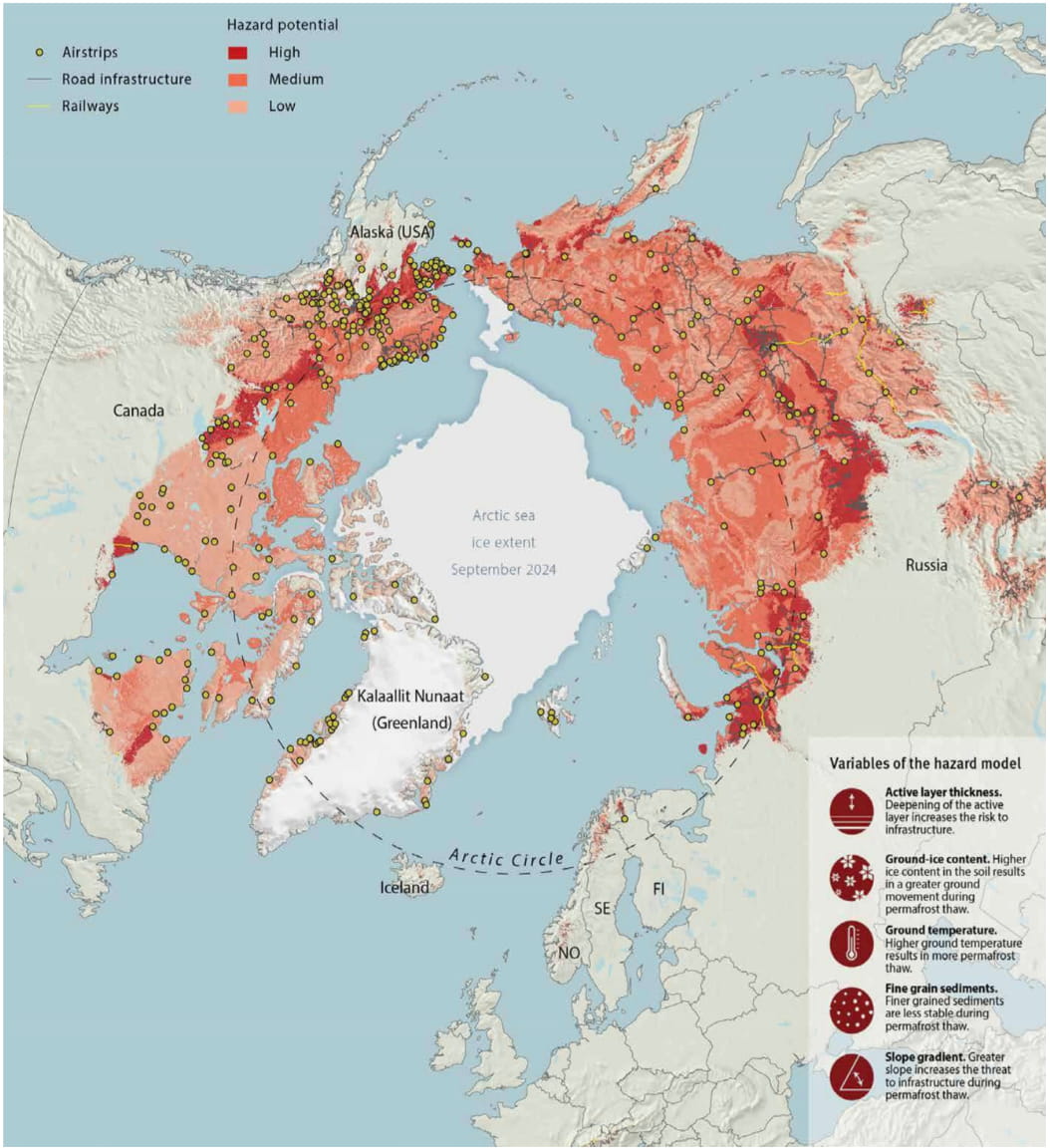
As observed in Figure 1, the level of infrastructure vulnerabilities accelerates due to emerging challenges, suggesting an urgent need to formulate local adaptation policies tailored specifically for Arctic conditions. By 2050, approximately three million people will inhabit regions where permafrost is at risk of deterioration or will completely disappear.19)
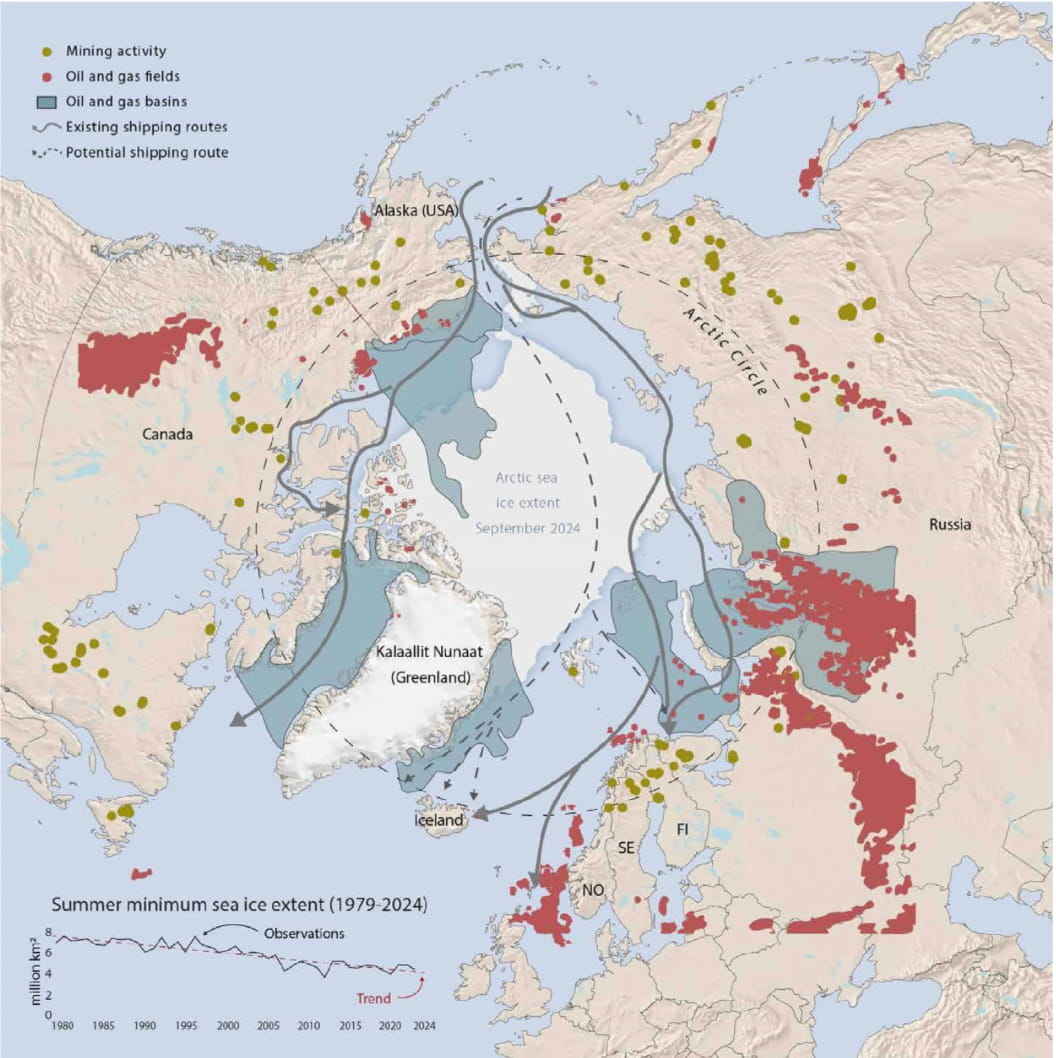
The Arctic Council EPPR Report also states that climate change and technological progress have created new opportunities for resource exploitation and commercial expansion in the region. The melting of sea ice further enables access to untapped reserves of oil, gas, and minerals estimated to contain around 70 per cent of undiscovered oil and 30 per cent of undiscovered natural gas reserves. This development has led to a surge in Arctic marine shipping activities including the development of deep-sea mining for seabed minerals. Additionally, new opportunities for commercial fishing and Arctic tourism have emerged, which were previously almost inaccessible due to sea ice. In the absence of pre-emptive action, this resource exploitation and these increased human activities would likely heighten risks, notably oil and cargo spills, ecosystem damage, and pollution.
Figure 2, again extracted from the Arctic Council EPPR report, depicts existing and potential shipping routes as well as potential resource exploitation for mining, oil, and gas. In addition, Figure 2 illustrates Arctic sea ice extent as observed in September 2024, focusing on the decline of sea ice from 1979 to 2024, which facilitates greater accessibility for shipping and resource extraction, according to the report, although the report does not fully factor in possible changes to the sea, which might add hazards.
A need exists to improve real-time monitoring systems to mitigate infrastructure vulnerability and community safety plans, collaborating with local response systems. Comprehensive policy and regulatory frameworks could continue to be improved to balance these economic opportunities with sustainable practices.
Risk management and policy prescription
Risk management of infrastructure vulnerability (Table 1) and resource exploitation (Table 2) is illustrated via examples of existing frameworks and policy improvement suggestions.
| Risk Management Areas | Existing Frameworks | Policy Improvements |
|---|---|---|
| Monitoring & Research | Real-time data collection systems: PermaMeteoCommunity can assist in climate-related warnings. Community Mapping: SmartICE can provide adaptation and safe travels. Data on the thickness of ice: SIKU, available on both the web and mobile app. | Real-time monitoring systems expanded to other areas for hazards including melting permafrost. Community-level resilience-building policies. Promoting research on erosion, natural transformations, and climate change impacts. Gather more information regarding trends in Arctic shipping, focusing on the number of vessels, their types, and the routes taken, in order to facilitate safer navigation. |
| International Cooperation & Frameworks | ‘The Agreement on Cooperation on Aeronautical and Maritime Search and Rescue’ provides international collaboration on SAR operations. Polar Code: a set of guidelines for shipping in Arctic (and Antarctic) waters. | More Arctic Council led multilateral cooperation. Improved inclusion of and power for Indigenous peoples in international partnership negotiations. More effective monitoring of existing frameworks. |
| Regulatory & Policy Frameworks | Some communities, such as Newtok and Shishmaref in Alaska, are creating strategies to move away from eroding coastlines. | Eliminate systemic and institutional obstacles, especially financing and decision-making power, in order to help communities adapt effectively, including providing support for relocation where warranted and desired. |
| Preparedness and response planning The severe vulnerability of Arctic infrastructure requires a comprehensive and periodic risk assessment, including of transportation such as shipping routes. The shipping passages should be monitored by a body of experts under the supervision of the IMO or the Arctic Council alongside the application of more robust technologies to safeguard infrastructure. Archaeological structures and sacred sites necessitate additional attention due to their historical and cultural significance. | ||
| Risk Management Areas | Existing Frameworks | Policy Improvements |
|---|---|---|
| Monitoring & Research | ‘Environmental Impact Assessment’ (EIA): furnishes an overall impact of mining activities in the region. ‘The Arctic Corridors Research Project’, initiated under ‘Canada’s Oceans Protection Plan’, attempts to provide guidelines for low-impact shipping corridors. | More studies are needed to evaluate the sustainability of resource extraction and its effects. There is an urgent need for research and evaluation on pollution and the exploitation of seabed minerals. Enhancing community-driven impact assessments should be done by incorporating Indigenous and other local knowledge. Social Impact Assessments should address the cumulative impacts on Indigenous and non-Indigenous communities. |
| International Cooperation & Frameworks | ‘The Agreement on Cooperation on Aeronautical and Maritime Search and Rescue (SAR) in the Arctic’. ‘The Agreement on Cooperation on Marine Oil Pollution Preparedness and Response in the Arctic’ (MOSPA): an Arctic Eight agreement for oil spill operations. ‘The Agreement to Prevent Unregulated High Seas Fisheries in the Central Arctic Ocean Fisheries Agreement’ (CAOFA): regulates sustainable fishing practices. | Enhancing the cooperation mechanism among the Arctic Eight is needed. Where permitted by Indigenous peoples and they are compensated on their own terms, which could mean decision-making power over the processes, apply Indigenous knowledge, including for resource exploration and exploitation standards. Improved monitoring, evaluation, and enforcement of existing agreements and their effective implementation. |
| Preparedness & Response Planning | Joint training exercises, such as ‘the ARCSAR Table-top exercise (TTX) Oil in Ice 2021’. The MOSPA exercise in March 2024 underlined the importance of training and cooperation in joint operations among the Arctic Eight. | Stakeholders such as industry, governments, Indigenous peoples, and non-Indigenous peoples should map out complete and tested plans to address disasters in the Arctic. Execute comprehensive drills to evaluate abilities in Arctic environments to enhance expertise and alleviate public worries. |
| Regulatory and policy frameworks The rapidly transforming Arctic and the international repercussions demand regional and global cooperation. Institutional structures should frame a set of long-term guidelines for resource extraction through synthesising Indigenous and non-Indigenous knowledges regarding the sustainability of projects in the region. The regulatory norms must include human activities such as tourism, shipping, waste management, and pollution prevention. To effectively manage shipping traffic, a suggestion is to establish designated shipping lanes that account for ecologically significant or sensitive regions.21). Furthermore, companies must ensure that the vessels operating in the region meet standards such as the ‘Polar Code’. | ||
Conclusion
Climate change-induced thawing of sea ice is gradually easing the accessibility of the Arctic, yet with dangers such as permafrost melting and open ocean hazards. The rich reserves of natural resources attract global interest, especially among the regional players, but extraction in such a sensitive environmental zone poses severe challenges, which could result in extreme repercussions on a global scale. In the face of such developments, DRR, risk analysis, and risk management acquire prominence in the Arctic, especially for local communities.
This paper aimed to evaluate DRR in the Arctic, with direct association to risk analysis and risk management of two particularly pressing issues: infrastructure vulnerability and sustainable resource exploitation. Arctic environments require cautious human engagement to minimize risks to people and communities, prevent ecosystem damage, and mitigate infrastructure damage. Applying all relevant knowledges, both Indigenous and non-Indigenous, with proper permissions and without exploitation, could provide a set of standard operating procedures that would safeguard and maintain the sustainability of human activities in the Arctic. The changes offer opportunities for sustainable resource exploitation, but the cost of such economic “benefits” might outweigh the gains in the near-term and long-term. The decision-making process must involve local communities, and future policies must be informed by DRR and risk analysis regarding the region as a whole, in order to ensure appropriate risk management.
Nikita Agarwalla is a Doctoral Student in the Department of Sociology, Pondicherry University, India. Shashi Bhusan Kr Vishwakarma is a Doctoral Student in the Department of Politics and International Studies, Pondicherry University, India.
References