Legal Preparedness for One Health in Polar Regions: Strengthening Disease Surveillance
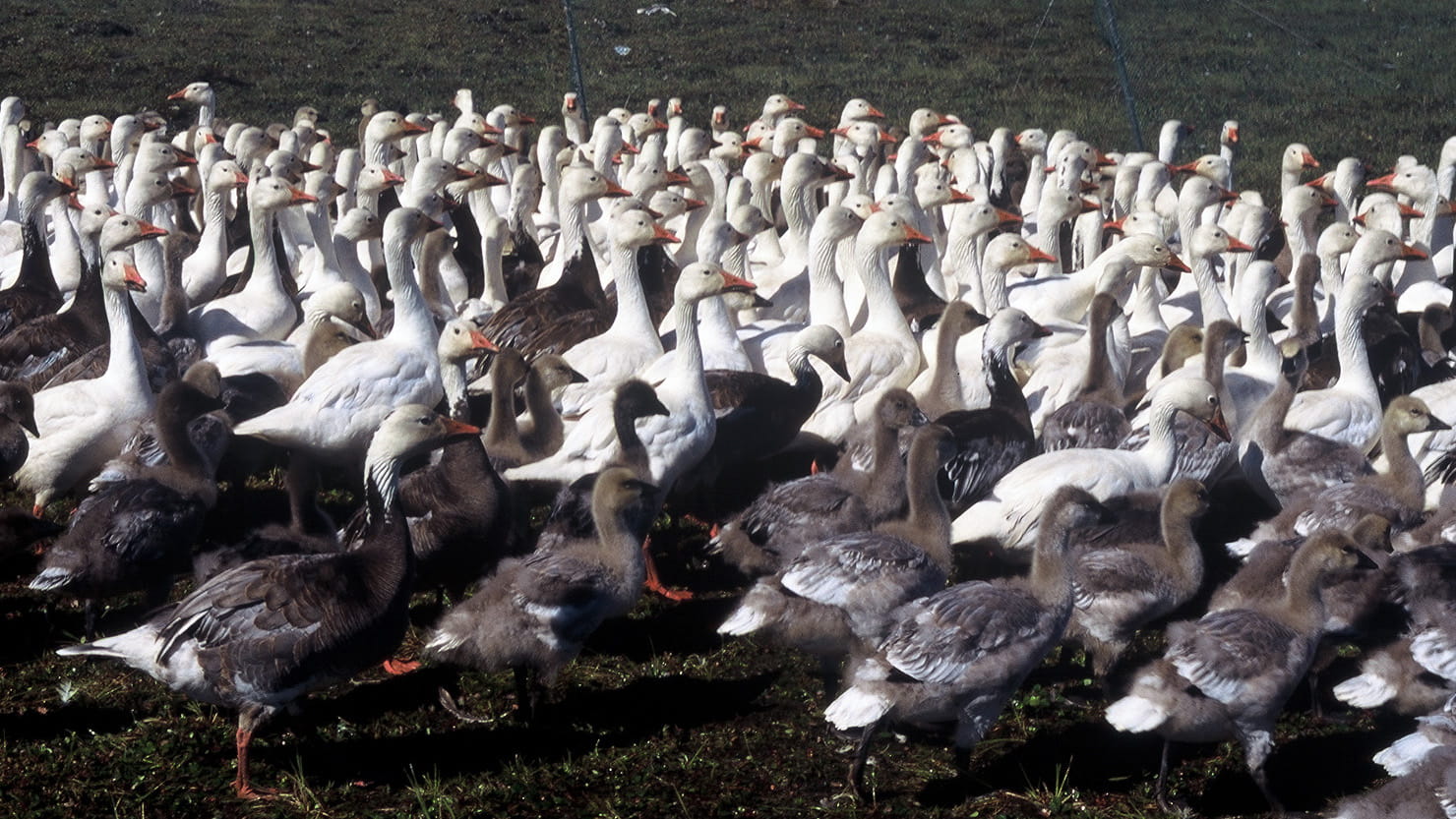
Wild snow geese, possible carriers of H5N1 bird flu. Photo: Ilan Kelman
The Arctic Institute Polar Disaster Series 2026
- The Arctic Institute’s 2026 Polar Disaster Risk Reduction and Response Series: An Introduction
- Crisis Management in Arctic Communities: Principles of Crisis Response
- Disaster Risk Reduction and Response: Greenland
- Risk Analysis of Infrastructure Vulnerability and Sustainable Resource Exploitation in the Arctic
- Ships in the Arctic Need to Plan to Survive Until Help Arrives
- From Pandemic to Permafrost: Legal Pathways for One Health Preparedness in Arctic Communities
- Icebergs and Navigation Safety in Antarctica: Possible Impact of new Sea-Ice Regime in the Southern Ocean and South Atlantic Ocean
- Legal Preparedness for One Health in Polar Regions: Strengthening Disease Surveillance
- A Framework for Avoiding Polar Disasters
- Keeping an Eye on Iceland: Volcanoes and Climate Change
- Choosing the Bear: Navigating Spectacular Risks in Longyearbyen
- Local Perspectives in Disaster Risk Reduction: Visualising Disaster Risk in Svalbard
- The Arctic Institute’s 2026 Polar Disaster Risk Reduction and Response Series: A Conclusion
In October 2023, a polar bear was found dead on Alaska’s North Slope in the first of the species known to have been killed1) by the highly pathogenic avian influenza (H5N1 strain) that is circulating among animal populations around the world. The discovery of the virus in the animal’s tissue required sampling and study by the North Slope Borough Department of Wildlife Management and other agencies. Swabs collected from the polar bear initially tested negative for the virus,2) but upon a more comprehensive analysis, including a necropsy and collecting tissue samples from the bear, there were clear signs of inflammation and disease. It was then reported to the World Organization for Animal Health (WOAH), contributing to global disease surveillance systems. Since the H5N1 emergence in 2020,3) it has infected an unusually broad array of wild birds and mammals, including foxes, skunks, mountain lions, and sea lions.
The Arctic region is particularly vulnerable to warming temperatures4) and according to the IPCC will warm at two-to-three times the global rate. Nearly 25% of the land area in the Northern Hemisphere is permafrost,5) which is ground that has remained frozen for at least two consecutive years. It is estimated that by the year 2100, 22% to 64% of current permafrost is expected to thaw resulting in the release of greenhouse gases, subsidence of surface soils, emergence of lakes, and release of chemical contaminants and microorganisms.6)
Microorganisms are active in frozen permafrost.7) Not all permafrost microbiomes are created equal and heterogeneously activate when thawed. Viable microorganisms in permafrost have been recovered8) from every type including aerobic/anaerobic bacteria, algae, yeast, fungi, and even free-living protozoa. There is substantial uncertainty surrounding how microbes persist in permafrost9) and the mechanisms that allow them to survive for thousands of years. Studies have shown that microbes, including viruses more than 30,000 years old, can remain infectious with giant viruses appearing to be particularly resilient in this environment.10) Although most identified giant viruses infect amoebas, a frozen woolly mammoth sample revealed four new ancient viruses: a mega virus, pandoravirus, Pithovirus, and an Asfa-like virus.11)
Warmer temperatures in the Arctic may allow some infected host animals to survive winter in larger numbers, increase their population, and expand their range of habitation resulting in increased opportunity for transmission of infection to humans.12) Rapid warming from climate change is driving cascading impacts on human health and wildlife health, changing extreme weather events, altering the range of infectious diseases, and accelerating harmful algae blooms that threaten social, natural, and built systems. Coupled with these changes13) are increasing health disparities between Indigenous and non-Indigenous populations. These conditions enable zoonotic pathogen amplification, spillover, and spread, underscoring the interconnectedness of human, animal, and ecosystem health, as well as the social and structural drivers of emergence and the disproportionate impacts on racialized or economically disadvantaged people, women, and Indigenous communities.14)
The One Health approach recognizes that the health of living beings and the environment are interdependent. Critiques and alternative framings of One Health exist including concerns about power dynamics, Indigenous sovereignty, and different governing models. Being a collaborative approach to complex challenges, a One Health15) approach highlights the need for diverse perspectives to identify potential actions that maximize health for all environments and animals.
Zoonotic Threats in a Warming Arctic
COVID-19 alongside ongoing outbreaks of highly pathogenic avian influenza (HPAI) highlight the need to better understand the human-animal-environment interface and the biological, ecological, and social drivers of zoonotic disease emergence and spread. A shift in the boundaries of ecosystems will result in new or changing habitats for plants, microbes, and animals with profound implications for human activity.16) It is expected that the ecology and epidemiology of infectious diseases will change as well.
Climate and weather affect the distribution and risk of many vector-borne diseases globally, such as malaria, Rift Valley Fever, plague, and dengue fever.17) Weather and climate also impact the distribution of food- and water-borne diseases and emerging infectious diseases, such as West Nile virus, hantavirus, and Ebola hemorrhagic fever. While less is known about the influence of climate change and the risk and distribution infectious diseases in Arctic regions,18) it is likely that climate change impacts could result in changes of rates of respiratory, skin, and intestinal infections, and many other conditions caused by bacterial, viral, and parasitic agents. Rising temperatures are expected to favor a northward expansion of boreal forest into the tundra and of tundra into the polar desert. Increasing temperatures may shift the density and distribution of animal reservoirs and arthropod vectors which could affect human and animal health or cause a shift in the geographical range of disease caused by these agents. In 2014 a report from northern Alaska documented an increased risk among residents of Arctic communities of contracting infectious diseases transmitted by wildlife.19)
Invasive bacterial infections are of special concern in the Arctic. Rising temperatures may allow reservoir animal species such as rodents to survive winters in larger numbers, increase in population size, and expand their habitat range. Such shifts can favor the transmission of Brucella spp., Toxoplasma gondii, Trichinella spp., Coxiella burnetiid, and Puumala hantavirus to humans in more northern locations.
Operationalizing One Health Through Surveillance
One Health can be operationalized for the future health of ecosystems, humans, and wildlife internationally. A key component of prevention and control of infectious diseases in Arctic regions is surveillance. Effective surveillance can facilitate timely control of outbreaks,20) inform public health officials’ decisions on resource allocation, and provide data to adjust prevention and control strategies to maximize their effects. For example, population-based surveillance for invasive H. influenzae type b disease in the US Arctic demonstrated pre-vaccine incidence rates of invasive disease of 601 cases and 129 cases per 100,000 population in Alaska Native and non-Native children under 5 years of age, respectively.21) Immunization programs that use the Hib (Haemophilus influenzae type B) conjugate vaccine were implemented in the US Arctic in 1991 and resulted in larger than a 10-fold decline in Hib cases in Alaska Native children.22)
Monitoring public health in the Arctic is challenging since the region is home to about 4 million people scattered across roughly 15 million square kilometers. Unlike the global commons of Antarctica the Arctic comprises sovereign territories and exclusive economic zones of eight countries. This was highlighted during the COVID-19 pandemic: Arctic public health analyses were based on data disaggregated at the regional, national, and local levels and the cooperation, transparency, and communication required for this joint activity were themselves important feats of pan-Arctic collaboration.23)
Towards Integrated Surveillance in Arctic Health Systems
The Arctic Council was formally established in 1996 and is the leading intergovernmental forum promoting cooperation, coordination, and interaction among the Arctic States, Arctic Indigenous Peoples and other Arctic inhabitants on common Arctic issues. While there are other Arctic organizations, like the International Arctic Science Committee and the Inuit Circumpolar Council, the Arctic Council24) remains the foremost Arctic institution by facilitating scientific and environmental cooperation with its working groups and producing valuable research and assessments that inform policy globally. It remains a crucial space for dialogue and ensures the inclusion of Indigenous peoples25) in discussions affecting the region. In 1998, the Arctic Council provided the platform for what became the International Circumpolar Surveillance (ICS) program.
The ICS program monitors infectious diseases in countries with Arctic regions. The program began in 1999 and collects data on five bacterial diseases: pneumococcal disease, group A streptococcus, group B streptococcus, meningococcal disease, and haemophiles influenzae.26) It does this through a network of hospitals and public health offices in countries with Arctic regions, with seven of the eight Arctic Council countries participating (Canada, Finland, Iceland, Norway, Sweden, Greenland, United States, Faroe Islands),27) noting that Greenland and the Faroe Islands are self-governing within the Kingdom of Denmark. The aim of the program is to monitor infectious diseases by collecting and sharing laboratory results and comparing incidence rates among northern populations. It works to understand why there are higher rates of some diseases among northern populations and develops strategies and best practices including vaccination recommendations to prevent and control infectious disease.28)
Russia is not a part of the ICS program. Instead, their communicable disease control systems evolved separately from other Arctic countries’ public health systems and consist of largely federal, regional, disease-specific, sector-specific (prison, military), and largely clinical case-based reporting systems.29) These differences with the relative isolation of northern and far-eastern regions of the Russian Federation,30) have led to some difficulties in establishing cross-border cooperation in infectious disease prevention and control.31) The ICS program provides a model for international surveillance of infectious diseases and collaboration between clinical hospitals, public health reference laboratories, and public health centers and institutes.32) It provides a platform where additional surveillance mechanisms can be incorporated to go beyond human health.
Additional action that the Arctic Council took was in 2011 with the establishment of an International Circumpolar Working Group “to assess the potential emergence and health impact of climate-sensitive infectious diseases in northern human and animal populations, and to identify activities that may minimize the risks of disease emergence.”33) This group identified 16 climate-sensitive infectious diseases of concern for human and animal health, caused by pathogens including viruses and parasites.34)
Current non-mandatory surveillance tends to rely on short-term research initiatives rather than formal, long-term programs.35) For example, surveillance mechanisms that target wildlife include programs that involve many organizations and various sources of funding, impeding long-term sustainability.36) While multiple partner surveillance can create valuable synergies with research, it can be a threat when core activities depend on research funding.
The development of disease surveillance systems needs to be rooted in participatory research involving Indigenous community representatives. Significant investment in surveillance is urgently needed to distinguish newly detected diseases from emerging diseases,37) and to establish baseline rates for endemic pathogens in the rapidly warming Arctic. Monitoring and surveillance programs for wildlife health are essential to: (1) detect and track alterations in individual animal and population level well-being; (2) detect emerging pathogens, disease syndromes, and contaminants, (3) identify zoonotic diseases and food/water safety concerns, and (4) assemble new and existing findings from disparate scientific areas to identify species and populations at risk from multiple stressors.38)
Data generated can be used to anticipate changes and/or threats to wildlife population health and trajectories, food web and water dynamics, and ecosystem health. It can provide critical information on which to base decisions that guide safety and security of country food and water.39) A coordinated Arctic wildlife health network can identify species and populations at risk from multiple stressors. This may include toxin burdens and physiologic changes, shifts in genetic diversity and population resilience, pathogen emergence and range changes, environment and food/water availability, and chronic stress effects on immunity and reproduction.40)
Zoonotic disease infections spread between animals and humans. Most human infectious diseases and about three-quarters of newly emerging infections originate from animals.41) Large-scale zoonotic outbreaks can impact society by: (1) harming animal health resulting in illness, loss of production, and death, (2) threatening livelihoods, food and water security, and cultural traditions for communities dependent on wildlife and livestock, and (3) affecting human health causing illness, death, and significant social and economic losses. Addressing these threats requires a multisectoral One Health approach.42)
Actions for early detection, research, prevention, and control include: (1) determining baseline levels of infection in both animals and host animals, (2) conducting research to understand the ecology of infection in Arctic environments, (3) improving active and passive surveillance systems in humans and animals, (4) improving outreach education on climate-sensitive infectious diseases, and (5) improving coordination between public health, animal health agencies, universities, and Indigenous health organizations.43)
Toward a Legally Grounded Arctic Surveillance System
There are several different types of wildlife and public health monitoring programs of shorter and longer durations that exist in the Arctic. These programs are by a variety of individuals, groups, or agencies and range from informal to highly standardized initiatives.44) However, they have different goals and objectives ranging from basic data collection with specific objectives to in-depth comprehensive species-specific research programs.45) While the programs in existence are generally successful at meeting their stated goal, the overall system would benefit from having an existing framework that all programs are operating under.
The legal foundations for Arctic disease surveillance can build off current existing models, but also need to reflect the complex interface between human, animal, and environmental health. Arctic states can start by codifying an Arctic One Health Surveillance treaty, either through the guidance of the Arctic Council or in partnership with the World Health Organization and the World Organization for Animal Health.46) This regional instrument47) could reinforce and operationalize commitments in the WHO Pandemic Agreement48) by translating high-level global obligations into mechanisms tailored to Arctic ecosystems, community health systems, and cross-border wildlife dynamics. The regional treaty could establish requirements for reporting of specific infectious diseases (human, animal, and plant), standardize pathogen testing protocols, enable pooled funding, call for legislation that strengthens data-sharing agreements across sectors, and create mechanisms for Indigenous co-production of knowledge.
Beyond a multicounty treaty, individual Arctic states can take several important actions. First, national public health law49) could be amended to formally recognize wildlife health and zoonotic emergence as integral to public health. This could include warning systems that include incorporate environmental and wildlife indicators and require collaboration between national agencies and Indigenous governments under One Health protocols. Second, governments could establish a legal basis for a Circumpolar Wildlife Health Observation Network. This would create a long-term, coordinated surveillance system, similar to the International Circumpolar Surveillance program, but with a broader scope to include animal and environment health. It could include specific protocols for detecting pathogens from permafrost and marine animals. Third, legislation50) should support harmonized cross-border data sharing of pathogen, genomic, necropsy, and host-species information, aligned with international reporting standards while embedding data sovereignty protections for Indigenous-contributed data. Fourth, legislation51) should embed long-term funding and sustainability providing dedicated national resources to transition short-term research projects into permanent monitoring infrastructure. Fifth, establish legal mechanisms that formally recognize Indigenous-led monitoring networks as equivalent to national and sub-national data sources, supporting participatory research, meaningful consultation, and co-production in surveillance design, data interpretation, and response planning. Finally, legally mandate environmental and social impact assessments for Arctic development projects to address infectious disease spillover risks and downstream threats to human, wildlife, and environmental health, with mitigation measures integrated into project planning.
Conclusion
Establishing legal foundations for existing programs and creating new mechanisms under a One Health framework ensure surveillance is grounded in law and policy that promote coordination, equity, standardization, and long-term sustainability. Embedding One Health principles in binding treaties, public health law, and governance structures would create a unified and durable system for detecting, preventing, and responding to existing and emerging pathogens across the Arctic.
Katherine Farrell Ginsbach is a Senior Associate at the Center for Transformational Health Law and Adjunct Law Professor at Georgetown University Law Center.
References