Disaster Risk Reduction and Response: Greenland
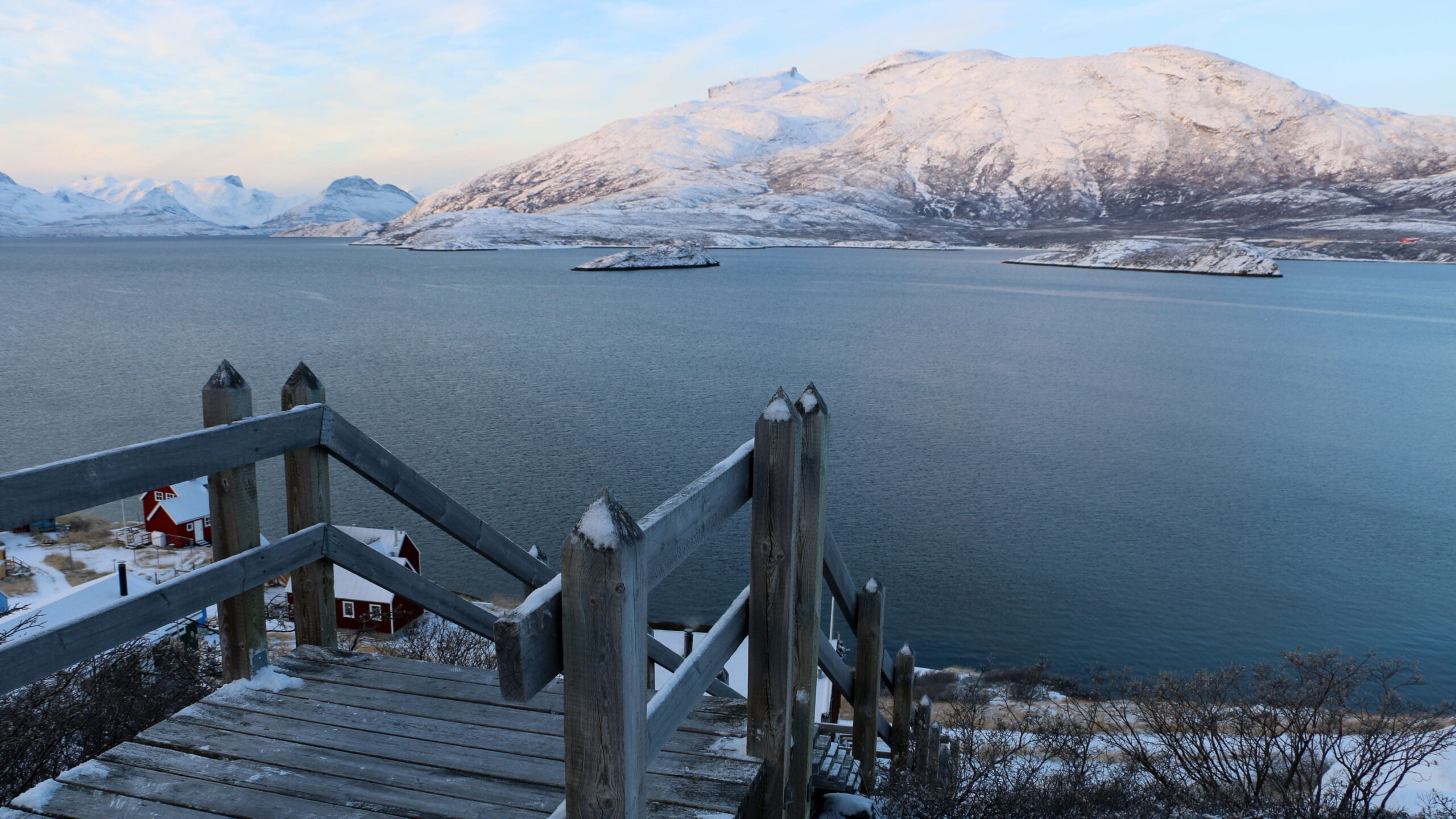
Greenland’s ocean at Kapisillit. Photo: Ilan Kelman
The Arctic Institute Polar Disaster Series 2026
- The Arctic Institute’s 2026 Polar Disaster Risk Reduction and Response Series: An Introduction
- Crisis Management in Arctic Communities: Principles of Crisis Response
- Disaster Risk Reduction and Response: Greenland
- Risk Analysis of Infrastructure Vulnerability and Sustainable Resource Exploitation in the Arctic
- Ships in the Arctic Need to Plan to Survive Until Help Arrives
- From Pandemic to Permafrost: Legal Pathways for One Health Preparedness in Arctic Communities
- Icebergs and Navigation Safety in Antarctica: Possible Impact of new Sea-Ice Regime in the Southern Ocean and South Atlantic Ocean
- Legal Preparedness for One Health in Polar Regions: Strengthening Disease Surveillance
- A Framework for Avoiding Polar Disasters
- Keeping an Eye on Iceland: Volcanoes and Climate Change
- Choosing the Bear: Navigating Spectacular Risks in Longyearbyen
- Local Perspectives in Disaster Risk Reduction: Visualising Disaster Risk in Svalbard
- The Arctic Institute’s 2026 Polar Disaster Risk Reduction and Response Series: A Conclusion
Interventions designed to prevent disasters and minimise their consequent impacts are encompassed within the framework of Disaster Risk Reduction and Response (DRR/R). This framework comprises the entire continuum of disaster-related actions, ranging from pre-disaster measures – such as prevention, preparedness, planning, and mitigation – to the primary post-disaster phase, response. An effective approach to disaster response involves the establishment of a coordinated Search and Rescue (SAR) operational framework.
Greenland is undergoing rapid environmental change. Rising temperatures, retreating ice, permafrost thaw, and increased glacial melt are profoundly affecting physical systems and human communities (e.g., in relation to sea-level rise and ecosystem change). These transformations change hazard frequency and severity, especially linked to maritime risks, coastal erosion, and potentially catastrophic events such as landslides and tsunamis. There is therefore an urgent need to assess Greenland’s capacity for DRR/R, situating this capacity within international legal frameworks, infrastructure constraints, and sociocultural considerations.
Environmental Drivers of Disaster Risk in Greenland
Climate change, ice melt, and permafrost degradation
Greenland’s ice sheet is losing mass at an accelerating rate. Modelling of subglacial bed topography improves understanding of ice dynamics, which is crucial for projecting meltwater runoff and associated hazards.1) Permafrost thaw is also affecting ground stability, increasing the probability of slope failures, infrastructure damage, and release of greenhouse gases.
Extreme events: landslides, tsunamis, and coastal hazards
One dramatic example is the 2023 Dickson Fjord landslide in northeast Greenland, which generated a large tsunami with run-up measurable over considerable distances. Such events highlight the hazard posed by glacial de-buttressing and permafrost weakening in steep terrain.2) Coastal erosion, rising sea levels, and storm surge, especially in communities near fjords, are additional risk influencers.
Increased maritime traffic and risks of marine pollution
As sea ice diminishes, formerly ice-bound waters become navigable for longer periods, increasing shipping, tourism, exploration, and resource extraction activities. These activities change the risk of incidents, oil spills, pollution, and disturbance of marine ecosystems.3) Instruments like the Polar Code (under the International Maritime Organization)) are intended in part to mitigate such risks.4)
Legal and Governance Frameworks
International agreements and obligations
- Polar Code: The International Code for Ships Operating in Polar Waters is a mandatory framework under the International Convention for the Safety of Life at Sea (SOLAS) and the International Convention for the Prevention of Pollution from Ships (MARPOL), covering ship design, operations, training, and environmental protection in polar regions.5)
- Arctic SAR Agreement (2011): Under the Arctic Council, this agreement delineates areas of SAR responsibility among Arctic states and obliges cooperation in aeronautical and maritime SAR in the Arctic. Greenland (via Denmark) is a signatory.6)
- Agreement on Cooperation on Marine Oil Pollution Preparedness and Response in the Arctic (2013): Also under the Arctic Council, this legally binding agreement aims to strengthen multinational cooperation in preparing for and responding to oil pollution incidents.7)
These legal frameworks provide a basis for DRR/R but do not themselves ensure capacity; local implementation, resource allocation, and logistical readiness remain critical constraints.
National and regional governance and community involvement
Greenland has a semi-autonomous government with responsibility for many internal affairs, while Denmark retains control over foreign policy and security. Governance for DRR/R must operate in this dual structure. Recent academic work emphasises the importance of Greenlanders’ knowledge, and of addressing colonial legacies in disaster policy: for example, displacement, relocation, and loss of traditional resilience strategies are significant issues.8)
Constraints on Response Capacity
Geography, remoteness, and infrastructure deficits
Greenland’s remote and sparsely populated settlements, particularly in the east and north, pose huge logistical challenges for timely disaster response. There is limited road infrastructure, port facilities are sparse and often inadequate, and access by air or sea is often dependent on seasonal or weather-dependent conditions. The absence of reliable connectivity and supply chains exacerbates vulnerability.
Limited SAR infrastructure and monitoring capability
SAR operations in Greenland face challenges: the vast areas to cover, seasonal ice, sparse population in many regions, limited local assets, and sometimes long delays in deploying external assistance. Maritime monitoring is similarly constrained: tracking of ship traffic, pollution risk, and ice calving or iceberg drift require both observational programmes and platforms (satellites, vessels, and buoys) which are not yet uniformly established. Projects such as iceberg tagging in Disko Bay enhance drift and decay data for icebergs, contributing to situational awareness for maritime traffic.9) Also, the Greenland Integrated Observing System (GIOS) is being developed to install permafrost monitoring stations in West Greenland along key transects.10)
Existing Strengths and Ongoing Initiatives
Monitoring and ecosystem baseline programmes
Greenland Ecosystem Monitoring, particularly via MarineBasis (in Nuuk, Disko, Zackenberg), provides long-term, consistent data on physical, chemical, and biological parameters in coastal zones. These datasets are essential for early warning systems and understanding environmental change trends.11) Recent funding for benthic ecosystem monitoring (seafloor communities) under Greenland’s “Green Growth” programme will improve knowledge of marine biodiversity, ecosystem function, and potentially sensitive areas that could be prioritised for protection or risk mitigation.12)
Institutional cooperation
Through the Arctic Council and related fora, Greenland gains access to multilateral cooperation in oil spill response, SAR coordination, shared data, scientific collaborations, capacity building, and joint exercises. These strengthen normative frameworks, raise awareness, and help build skills and interoperability.
Gaps and Recommendations
Based on the literature and recent developments, the following gaps are salient, and recommendations are proposed:
| Area | Gap / Challenge | Recommendation |
|---|---|---|
| SAR infrastructure | Sparse assets; delays in response in remote regions; seasonal limitations | Build distributed SAR stations in remote regions; improve air/sea lift capabilities; ensure trained personnel locally; leverage community first responders |
| Maritime Monitoring and Pollution Response | Incomplete coverage; lack of sufficient equipment; monitoring of ship traffic and iceberg hazards remains costly and technically demanding | Investment in radar, AIS (Automatic Identification Systems), satellite surveillance; improved remote sensing; robust oil spill response capabilities (equipment, contingency plans) |
| Connectivity and Infrastructure | Inadequate ports/airfields; limited transport during adverse weather; poor backup systems | Prioritise critical infrastructure: e.g. deep-water ports, runways, communication networks; ensure redundancy |
| Greenlanders’ Knowledge | Historical neglect: sometimes centralised policies do not match local risk perceptions or capacities | Integrate local knowledge in hazard mapping, risk perception, early warning; participatory planning; ensure legal frameworks recognise local rights and responsibilities |
| Early Warning Systems and Forecasting | Need for better modelling of ice dynamics, landslide-tsunami risk, climate change scenarios | Expand networks like GIOS, support predictive modelling (e.g. subglacial topography and meltwater models), invest in real-time monitoring of critical variables |
| Funding and Political Will | DRR/R often underfunded; delays in implementing legal obligations; balancing competing priorities | Secure dedicated funding streams; strengthen institutional capacities; embed DRR/R into national development plans |
Infrastructure Commitments 2025-2029
One salient recent development is the 2025 Denmark-Greenland framework agreement: Denmark’s commitment of DKK 1.6 billion (~US$253 million) for the period 2026-2029 to support infrastructure and healthcare in Greenland. Key elements include constructing a new runway in Ittoqqortoormiit in eastern Greenland, a deep-water port in Qaqortoq in the south, and an agreement for Denmark to cover costs for Greenlandic patients treated in Danish hospitals. These investments directly address some of the constraints previously noted, especially in transport infrastructure and access to health services.13) Combined with scientific monitoring projects (e.g. MarineBasis, GIOS, benthic ecosystem mapping), there is a recognition at policy level of the importance of strengthening both “hardware” (infrastructure, transport, response assets) and “software” (knowledge, community capacity, governance) for DRR/R in Greenland.
Conclusion
The dual pressures of greatly changed environmental hazards (including from climate change) and of rising human activity (shipping, tourism, exploration) in Greenland’s maritime zones underscore that disaster risk remains a major present challenge. Legal frameworks like the Polar Code and Arctic Council agreements establish essential norms, yet they do not guarantee resilience in practice. The remote geography, sparse settlement patterns, variable accessibility, and extreme weather all mean that DRR/R must adopt strategies tailored to Arctic conditions. One size does not fit all. Measures will need to be adaptive, highly localised, and cognisant of both technical constraints and cultural realities.
Moreover, incorporating local Greenlanders’ knowledge can improve early detection, risk perception, and community response, while supporting legitimacy and trust in governmental action. There is also a geopolitical dimension: Arctic states are increasingly attentive to Greenland’s strategic position, which may bring more resources and more competing interests. Greenland is at a critical juncture with respect to disaster risk reduction and response. It operates within several strong international legal instruments, has committed scientific monitoring infrastructure, and is receiving renewed investment in transport and health infrastructure. Yet major gaps remain in response capacity, especially in remote regions, maritime monitoring, early warning systems, and community engagement. To safeguard both human and environmental security in Greenland – and more broadly in the Arctic – there must be sustained investment, political commitment, and inclusive governance.
Teresa Barros Cardoso is at the Jean Monnet Oceanid+ Centre of Excellence on Sustainable Blue Europe which promotes maritime sustainability and the blue economy in Europe.
References